
Travel ranges from short local inspections to multi-week deployments in disaster zones, and how those trips are paid for, whether by per diem or reimbursement, depends heavily on your contract type and tax status.
TL;DR:
- Travel frequency and duration vary significantly by role, with CAT adjusters often deployed to disaster zones for two to three weeks or longer.
- Per diem allowances under an accountable plan are generally tax-free if kept within local government rates, but flat day rates without expense documentation are taxable.
- Long-term disaster assignments can jeopardize eligibility for tax-free per diems if the adjuster is considered itinerant under IRS rules.
- Most field adjusters travel locally within their region daily, while independent and CAT adjusters can spend extensive time away from home, sometimes over 90% of the time.
- Preparing for travel involves certification in estimating software, safety courses, and packing a “go bag” with essentials, especially for short notice CAT deployments.
Table of Contents
- Types of claims adjusters and how travel varies by role
- Typical travel patterns: frequency, deployment length and scheduling
- Expenses, per diem, contracts and tax/home implications
- A day in the field: duties, tools and safety when travelling for claims work
- How to prepare if you expect travel as an adjuster
- Pay, hours and career impact of travel-heavy roles
- Weighing the travel trade-off yourself
- Cover yourself before you cover everyone else’s claims
- Sources
- FAQ
Types of claims adjusters and how travel varies by role
Not every adjuster spends their week on the road. The job title tells you almost everything about how much packing you will be doing.
- Staff (company) adjuster: employed directly by an insurer, usually working a mix of desk and light field duties within a set territory.
- Desk adjuster: handles claims by phone, email and video review, with minimal or no travel required.
- Field adjuster: inspects property and vehicle damage in person, travelling locally with occasional overnight trips.
- Independent adjuster: contracted through a third-party firm to work claims for multiple insurers, often travelling further and more frequently than staff colleagues.
- Catastrophe (CAT) adjuster: deployed to disaster areas after hurricanes, floods or wildfires, with the heaviest travel demands of any role.
- Public adjuster (loss adjuster in the UK): represents the policyholder rather than the insurer, with travel tied to caseload rather than carrier deployment cycles.
In the UK, the route towards becoming a chartered loss adjuster through the Chartered Institute of Loss Adjusters typically involves more site visits as seniority increases, particularly for commercial and complex claims.
Typical travel patterns: frequency, deployment length and scheduling
How often you travel depends entirely on which of those roles you hold, and the pattern shifts sharply once a major weather event hits.
- Daily local inspections: field adjusters commonly drive between two and six properties a day within a home region, returning each evening.
- Occasional overnight trips: independent adjusters covering wider territories may spend one or two nights away during busy periods.
- Multi-week CAT deployments: after a hurricane or major flood, adjusters are often sent away for 7 to 21 days or longer, sometimes on rotations such as ten days on and four days off.
- Advertised travel percentages: some CAT-focused job adverts state travel requirements as high as 90%, reflecting how central mobility is to the role.
Occupational guidance from the Bureau of Labor Statistics notes that adjusters regularly work both inside and outside the office, with evening and weekend appointments becoming routine once an event triggers a claims surge. Personal plans get disrupted fast. If you are mid-deployment when a storm season peaks, your four days off can vanish without much warning.
Expenses, per diem, contracts and tax/home implications
Travel costs are rarely paid the same way twice, and the difference matters more than most new adjusters expect.
Per diem is a fixed daily allowance meant to cover meals, incidentals and sometimes lodging, separate from itemised reimbursement of actual receipts. Whether that allowance is taxable depends on the contracting structure.
Statistic callout: Per diem paid under an accountable plan, and kept within local government rates, is typically excluded from taxable income. Flat bundled day rates paid without expense substantiation are generally taxable, according to Insurance Adjuster Authority.
- Staff adjusters often have lodging and travel booked directly by their employer.
- Independent adjusters usually book their own travel and claim it back under contract terms.
- Long-term CAT work raises a tax home question: the IRS treats your tax home as your main place of business, and an adjuster who is perpetually itinerant can lose eligibility for tax-free per diem treatment entirely.
That last point trips up more experienced CAT adjusters than beginners. It is worth a conversation with a tax professional before accepting back-to-back deployments.
A day in the field: duties, tools and safety when travelling for claims work
The on-site workflow follows a fairly consistent shape, whether you are inspecting a kitchen fire or a hurricane-hit roof.
- Arrive, meet the claimant, and confirm the scope of the loss.
- Photograph damage systematically, inside and out.
- Take measurements and note structural or safety concerns.
- Build or update an estimate using software such as Xactimate.
- Communicate next steps to the claimant before leaving.
- Write up the report and file it, often that same evening.
Connectivity in disaster zones can be patchy, so many adjusters draft notes offline and sync reports once signal returns. The Bureau of Labor Statistics points to genuinely physical demands too: carrying ladders, climbing onto roofs, and squeezing into crawlspaces are routine, with equipment sometimes weighing 30 to 50 lbs.
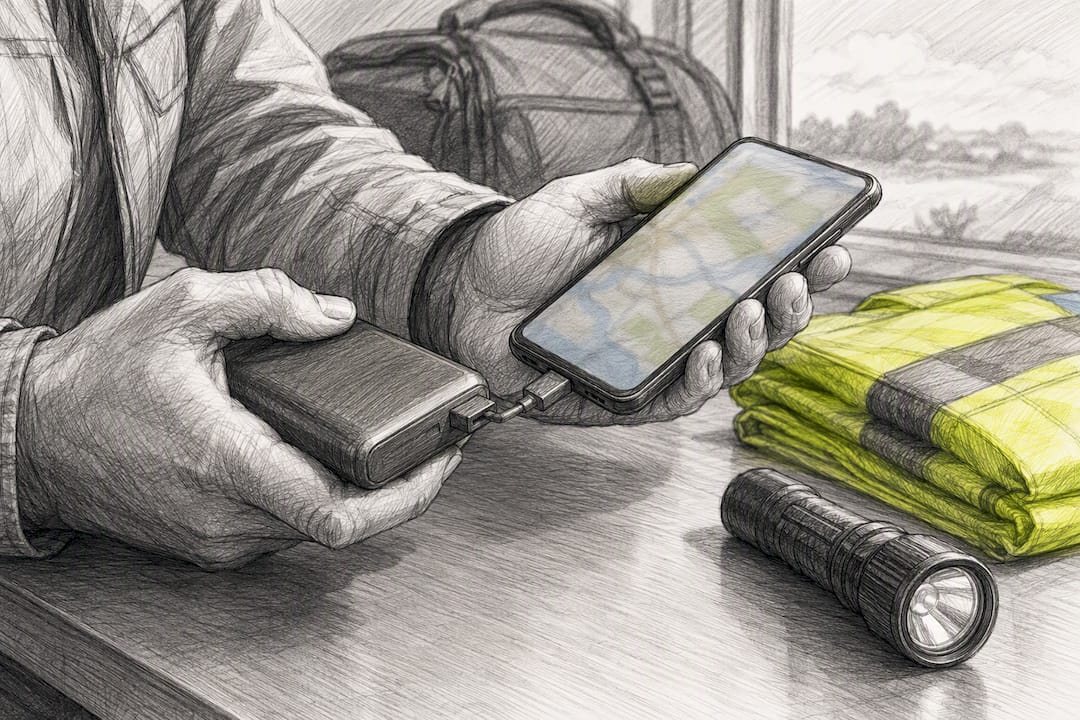
Pro Tip: Pack a portable power bank and offline maps before any CAT deployment. Cell towers are frequently the first infrastructure to fail after a major storm, and you cannot bill a claim you cannot document.
How to prepare if you expect travel as an adjuster
Getting travel-ready is less about instinct and more about a checklist you can actually tick off.
- Build core credentials: estimating software training (Xactimate is the industry standard), ladder and rope safety courses, and a recognised claims-handling certificate all improve your competitiveness for field and CAT roles, according to guidance from Crawford & Company.
- Sort your logistics: pack for variable weather, carry paper and digital copies of your licences, and back up every report to the cloud before you leave a site.
- Prepare mentally: distressed claimants, long hours and disrupted sleep are part of the job, so build in a routine that helps you decompress between inspections.
Pro Tip: Keep a “go bag” permanently packed with chargers, PPE and spare batteries. CAT deployments are often confirmed with less than 48 hours’ notice.
Pay, hours and career impact of travel-heavy roles
Travel-heavy roles tend to pay more, but the hours reflect that.
Statistic callout: The median annual wage for claims adjusters, examiners and investigators in the US was $76,790 as of May 2024, with the top 10% earning over $112,150. In the UK, loss adjuster salaries average around £42,248, with chartered loss adjusters earning roughly £40,000 to £90,000 or more depending on seniority and claim complexity.
CAT and independent work can push earnings higher through day rates and overtime, though hours often stretch well past a standard week during active deployments. Field and CAT experience commonly leads into senior field adjuster, team lead or, in the UK, chartered loss adjuster positions.
Weighing the travel trade-off yourself
Travel-heavy adjusting suits people who thrive on variety and want to build experience fast, but it costs you predictable routines and steady sleep. Ask yourself honestly: can you handle irregular hours away from home, and do you have someone managing things while you are gone? If both answers are yes, the career rewards can be real.
— Coert
Cover yourself before you cover everyone else’s claims
Adjusters spend more time away from home than almost anyone else in insurance, which makes personal cover an odd thing to overlook. Whether you are heading into a CAT deployment abroad, visiting family between assignments, or simply someone who travels often for work, insurance providers often partner with a global network of insurers to arrange coverage with multilingual support and flexible options for pre-existing conditions, features that standard employer policies may not provide.

If your work or personal travel takes you across borders regularly, a travel insurance plan built for frequent movement is worth checking before your next trip, not after something goes wrong on-site. Planning a trip for yourself, a resident, or visiting family? UGB + Ekta can arrange travel insurance for seniors up to 100 years old. Just click here: Ektatraveling and add the promo code “UGB” to receive an additional 10% discount. Watch this short overview for a clearer picture of how travel cover works before you request your own quote through Unparalleledglobalbenefits:
Sources
Facts on wages, hours, per diem and tax home rules come from the Bureau of Labor Statistics, Prospects, the IRS and Insurance Adjuster Authority, linked throughout this guide.
This article is general information, not a substitute for advice from a qualified financial advisor. Consult a qualified financial professional about your own circumstances before acting on anything here.
- Prospects — Chartered loss adjuster job profile
- Insurance Adjuster Authority — Per diem and travel logistics for catastrophe adjusters
- IRS — Tax home and foreign earned income exclusion guidance
FAQ
What is the role of a claims adjuster?
A claims adjuster investigates insurance claims by inspecting damage, gathering evidence, and determining how much a policy should pay out. Field and CAT adjusters do this in person at the claimant’s location, while desk adjusters handle it remotely through documents and photos.
How stressful is being a claims adjuster?
It can be demanding, particularly for field and CAT roles, where irregular hours, distressed claimants and physically tiring inspections are routine. The Bureau of Labor Statistics notes that evening and weekend work becomes common once claim volumes rise, which adds pressure during active disaster seasons.
What is the average salary for a loss adjuster in the UK?
UK loss adjusters average around £42,248 a year, with chartered loss adjusters earning between roughly £40,000 and £90,000 or more depending on seniority and claim complexity. Working hours typically run 38 to 40 hours a week outside of major claim events.
What not to say to a claims adjuster?
Avoid guessing at figures, admitting fault, or making firm statements about the cause of damage before an inspection is complete, since these can complicate the claims process. Stick to factual descriptions of what happened and let the adjuster’s inspection and report determine the assessment.
Do independent adjusters travel more than staff adjusters?
Yes, independent adjusters typically travel further and more frequently, since they are contracted across multiple insurers and regions rather than working within one company’s fixed territory. CAT deployments in particular rely heavily on independent adjusters willing to travel at short notice.