
Trip interruption insurance is a post-departure benefit that reimburses unused, prepaid, non-refundable trip costs plus reasonable extra expenses when a covered event forces you to cut a trip short or extend it unexpectedly. It differs from trip cancellation cover, which only applies before you leave, and from trip delay benefits, which handle temporary hold-ups rather than a curtailed journey. If you have paid deposits on a cruise, safari, or multi-city itinerary, understanding this distinction matters far more than most travellers realise.
TL;DR:
- Trip interruption insurance covers unused prepaid costs, additional travel expenses, and extension costs if a covered event forces early return or stay extension.
- It typically pays between 100% and 150% of the insured trip cost, with higher payouts intended to cover last-minute rebooking and extra expenses.
- Common exclusions include pre-existing conditions unless a waiver is purchased, foreseeable events, and regions under travel advisories or sanctions.
- Claimants should act quickly by contacting insurers immediately, securing official documentation, and saving all receipts to support claims.
- Buying coverage at the time of booking is crucial, especially for large deposits or remote destinations, to avoid missing out on waivers or exclusions.
Table of Contents
- What does trip interruption insurance cover?
- What trip interruption insurance typically excludes
- Trip interruption vs trip cancellation vs trip delay
- How do you make a trip interruption claim?
- What does trip interruption insurance cost, and what are the limits?
- When should you buy trip interruption cover?
- Real-world scenarios: how trip interruption plays out
- Why travellers turn to Unparalleledglobalbenefits for this cover
- A practical take on when this cover earns its premium
- Get a trip interruption quote from Unparalleledglobalbenefits
- Sources
What does trip interruption insurance cover?
Once you have set off, trip interruption insurance steps in to reimburse the parts of your trip you cannot use plus the practical cost of getting home or continuing safely. NerdWallet’s explainer confirms the benefit reimburses unused, prepaid, non-refundable trip expenses and often extends to additional return-travel costs and reasonable extra accommodation.
In practice, this usually means:
- Unused prepaid, non-refundable costs: hotel nights you never used, guided tours, cruise segments, event or excursion tickets.
- Additional travel costs incurred because of the interruption: airline change fees, a last-minute one-way flight home, taxis, and extra hotel nights while you wait for a new connection.
- Cover for the reverse scenario too. A quarantine order or missed connection that forces you to extend your stay can trigger the same benefit, not just an early return.
- A payout formula rather than a flat refund. Many policies reimburse between 100% and 150% of your insured trip cost, with the extra percentage specifically there to absorb the higher price of a same-day or next-day replacement flight, according to Squaremouth.
What trip interruption insurance typically excludes
Insurers are specific about what they will not pay for, and most claim disputes trace back to one of the gaps rather than a genuinely unfair denial.
- Pre-existing medical conditions, unless you bought a waiver within the policy’s look-back window.
- Foreseeable events. If a storm system was already named and tracked before you booked or departed, insurers generally treat it as a known risk rather than a covered surprise.
- Missing or late notification, or a claim submitted without receipts, medical reports, or other supporting evidence.
- Country-specific exclusions, including destinations under travel advisories, sanctions, or civil unrest, so it is worth checking official sanctions and country information before you assume a region is insurable at all.
Pro Tip: Photograph every receipt the moment you get it, even the taxi chit and the airport meal voucher. Insurers reject far more claims for missing paperwork than for genuinely excluded events.
Trip interruption vs trip cancellation vs trip delay
These three benefits sound interchangeable, but they trigger at different moments and pay for different things.
- Trip cancellation applies before departure. It reimburses prepaid costs when you cannot start the trip at all, for reasons such as illness or a family emergency at home.
- Trip interruption applies after departure, once you are already travelling, and covers unused prepaid costs plus the expense of returning home early or extending your stay. Chase’s guide confirms this cover activates only once the journey is underway, distinct from both cancellation and delay.
- Trip delay covers a temporary hold-up, such as a missed connection, and typically pays for meals and a hotel room for a night or two, not the abandonment of the trip itself.
If your trip is merely running late, claim delay. If you never left, claim cancellation. If you are already abroad and the trip is cut short, that is interruption.
How do you make a trip interruption claim?
The moment something goes wrong is the moment your claim either takes shape or falls apart, so act quickly and methodically.
- Contact your insurer’s assistance line immediately, ideally before you make new arrangements, so they can guide you on approved providers and pre-authorise costs where possible.
- Secure official documentation on the spot. That means a doctor’s letter for a medical emergency, a death certificate for a bereavement, or a government evacuation order for a weather event.
- Keep every original and replacement receipt, including the ticket you never used and the new one you bought.
- Notify within your policy’s stated window, then file the claim with your documentation once home. Reimbursements are usually calculated against your insured trip cost, minus anything already refunded by an airline or hotel.
Progressive notes that trip interruption benefits are generally paid on a reimbursement basis, so you often pay upfront and recover the cost afterwards.
Pro Tip: If an airline cancels or significantly delays your flight, check the carrier’s own record on the US Department of Transportation’s airline dashboard or, for UK flights, the official passenger rights guide. A written admission of fault from the carrier strengthens your insurance claim considerably.
What does trip interruption insurance cost, and what are the limits?
Premiums move with your total trip cost, your age, and any optional add-ons such as cancel-for-any-reason cover. A £6,000 honeymoon costs more to insure than a £900 weekend break, and older travellers typically pay a higher rate reflecting greater health risk.
- Benefit levels commonly run between 100% and 150% of your insured trip cost, a structure Squaremouth confirms is designed to absorb higher last-minute replacement fares.
- Per-person maximums and per-trip deductibles vary by plan, so check the schedule of benefits rather than assuming a flat number.
- Worked example: if your insured trip cost is £3,000 and your policy pays 150%, your maximum interruption benefit is £4,500. That gap between the two figures is meant to cover the £1,200 last-minute flight home plus a couple of unplanned hotel nights, not to hand you a windfall.
When should you buy trip interruption cover?
Buy it at the time of booking, or as soon afterwards as your policy allows. Waiting until closer to departure can leave you outside the window for pre-existing condition waivers or “known event” exclusions, since a storm system or political situation that has already made headlines is no longer an insurable surprise.
This cover matters most for:
- Travellers with large non-refundable deposits, such as cruises, safaris, or destination weddings.
- Long-haul or multi-leg itineraries where a single missed connection can unravel the whole trip.
- Anyone travelling to remote destinations with limited rebooking options.
- Travellers with existing health conditions, where a mid-trip flare-up is a realistic risk rather than a hypothetical one.
Before buying, check whether a credit card you already hold or an employer travel policy offers overlapping benefits, so you are not paying twice for the same protection.
Real-world scenarios: how trip interruption plays out
- Medical emergency abroad. A traveller suffers a cardiac event on day four of a two-week trip. The claim needs hospital discharge paperwork, the original flight itinerary, and receipts for the new one-way ticket home.
- Mandatory evacuation. A hurricane triggers a government evacuation order at a resort. The insurer typically wants a copy of that order plus receipts for the extra hotel nights and rebooked flight.
- Family emergency at home. A parent’s sudden hospitalisation cuts a business trip short. Proof usually means a hospital letter naming the relationship to the traveller, alongside the amended flight ticket.
For anyone whose interruption involves a medical evacuation rather than a simple early return, it is worth reading Unparalleledglobalbenefits’s guide to emergency medical evacuation cover, since the two benefits often work together on the same claim.
Why travellers turn to Unparalleledglobalbenefits for this cover
There are detailed guidance pages available on trip cancellation and interruption cover and a dedicated explainer on interruption cover for expats living or working abroad long-term. Alongside plan comparison tools, travellers can match benefit levels and deductibles to their actual trip cost, and find advice on the right documentation before a claim is filed. If you are unsure whether cancellation or interruption cover fits your itinerary better, the comparison in the trip cancellation guide provides a useful starting point before requesting a quote.

A practical take on when this cover earns its premium
Trip interruption cover is worth buying whenever your prepaid costs would sting to lose outright, not just when a brochure suggests it. The single biggest factor in whether a claim succeeds is not the size of the disruption. It is how fast you call the assistance line and how carefully you hold onto receipts from that moment forward. Treat the notification call as step one of the of the trip itself, not an afterthought once you are home.
— Coert
Get a trip interruption quote from Unparalleledglobalbenefits
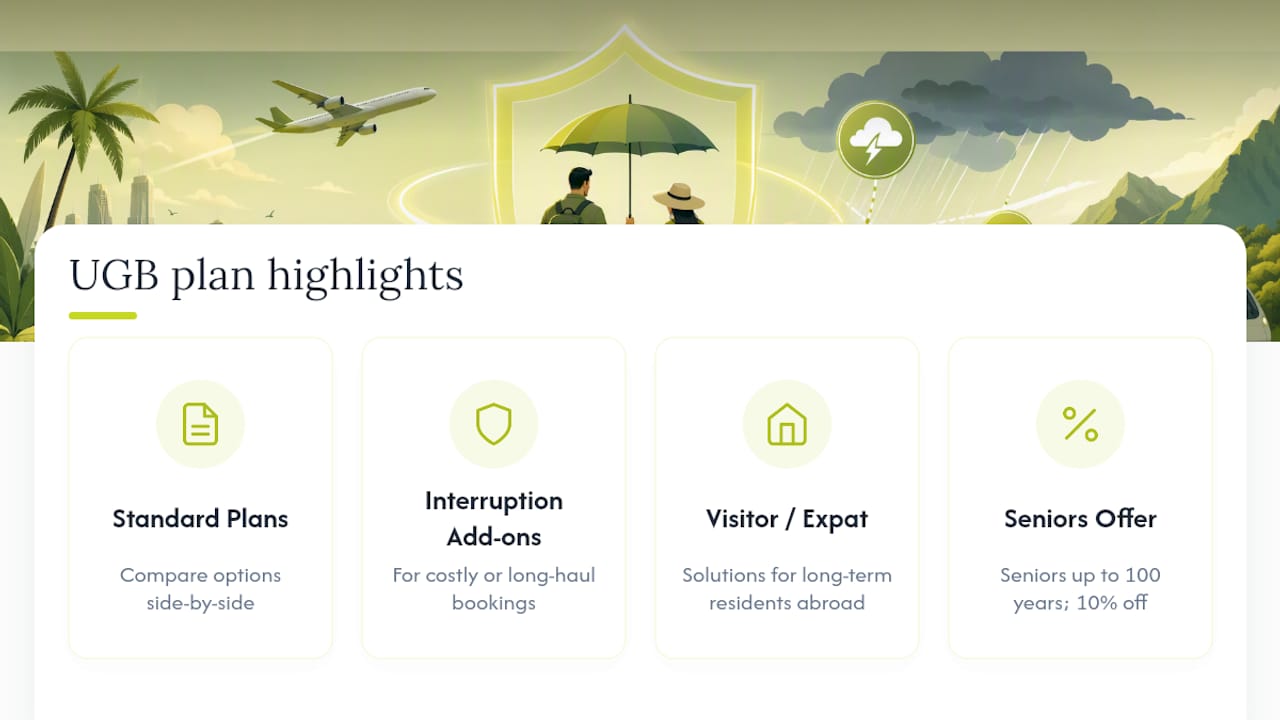
Unparalleledglobalbenefits gives you a direct route to travel and trip interruption cover without wading through a dozen separate insurer websites to compare benefit levels and deductibles yourself. Its plan range spans standard travel insurance, interruption add-ons for costly or long-haul bookings, and visitor and expat solutions for those living abroad long-term.

If you want to see how interruption benefits sit alongside broader travel protection, start with the Choose a Plan page to compare options side by side, or explore how standard travel insurance protects your journey before you decide on add-ons.
Planning a trip for yourself, a resident, or visiting family? UGB + Ekta can arrange travel insurance for seniors up to 100 years old. Just click here: https://ektatraveling.com/?partner_uid=808 and add the promo code “UGB” to receive an additional 10% discount.
For a walkthrough of how coverage works in practice, watch this short explainer video. When you are ready, request a quote through Unparalleledglobalbenefits and get your benefit levels and deductibles matched to your actual trip cost before you travel.
This article is general information, not a substitute for advice from a qualified financial advisor. Consult a qualified financial professional about your own circumstances before acting on anything here.
Sources
- Trip Interruption Insurance Explained – NerdWallet
- Trip Interruption Insurance: Coverage, Cost, & Plans – Squaremouth
- What is Trip Interruption Insurance? | Chase
- What is trip interruption insurance coverage? – Progressive