Open perils (sometimes called all-risk) covers your property against everything except the specific events your policy lists as excluded. Named perils cover only the risks written into the policy by name, nothing more. That single difference decides who has to prove what when something goes wrong, and it usually shows up in your premium too: broader open perils cover typically costs more, while named perils policies are cheaper but leave more gaps. Neither one covers absolutely everything, so exclusions still matter under both.
TL;DR:
- Open perils policies are more comprehensive but still exclude flood, earthquake, wear and tear, war, nuclear hazards, and neglect, which are usually sold separately.
- Named perils policies cover only specific risks listed in the policy, placing the burden of proof on the policyholder to show that a covered peril caused the loss.
- Open perils premiums are higher because of broader coverage, while named perils policies are cheaper but leave gaps, especially for unexplained or accidental damage.
- The main differences also involve who proves the cause of loss and what is excluded, with open perils requiring insurer proof of an exclusion to deny a claim.
- For valuable or unpredictable risks, paying for open perils coverage generally offers better protection, especially for the dwelling, while lower-value contents may be manageable under named perils.
Table of Contents
- Open perils vs named perils explained: what open (all-risk) cover actually does
- What named perils coverage means for your claim
- Open perils vs named perils: the differences that actually matter
- Where the difference actually shows up in a claim
- Choosing the right peril basis for your home
- What this means if you’re moving abroad or living as an expat
- An honest recommendation on peril basis
- Get help comparing your policy options
- Sources
Open perils vs named perils explained: what open (all-risk) cover actually does
Insurers increasingly avoid the phrase “all-risk” because it misleads people into thinking nothing is excluded. The IRMI glossary notes the industry now prefers “open perils” or “special perils” for exactly this reason: the policy wording still lists specific exclusions, so “all” never means universal.
Here’s how it works in practice. An open perils policy covers loss or damage from any cause except those explicitly written out. That flips the burden of proof onto the insurer. If your claim is denied, the insurer has to point to the specific exclusion clause that applies to your loss, rather than you having to prove your loss falls under a listed cause.
Common exclusions on open perils policies include:
- Flood and earthquake damage (almost always excluded and sold separately)
- Ordinary wear and tear or gradual deterioration
- War and government action
- Nuclear hazard
- Neglect or intentional damage
Regulatory guidance from the Texas Department of Insurance confirms these exclusions are standard, not a red flag on a particular insurer’s paperwork. Open perils cover typically applies to the dwelling structure on an HO-3 policy, and to both dwelling and contents on the broader HO-5 form.
What named perils coverage means for your claim
Named perils coverage flips the entire logic. Instead of covering everything except a list of exclusions, it covers only the risks written into the policy by name. If your loss doesn’t match one of those named causes, there’s no payout, full stop.
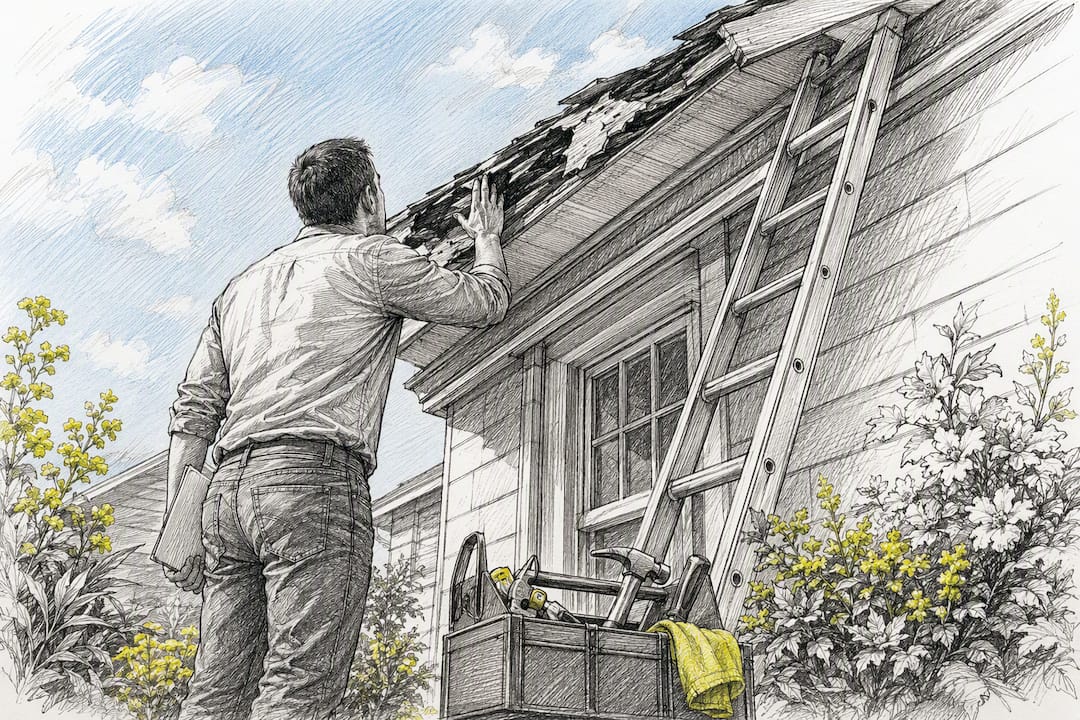
That places the burden of proof on you, the policyholder. Investopedia explains that under a named perils policy, you must demonstrate your loss resulted from one of the specifically listed causes before the insurer pays anything.
Most standard homeowner policies use a fairly consistent list. According to Insurance Geek, personal property on a typical HO-3 policy is commonly insured against 16 named perils, including:
- Fire and lightning
- Windstorm and hail
- Explosion
- Riot or civil commotion
- Vehicles and aircraft
- Smoke damage
- Vandalism and theft
- Weight of ice, snow, or sleet
Named perils policies tend to carry lower premiums because the insurer’s exposure is defined and finite. For lower-value contents, or where budget is genuinely tight, that trade-off can be perfectly reasonable, provided you understand exactly what falls outside the list.
Open perils vs named perils: the differences that actually matter
The gap between these two policy types comes down to four practical factors: who proves what, what’s excluded, what you pay, and how the two typically get paired in a real policy.
| Factor | Open perils | Named perils |
|---|---|---|
| Burden of proof | Insurer must prove an exclusion applies | You must prove a named peril caused the loss |
| Coverage scope | Broad, subject to listed exclusions | Narrow, limited to listed perils only |
| Typical premium | Higher | Lower |
| Common pairing | Dwelling on HO-3, or dwelling and contents on HO-5 | Personal property on HO-3 |
NEXT Insurance notes that open perils policies are generally recommended when a policyholder wants fewer coverage gaps and is willing to pay for that certainty. Named perils suit people who’ve accepted a narrower safety net in exchange for a lower bill, often because their contents carry modest value or their budget won’t stretch further.
Neither structure is fixed forever. Endorsements and riders exist precisely to plug gaps, adding flood cover, scheduling jewellery, or extending contents to open perils even under an otherwise named perils policy.
Pro Tip: Ask your insurer to show you, in writing, exactly which peril basis applies to your dwelling versus your personal property. Many HO-3 policyholders assume their contents are covered as broadly as their house, and that assumption causes the most painful claim disputes.
Where the difference actually shows up in a claim
Abstract definitions only go so far. These scenarios show why the peril basis you choose changes the outcome of a real claim.
- Mysterious disappearance. Your ring vanishes with no witnesses and no sign of a break-in. Open perils cover is far more likely to pay out here, because there’s no clear exclusion for “unexplained loss.” Named perils cover typically won’t, since disappearance isn’t one of the listed causes. Insurance Journal cites this as one of the clearest gaps between the two.
- Accidental breakage. You knock a table lamp over and it shatters. Open perils generally covers this. Named perils usually doesn’t, because “accidental damage” rarely appears on the standard 16-peril list.
- Interior water damage from a window left open. Rain blows in and ruins a carpet. Open perils cover often responds; named perils cover may exclude it depending on exact wording.
Always check your policy’s specific exclusions and conditions before assuming either basis will pay. The scenario matters less than the wording in front of you.
Choosing the right peril basis for your home
Start with your risk profile, not your budget. If you live somewhere prone to accidental damage, have valuable but not extraordinarily expensive contents, or simply want fewer arguments at claim time, open perils cover is usually worth the extra premium. NAIC data shows homeowners insurance premiums have climbed in recent years, so weigh that broader protection against what you can realistically absorb out of pocket if a named perils gap catches you out.
Before renewing or switching, ask your insurer or broker:
- Which peril basis applies to my dwelling, and which applies to my contents?
- What are the specific exclusions on my current policy?
- What would an endorsement for flood, earthquake, or scheduled valuables cost?
- Can I upgrade from HO-3 to HO-5 for broader contents cover?
Pro Tip: Keep a simple inventory with photos of higher-value items. It won’t change your peril basis, but it makes proving a claim far faster under either structure, especially if you’re relying on named perils and need to show a specific covered cause.
What this means if you’re moving abroad or living as an expat
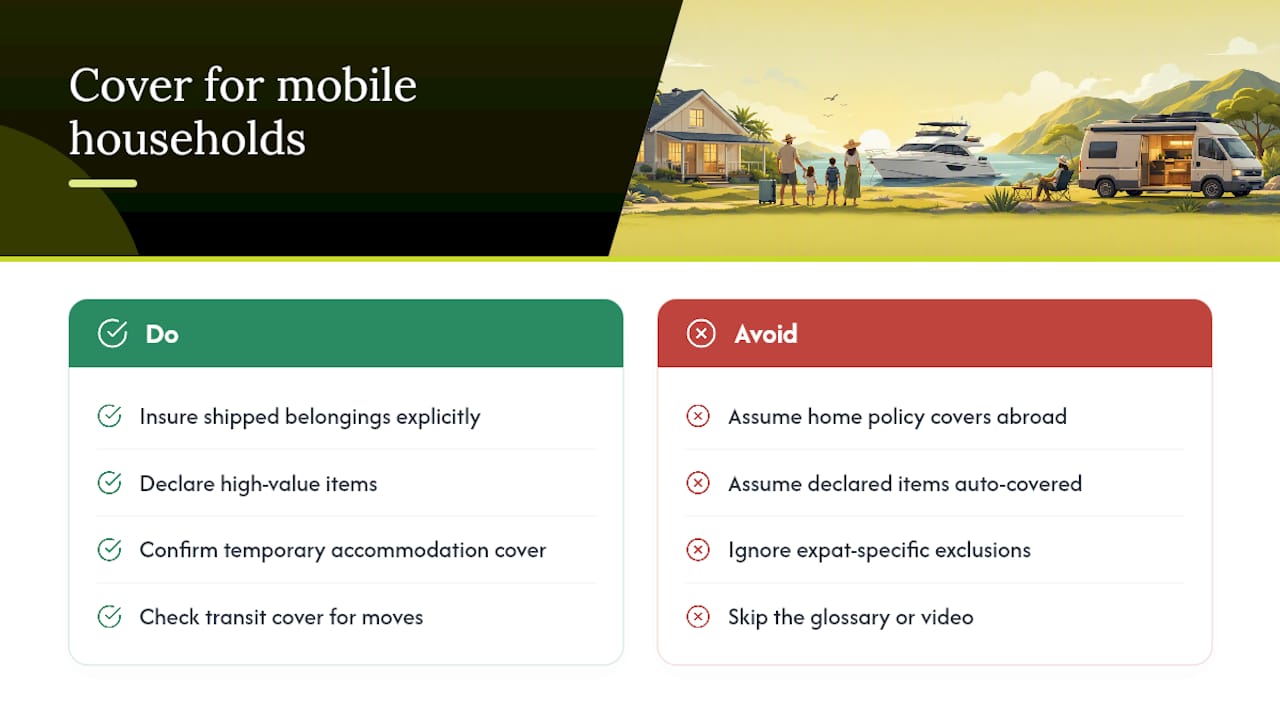
Peril basis matters just as much when your belongings are in transit or split between two homes. Declared items, temporary accommodation, and transit cover often carry more weight for internationally mobile households than the fine print on a stationary dwelling policy. If you’re relocating, insuring shipped belongings, or setting up in temporary housing, it pays to understand what expat insurance doesn’t cover before you assume broader cover follows you across borders. For a wider grounding in the terminology itself, our expat insurance glossary is worth a look. See a practical rundown in this video:
An honest recommendation on peril basis
Pay for open perils cover on anything that would genuinely hurt to lose unexpectedly, your dwelling especially. Named perils can be perfectly acceptable for lower-value contents if your budget is tight, but read the exclusion list before you agree to it, not after a claim gets denied. Schedule anything of real value separately, and get your policy reviewed by Unparalleledglobalbenefits before you assume you’re covered.
— Coert
Get help comparing your policy options
Unparalleledglobalbenefits gives internationally mobile readers something most local brokers can’t: a policy review built specifically around expat, travel, and cross-border risk, not a generic homeowner template. Whether you’re weighing open perils against named perils for a dwelling back home, or you need cover that follows you across a relocation, our team can walk through your exclusions line by line and recommend the endorsements that actually close your gaps.

If medical cover abroad is part of the picture too, our guide to international health insurance is a sensible next stop. And if you’re travelling internationally yourself, whether for a short trip or a family visit, one relevant note: planning a trip for yourself, a resident, or visiting family? UGB + Ekta can arrange travel insurance for seniors up to 100 years old. Just click here: https://ektatraveling.com/?partner_uid=808 and add the promo code “UGB” to receive an additional 10% discount. For travellers weighing medical safety abroad more broadly, this medical tourism safety checklist is also worth a read. Request a quote today and get a straight answer on which peril basis actually fits your situation.
This article is general information, not a substitute for advice from a qualified financial advisor. Consult a qualified financial professional about your own circumstances before acting on anything here.
Sources
- IRMI — Open perils definition
- Investopedia — Named perils
- Texas Department of Insurance — Home insurance policies: All risk or named peril
- Insurance Geek — Home insurance perils