UK professional athletes can buy travel insurance that covers professional participation, but only through a specialist policy or broker-arranged cover that expressly includes professional competition and training. A standard travel policy will not do it. CNBC Select confirms that many insurers exclude professional athletics from standard policies, and Forbes Advisor notes that high-risk and competitive activities require an upgrade or specialist policy. Before you travel, check the FCDO travel advice for your destination, confirm your broker is FCA-regulated, and gather proof of your professional status.
Your immediate next steps:
- Confirm your destination has no FCDO “advise against” advisory that would void cover.
- Gather your professional status documents (contract, payslips, federation letter).
- Request a specialist quote through an FCA-regulated broker such as Unparalleledglobalbenefits before you book travel.
Key takeaways
UK professional athletes can get valid travel insurance for professional competition abroad, but only through a specialist or brokered policy that expressly covers professional participation, declared at the point of purchase with supporting documentation.
| Point | Details |
|---|---|
| Declare professional status | Undisclosed professional participation is the most common reason sports travel claims are denied. |
| Check medical and evacuation limits | Emergency medical cover up to £5 million–£10 million and evacuation up to £250,000–£1 million are typical benchmarks for specialist policies. |
| Verify liability and equipment cover | Confirm third-party liability up to £2 million and check whether equipment damaged in use is included. |
| Allow 24–72 hours for underwriting | Straightforward cases take 24–72 hours from quote to policy; medical waivers or unusual sports take longer. |
| Use Unparalleledglobalbenefits | Unparalleledglobalbenefits arranges FCA-regulated specialist quotes for UK professional athletes, including single-trip and annual multi-trip options. |
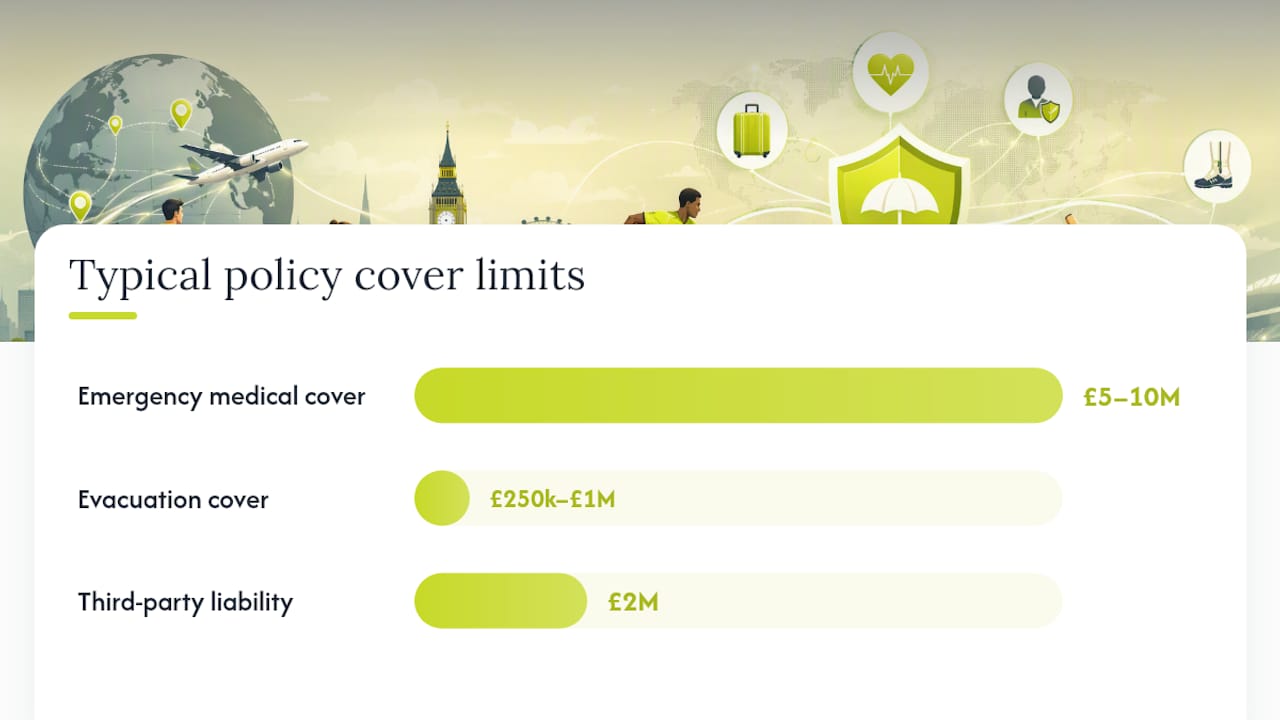
Table of Contents
- What does professional sports travel insurance typically cover?
- How do insurers define “playing professional sports”?
- Which sports can be covered, and what are the caveats?
- What key features and limits should you compare between policies?
- How are pre-existing medical conditions handled?
- What exclusions commonly invalidate professional sports cover?
- How do you get a quote, and what documents will you need?
- Which UK resources should you check before travelling?
- How Unparalleledglobalbenefits arranges professional sports cover
- A practical perspective for UK professional athletes
- Get a specialist quote through Unparalleledglobalbenefits
- Sources
What does professional sports travel insurance typically cover?
A specialist policy for professional athletes goes well beyond what a standard travel policy offers. The core sections you should expect are:
- Emergency medical treatment and hospitalisation: generally very high coverage per trip to cover injuries sustained during training and competition.
- Medical evacuation and repatriation: limits commonly range from £250,000 to £1 million, covering air ambulance and specialist transfer home.
- Third-party liability: significant coverage for accidental injury to another person or damage to property during a covered sporting activity.
- Personal accident: lump-sum benefit for permanent disability or accidental death arising from a covered sporting event.
- Cancellation and curtailment: reimbursement of pre-paid costs if you cannot travel or must return early due to injury, illness, or a covered event. Some policies may offer Cancel For Any Reason (CFAR) as an optional add-on.
- Sports equipment loss or damage: cover for kit, specialist gear, and competition equipment, subject to limits set by the policy.
- Race and entry fee cover: reimbursement of non-refundable entry fees if a covered event forces withdrawal is sometimes included.
- Search and rescue: costs of mountain rescue, coastguard, or similar emergency services may be covered.
Medical limits matter most. A single overseas hospitalisation for a serious sports injury can cost well over £100,000 in some markets. Evacuation from a remote competition venue can add tens of thousands more. Policies with limits below £2 million for medical expenses are worth scrutinising carefully before you sign.
Pro Tip: Always confirm whether the policy covers you during training sessions as well as competition days, and whether an injury that occurred before departure but worsens abroad is treated as a pre-existing condition or a new claim.
Understanding how travel insurance works at a mechanical level helps you read policy wording critically rather than taking a broker’s summary at face value.
How do insurers define “playing professional sports”?
The definition varies between underwriters, but most apply one or more of the following tests:
- Income threshold: earning above a set amount from sport, with thresholds varying by insurer.
- Contracted participation: holding a formal playing, coaching, or performance contract with a club, federation, or event organiser.
- Full-time occupation: sport listed as your primary occupation on tax returns or employment records.
- Scholarship or regular prize-money: receiving a sports scholarship or regularly competing for prize money, even if not formally employed.
- Paid appearance fees or sponsorship income: some insurers treat significant sponsorship or appearance income as professional status even without a contract.
Borderline cases, such as semi-professional players who hold a day job alongside paid weekend fixtures, require careful disclosure. Present all income sources from sport honestly. Insurers can and do void claims where professional status was not declared, and the Financial Conduct Authority expects regulated brokers to apply fair disclosure standards.
Pro Tip: If you are unsure whether your situation counts as professional, err on the side of disclosure. Bring a letter from your national governing body or federation confirming your status, alongside payslips or a contract. This speeds underwriting and protects your claim.
Which sports can be covered, and what are the caveats?
Specialist policies can cover a wide range of sports at professional level. Common categories include:
- Team field sports: football, rugby union and league, cricket, hockey, basketball, and similar.
- Athletics and endurance: track and field, road running, triathlon, and open-water swimming.
- Cycling: road, track, mountain biking, and BMX, though some insurers add caveats for professional road racing on open roads.
- Water sports: surfing, kayaking, and rowing; scuba diving is usually subject to depth limits (commonly 30–40 metres for recreational, deeper for professional with certification evidence).
- Winter sports: skiing and snowboarding at professional level; see the winter sports travel insurance guide for sport-specific caveats on off-piste and race cover.
- Combat sports: boxing, mixed martial arts, and wrestling, often with specific exclusions for sanctioned prize-money bouts unless declared and underwritten separately.
- Mountaineering and climbing: typically subject to elevation limits; above 6,000 metres usually requires a specialist expedition endorsement.
Some activities sit outside standard professional sports cover regardless of how they are declared. Professional motorsport (circuit racing, rally driving) is frequently excluded or only available through a dedicated motorsport policy. Sanctioned prize-money combat events, certain air sports, and BASE jumping are similarly restricted. Forbes Advisor recommends checking activity definitions in the policy wording before purchase, not after an incident.
What key features and limits should you compare between policies?
When you receive competing quotes, the dimensions below are where policies genuinely diverge and where the difference shows up in a real claim.
- Covered activities and participation level: does the policy explicitly name your sport and confirm cover for professional competition, not just amateur participation?
- Medical expense limits: compare the per-trip maximum and any per-incident sub-limits; a £2 million limit sounds large until you price a multi-week ICU admission in the United States.
- Evacuation limits: air ambulance from a remote venue to a specialist hospital, then repatriation to the UK, can together exceed £150,000 for complex cases. Check the medical evacuation guide for a breakdown of typical cost components.
- Third-party liability: £2 million is a common benchmark; some professional contexts warrant higher.
- Equipment and kit cover: check per-item limits, aggregate limits, and whether equipment in use during competition is covered (many policies exclude damage that occurs while the item is being used).
- Excess amounts: a £500 excess on a £1,000 equipment claim effectively halves your payout; negotiate excess levels when arranging bespoke cover.
- Territorial limits: confirm the policy covers every country on your competition schedule, including any transit countries.
- Single-trip vs annual multi-trip: discussed further in the perspective section below.
- CFAR (Cancel For Any Reason): available as an optional add-on from some specialist insurers; worth considering if your competition schedule is subject to late changes.
U.S. News editorial analysis highlights equipment protection, high medical limits, and mid-trip policy flexibility as the most important differentiators for athletes choosing specialist cover. Confirm that your policy includes 24/7 emergency assistance and a named repatriation provider, and ask the broker how long claims typically take to settle.
How are pre-existing medical conditions handled?
Full disclosure of pre-existing conditions is non-negotiable. Failing to declare a known condition is the most common reason sports travel claims are denied.
- Standard rule: disclose every diagnosed condition, ongoing treatment, and prescribed medication at the point of application.
- Pre-medical screening: some specialist insurers offer a medical screening process where a declared condition is assessed individually; the outcome is either cover at standard terms, cover with an exclusion for that condition, or a premium loading.
- Waivers: a waiver means the insurer agrees to cover a declared condition rather than exclude it. Waivers are typically granted when the condition is stable, well-managed, and supported by recent medical evidence.
- Evidence commonly requested: a letter from your GP or consultant confirming current treatment, recent test results or consultant notes, and a full medication list.
- Untreated or undiagnosed conditions: most policies exclude claims arising from conditions you were aware of but had not yet sought treatment for.
Pro Tip: Organise your medical evidence before you apply, not after. A GP letter confirming your condition is stable, dated within the last three months, can cut underwriting time significantly and reduces the chance of a mid-trip claim denial.
For athletes managing chronic conditions alongside professional sport, the pre-medical travel insurance guide explains the screening and waiver process in practical detail.
What exclusions commonly invalidate professional sports cover?
Knowing what voids a claim is as important as knowing what is covered. Watch for these:
- Undisclosed professional participation: competing as a professional without declaring it at application is the single most common grounds for claim denial.
- Competing without notifying the insurer: some policies require you to notify the insurer of each event; check whether a blanket declaration at purchase is sufficient.
- Drug or alcohol-related injury: any incident where impairment is a contributing factor is typically excluded.
- Injury while breaching event rules: if you are competing in a sanctioned event and breach the rules of that event, cover may be voided.
- Equipment damage in use: as noted above, many policies exclude kit damaged during active competition rather than in transit or storage.
- Travel to FCDO-advised-against destinations: if the FCDO advises against travel to your competition country, most policies will not pay out. Check the FCDO pages for every destination before departure.
- Late purchase after booking a competition: buying cover after a known risk has materialised (e.g. after an injury has occurred or after a competition is already in doubt) can trigger a pre-existing-event exclusion.
- Travel against medical advice: competing when a treating clinician has advised against travel or participation.
- Undeclared concurrent cover: if your team or federation holds a group policy that also covers you, some policies require you to disclose this.
Purchasing cover the day before departure, after you have already booked a competition, is a red flag for underwriters. Buy your policy as soon as your travel and competition dates are confirmed.
How do you get a quote, and what documents will you need?
The process for specialist professional sports cover is straightforward when you prepare in advance.
- Gather your passport and full travel itinerary, including all transit countries and dates.
- Prepare proof of professional status: a current playing or coaching contract, recent payslips showing sport income, or a letter from your national governing body or federation confirming your status.
- Compile your medical history: a list of all diagnosed conditions, current medications, and any recent GP or consultant letters.
- List all scheduled events and training camps, with dates, venues, and sports involved.
- Request a quote from an FCA-regulated broker, providing all documents upfront to avoid delays. Agree all terms, confirm the policy schedule lists your sport and participation level, and pay before departure.
Documents to have ready:
- Valid passport (copy)
- Travel itinerary and competition schedule
- Professional status evidence (contract, payslips, or federation letter)
- Medical history summary and medication list
- GP or consultant letter if a pre-existing condition applies
- Details of any concurrent team or federation cover
Timing: for straightforward cases with no complex medical history, expect 24–72 hours from quote to policy issue. Cases involving medical waivers or unusual sports may take longer. Allow at least a week before departure when applying for the first time. See the sports travel insurance tips for athletes for a fuller preparation checklist.
Which UK resources should you check before travelling?
- FCDO travel advice (gov.uk): check destination-specific safety, entry requirements, and any “advise against” status before every trip. Insurers use FCDO advisories as a benchmark for territorial exclusions.
- Your national governing body (NGB): your sport’s NGB can confirm whether you need specific licences, federation permissions, or mandatory insurance to compete abroad.
- Financial Conduct Authority (FCA): the FCA register lets you verify that any broker or insurer you use is authorised and regulated in the UK. Check at fca.org.uk before purchasing.
- Sport-specific federation contacts: international federations (World Athletics, World Rugby, UCI, and others) often publish insurance requirements for athletes competing under their sanction.
How Unparalleledglobalbenefits arranges professional sports cover
Unparalleledglobalbenefits operates as a regulated insurance broker, arranging specialist travel and health insurance for athletes, expats, and travellers with complex needs. For UK professional athletes, the practical benefits are:
- Brokered specialist quotes: Unparalleledglobalbenefits sources quotes from specialist underwriters who expressly cover professional competition and training, rather than relying on standard travel policy add-ons.
- Single-trip and annual multi-trip options: whether you need cover for one overseas competition or a full season of international events, the team can arrange the appropriate structure.
- Medical waiver support: the team assists with gathering and presenting medical evidence to underwriters, speeding the waiver process for athletes with pre-existing conditions.
- 24/7 emergency assistance: policies arranged through Unparalleledglobalbenefits include round-the-clock emergency assistance and a named repatriation provider.
- Claims support: the team provides guidance through the claims process, from initial notification to settlement.
- FCA-regulated brokerage: Unparalleledglobalbenefits operates within the UK’s FCA-regulated framework, giving you the consumer protections that regulation requires.
Pro Tip: When requesting a quote, send your full competition schedule and professional status documents in your first message. This allows the underwriter to assess your risk in a single pass and avoids back-and-forth that delays policy issue.
Watch this short overview to understand how specialist travel cover is arranged for athletes:
Planning a trip for yourself, a resident, or visiting family? UGB + Ekta can arrange travel insurance for seniors up to 100 years old. Just click here: Ektatraveling and add the promo code “UGB” to receive an additional 10% discount.
A practical perspective for UK professional athletes
The single-trip versus annual multi-trip decision is where most athletes leave money on the table. If you compete internationally more than three or four times a year, an annual policy almost always costs less per trip and removes the risk of a gap in cover between events. The catch is that annual policies often carry a per-trip duration limit, commonly 31 or 45 days; athletes on extended tours or training camps abroad need to check this carefully.

Federation cover, such as the scheme the USOPC provides for enrolled US athletes, is a useful baseline but rarely covers trip cancellation, family members travelling with you, or the full range of personal liability scenarios. A brokered private policy fills those gaps. If your NGB or federation holds a group scheme, disclose it to your broker; the two policies can usually sit alongside each other without conflict, and knowing both exist helps you direct a claim to the right insurer.
For high-value kit, the equipment excess is worth negotiating before you sign. A specialist broker can often secure a lower excess on equipment cover for athletes who can demonstrate that their kit is stored and transported professionally. Document your equipment with photographs and receipts before every trip.
Involve Unparalleledglobalbenefits early in your event planning, ideally when you confirm competition dates, not the week before departure. Last-minute applications attract more scrutiny and occasionally require additional underwriting that delays policy issue.
Get a specialist quote through Unparalleledglobalbenefits
Athletes who compete professionally abroad need cover that is built for their situation, not retrofitted from a leisure travel policy. Unparalleledglobalbenefits arranges specialist international cover for UK professional athletes, with options for single-trip and annual multi-trip policies that expressly include professional competition, training, and evacuation at the limits serious athletes need.

The quote process is straightforward: send your travel itinerary, competition schedule, and proof of professional status, and the team will source quotes from specialist underwriters within 24–72 hours for most cases. Medical waivers and complex cases are handled with the same care, with the team guiding you through the evidence required.
Visit Unparalleledglobalbenefits to request your quote today, and have your professional status documents ready to send with your first enquiry.
Planning a trip for yourself, a resident, or visiting family? UGB + Ekta can arrange travel insurance for seniors up to 100 years old. Just click here: https://ektatraveling.com/?partner_uid=808 and add the promo code “UGB” to receive an additional 10% discount.
Sources
- Gov
- CNBC Select — Best adventure travel insurance
- Forbes Advisor — Travel insurance for adventure activities
- USOPC — Global travel insurance
- U.S. News — Best adventure travel insurance
Always read the full policy wording and insurer policy documents before purchase. Summary documents give an overview; the policy schedule and terms and conditions govern what is actually covered.
This article provides general information only and is not a substitute for professional insurance advice. Confirm current policy terms, regulatory status, and destination requirements with your broker or insurer before purchasing cover.
Recommended
- What will travel insurance cover? Your UK guide – Unparalleled Global Benefits
- International seniors travel insurance: your 2026 UK guide – Unparalleled Global Benefits
- Travel medical insurance comparison: UK guide 2026 – Unparalleled Global Benefits
- Travel insurance including winter sports: 2026 guide – Unparalleled Global Benefits