Emergency medical evacuation sounds like something you only see in action films. Yet, for people in remote areas facing a sudden crisis, it often becomes a real lifeline. But get this. The potential financial and medical risks of being stranded without proper support can be catastrophic, far outweighing the immediate hassle of transport. Most people think these services are all about helicopters and drama. The real story is how carefully orchestrated medical logistics and split-second decisions make the difference between full recovery and tragedy.
Table of Contents
Quick Summary
| Takeaway | Explanation |
| Emergency evacuation saves lives | Rapid transport to advanced care can significantly reduce mortality in critical situations. |
| Coordination is essential | Effective communication among medical professionals ensures seamless patient transfers and optimal care. |
| Multiple transport options are available | Air ambulances, ground ambulances, and specialized vehicles cater to different medical and geographical needs. |
| Continuous monitoring is crucial | Ongoing medical care during transport prevents complications and maintains patient stability. |
| Understanding protocols is vital | Knowledge of medical evacuation terminology aids in effective and efficient emergency response. |
What is Emergency Medical Evacuation?
Emergency medical evacuation represents a critical lifeline for individuals experiencing severe medical emergencies while travelling or residing in remote locations. Medical evacuation involves the strategic transportation of patients who require immediate and specialised medical intervention that cannot be adequately provided at their current location.
Understanding the Core Concept
At its essence, emergency medical evacuation is a comprehensive medical transport service designed to move patients from areas with limited medical capabilities to healthcare facilities equipped to provide advanced treatment. This process goes beyond simple transportation, encompassing complex medical logistics and critical care management.
The primary objectives of emergency medical evacuation include:
-
Ensuring patient survival by rapidly transferring them to appropriate medical facilities
-
Minimising potential complications through professional medical support during transport
-
Providing continuous medical monitoring and intervention during the evacuation process
Types of Medical Evacuation
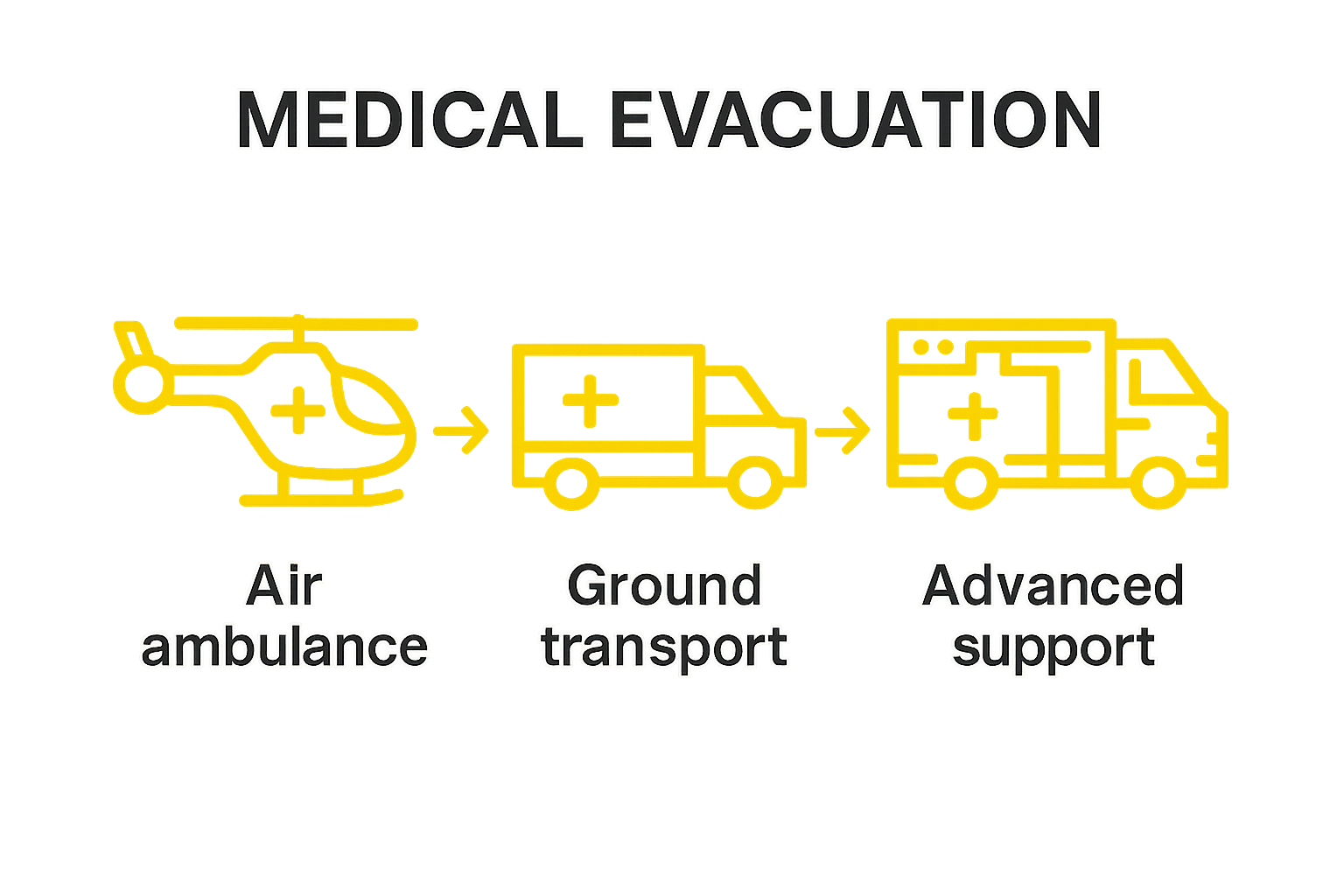
Emergency medical evacuations can occur through multiple transportation modes, each selected based on specific medical requirements and geographical constraints:
-
Air Ambulance: Utilising helicopters or fixed-wing aircraft for rapid long-distance medical transport
-
Ground Ambulance: Suitable for shorter distances or regions with challenging aerial access
-
Specialised Medical Transport: Involving customised vehicles with advanced life support equipment
For travellers and expatriates, understanding emergency medical evacuation is crucial. Read our comprehensive guide on medical evacuation procedures for travellers and expats to gain deeper insights into this critical service.
The complexity of emergency medical evacuation requires significant coordination between medical professionals, transport specialists, and communication experts to ensure patient safety and optimal medical outcomes.
Below is a table comparing the different types of emergency medical evacuation transport options mentioned in the article, outlining their uses and situations where each is most appropriate.
| Transport Type | Description | Typical Use Cases |
| Air Ambulance | Helicopters or fixed-wing aircraft equipped for medical care | Long distances, remote or inaccessible locations |
| Ground Ambulance | Road vehicles with medical team and equipment | Shorter distances, urban settings, difficult aerial access |
| Specialised Medical Transport | Custom vehicles with advanced life support systems | Patients requiring intensive care, complex evacuations |
Why Emergency Medical Evacuation Matters
Emergency medical evacuation plays a pivotal role in protecting human life during critical medical situations, particularly when individuals find themselves in remote or medically underserved regions. Research indicates that prompt medical intervention can significantly reduce mortality and long-term health complications.
Life-Saving Intervention in Critical Scenarios
The importance of emergency medical evacuation extends far beyond simple transportation. In scenarios where local medical facilities lack advanced equipment or specialised expertise, medevac services become the primary lifeline for patients facing complex medical emergencies. Whether dealing with severe trauma, critical illnesses, or unexpected medical complications, these services ensure patients receive timely and appropriate medical treatment.
Key circumstances where emergency medical evacuation becomes crucial include:
-
Remote geographical locations with limited medical infrastructure
-
Situations requiring specialised medical interventions not available locally
-
Medical emergencies during international travel or work assignments
-
Regions experiencing natural disasters or significant healthcare disruptions
Global Health and Personal Security
Beyond immediate medical needs, emergency medical evacuation represents a critical component of personal health security for travellers, expatriates, and professionals working in challenging environments. The potential financial and medical risks of being stranded without proper medical support can be catastrophic.
The economic implications of emergency medical evacuation are substantial. Without proper medical transport, individuals might face:
-
Exponential medical treatment costs
-
Potential long-term health complications
-
Risk of permanent disability or life-threatening outcomes
Explore our comprehensive guide on understanding emergency evacuation procedures to gain deeper insights into protecting yourself during unexpected medical emergencies.
Ultimately, emergency medical evacuation matters because it represents more than a service—it is a critical lifeline that bridges the gap between medical vulnerability and comprehensive healthcare, ensuring individuals receive the right medical attention at the right time, regardless of their location.
How Emergency Medical Evacuation Works
According to global health guidelines, emergency medical evacuation operates through a complex, meticulously coordinated system involving multiple professional stakeholders to ensure patient safety and optimal medical care.
Initial Assessment and Activation
The emergency medical evacuation process begins with a comprehensive medical assessment to determine the urgency, patient condition, and most appropriate transportation method.
Medical professionals evaluate critical factors such as:
-
Patient’s current medical stability
-
Specific medical equipment required during transport
-
Distance and geographical challenges of evacuation
-
Potential risks and necessary medical interventions
Immediate communication between local medical providers, evacuation coordinators, and receiving healthcare facilities is crucial during this initial stage. This ensures a seamless transfer of critical patient information and preparation of receiving medical teams.
Transportation and Medical Support
Once the evacuation is deemed necessary, a specialised medical transport team is mobilised. This team typically includes:
-
Experienced emergency medical technicians
-
Specialised physicians or nurses
-
Transport coordination experts
-
Communication specialists
The transport mechanism is carefully selected based on patient condition, distance, and available resources. This might involve air ambulances, specialised ground vehicles, or a combination of transportation modes to ensure the safest possible patient transfer.
Continuous Medical Monitoring
Throughout the evacuation process, continuous medical monitoring is paramount. Medical professionals provide ongoing care, managing potential complications and maintaining patient stability. Advanced medical equipment onboard evacuation vehicles allows for real-time health tracking and immediate intervention if required.
Learn more about medical evacuation procedures for international travellers to understand the intricate processes that save lives in critical situations.
The success of emergency medical evacuation depends on rapid decision-making, professional expertise, and a well-coordinated international healthcare response system that prioritises patient survival and recovery.
Key Concepts Related to Emergency Medical Evacuation
Medical evacuation protocols encompass a complex set of technical, medical, and logistical concepts that ensure effective patient transport and care during critical medical situations.
Essential Terminology and Definitions
Understanding the specialised language surrounding emergency medical evacuation is crucial for comprehending its intricate processes. Key terminologies include:
-
Aeromedical Evacuation: Specialized medical transport using aircraft for patients requiring urgent medical intervention
-
En Route Care: Continuous medical treatment provided during the transportation process
-
Triage: Medical prioritization system for assessing and categorizing patient urgency
-
Medical Stabilization: Preparing a patient for safe transportation by managing their immediate medical condition
Precise medical classification determines the approach and resources allocated during emergency medical evacuations, making these definitions critically important for healthcare professionals and patients alike.
The following table defines key concepts and terminology used throughout the article to help clarify the specialised language associated with emergency medical evacuation.
| Term | Definition |
| Aeromedical Evacuation | Specialised medical transport using aircraft for patients requiring urgent care |
| En Route Care | Continuous medical treatment provided during the transportation process |
| Triage | System for prioritising patients based on urgency of their medical condition |
| Medical Stabilisation | Preparing a patient for transport by managing immediate medical needs |
Critical Decision-Making Frameworks
Emergency medical evacuation involves sophisticated decision-making processes that balance multiple complex factors. Medical teams must simultaneously consider:
-
Patient medical condition and stability
-
Available medical resources
-
Transportation infrastructure
-
Potential risks during transport
-
Distance to advanced medical facilities
Advanced Medical Preparation
Successful emergency medical evacuations require extensive preparation and specialized equipment. This involves:
-
Portable advanced life support systems
-
Specialized medical communication technologies
-
Customised medical transport vehicles
-
Trained multidisciplinary medical response teams
Explore our comprehensive guide on medical evacuation procedures for international travellers to gain deeper insights into these critical medical transport strategies.
These interconnected concepts demonstrate the remarkable complexity and precision required in emergency medical evacuation, highlighting the critical role of advanced medical knowledge, technological infrastructure, and rapid decision-making in saving lives.
Protect Yourself with Expert Medical Evacuation Support
If reading about emergency medical evacuation made you worry about unexpected health crises away from home, you are not alone. Many travellers and expats face the challenge of accessing advanced healthcare during a sudden illness or accident. Without proper support, you risk high medical bills, uncertainty about care, and separation from loved ones during a critical time. The article explains concepts like aeromedical evacuation and triage, but true peace of mind comes when you have a solid safety net in place.

Take control of your future health outcomes with insurance designed for emergencies just like these. At Unparalleled Global Benefits, we provide comprehensive expat medical and travel insurance, including coverage for emergency medical evacuation. By choosing the right plan, you gain rapid access to specialised care and immediate support wherever you are in the world. Learn more about our solutions by visiting our main site and discover how to protect yourself and your loved ones before the unexpected happens.
Frequently Asked Questions
What is emergency medical evacuation?
Emergency medical evacuation is a medical transport service designed to swiftly move patients from remote locations with limited medical facilities to healthcare centres that can provide advanced treatment.
What are the types of medical evacuation?
Emergency medical evacuations can occur through air ambulances, ground ambulances, or specialised medical transport, depending on the patient’s medical needs and geographical conditions.
Why is emergency medical evacuation important?
It provides a critical lifeline for individuals facing severe medical emergencies in remote areas, ensuring they receive timely and appropriate medical attention that can save lives and minimise health complications.
How does the emergency medical evacuation process work?
The process begins with a comprehensive medical assessment and coordination between medical professionals and transport specialists, followed by the transportation of the patient with continuous medical monitoring during the journey.