
On a £1,000 trip, budget roughly a few dozen pounds for cover. The exact figure moves with your age, destination, and how much protection you want, but that range gives you a workable starting point before you get a quote.
TL;DR:
- Travel insurance usually costs around 4% to 8% of the trip price, with the average being 6% to 7%, but the percentage decreases for larger trips.
- Higher coverage limits, especially for emergency evacuation, cancellation, and pre-existing conditions, significantly raise the premium, particularly for older travelers or high-risk destinations.
- Insuring a trip with expensive prepaid components or trips to countries with costly healthcare can substantially increase the policy cost.
- Comparing at least three quotes, increasing the excess, or using annual multi-trip policies can lower overall expenses, especially for frequent travelers.
- Declaring medical conditions early and accurately, along with checking existing coverage, helps prevent unexpected costs and avoids claim issues.
Table of Contents
- What does travel insurance cost for a typical trip?
- What factors affect travel insurance cost?
- Which coverage limits push the price up most?
- How can you reduce your travel insurance cost?
- Who backs this cost guidance?
- When is travel insurance actually worth the cost?
- Get a tailored travel insurance quote
- Sources
- FAQ
What does travel insurance cost for a typical trip?
The percentage-of-trip-cost rule holds up well across the industry, but it isn’t flat. NerdWallet’s analysis puts the average at around 6% to 7% of trip cost, with quotes ranging from 4% to 16% depending on your age, health, and the cover level you pick. Data from Forbes Advisor shows something worth knowing before you shop: the percentage actually falls as your trip gets more expensive. A $1,000 trip might cost around $67 to insure (about 7%), while a $20,000 trip could average $845, or roughly 4%.
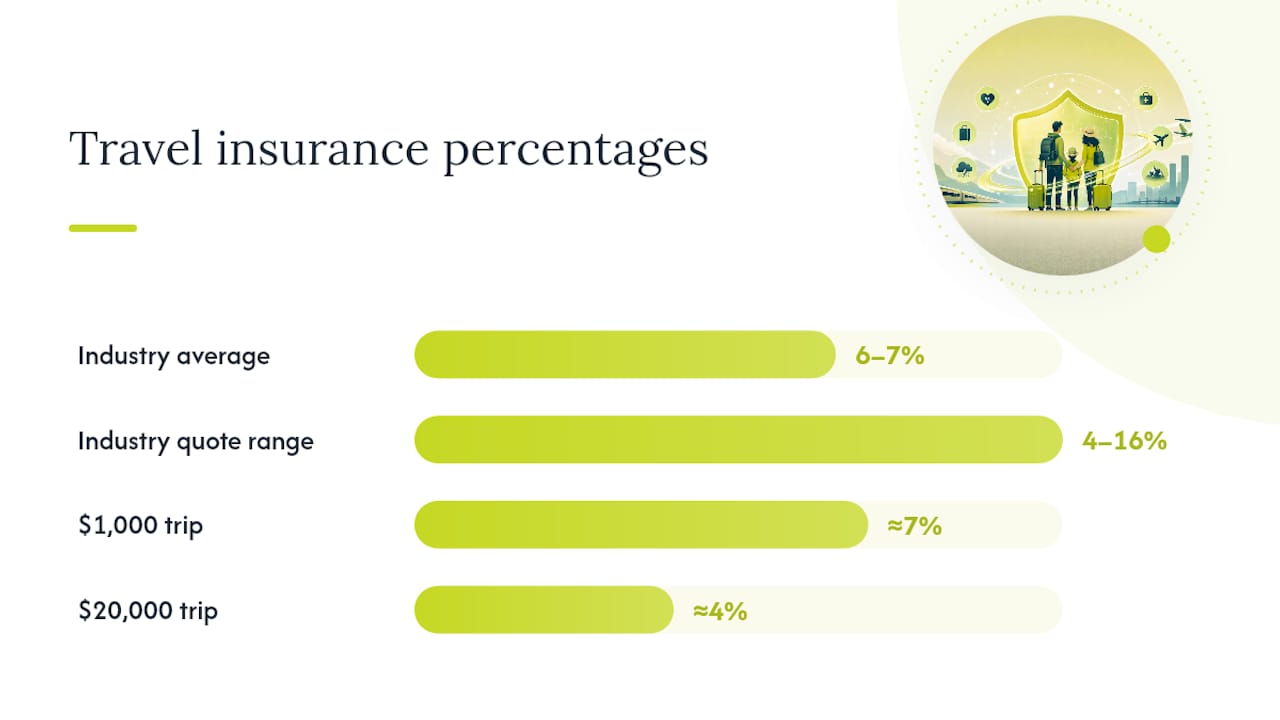
Why the drop? Insurers build in fixed administrative costs regardless of trip size, so those costs shrink as a share of a larger premium base. Experian’s reporting on SquareMouth data frames the realistic range as 4% to 10%, with destination risk and planned activities pushing some quotes toward the top of that band.
A few structural differences matter beyond trip cost alone:
- Single-trip policies price against that one journey’s total cost and dates.
- Annual multi-trip policies charge a flat yearly premium, which tends to be far more economical if you travel more than twice a year.
- Travel medical-only policies, aimed at people who just need emergency health cover rather than cancellation protection, average around $5 per day rather than a percentage of trip cost.
That last option matters if your trip involves little prepaid, non-refundable spending. Paying by the day for medical protection alone can be considerably cheaper than a full comprehensive policy priced against an expensive flight or cruise.
What factors affect travel insurance cost?
Insurers price risk, not convenience, so every question on a quote form is really asking: how likely is this person to make a claim, and how much might it cost? Six factors do most of the work:
- Age. Premiums climb steadily after 65 and again after 70, reflecting higher medical claim likelihood.
- Destination. Countries with expensive private healthcare, or higher medical evacuation costs, push premiums up regardless of your age.
- Trip length. Longer trips mean more days of exposure to illness, injury, or cancellation risk, and annual policies often cap per-trip duration at 30 to 45 days.
- Coverage level chosen. Higher medical, cancellation, and evacuation limits all increase the premium, sometimes sharply.
- Activities and claims history. Winter sports, scuba diving, and other higher-risk pursuits typically require an add-on or a separate policy tier.
- Excess level. A higher excess lowers your premium because you absorb more of any claim yourself.
Pre-existing medical conditions deserve their own mention: insurers usually ask detailed questions about diagnosis, treatment, and stability, and a loading (an increase applied to your premium) is common rather than exceptional.
Pro Tip: Before comparing quotes, write down your exact travel dates, destinations, and total prepaid trip cost. Insurers quote differently based on precise inputs, and vague estimates almost always produce inaccurate comparisons.
Which coverage limits push the price up most?
Not every part of a policy affects price equally. Medical cover tends to move in tiers, and jumping from a basic limit to a higher one (say, from $50,000 to $250,000 in medical coverage) can noticeably raise your premium, particularly for older travellers or higher risk destinations.
A few elements consistently drive bigger jumps:
- Emergency evacuation and repatriation cover is often the single most expensive line item, because medical flights and specialist transport can run into tens of thousands of pounds.
- Cancellation and trip interruption limits scale with how much of your trip is non-refundable; insuring a £5,000 prepaid cruise costs more than insuring a £500 refundable booking.
- Pre-existing condition cover usually carries a specific loading rather than a blanket increase, and some conditions require separate underwriting.
- Cancel For Any Reason (CFAR) add-ons are among the priciest upgrades available, often adding a meaningful percentage on top of your base premium in exchange for flexibility standard policies don’t offer.
Forbes Advisor’s analysis notes that raising coverage limits or adding CFAR can increase your premium disproportionately compared with simply insuring a more expensive trip. The lesson is straightforward: decide what you genuinely need protection against before you start adding optional extras.
How can you reduce your travel insurance cost?
You don’t have to accept the first quote, and you don’t have to strip out cover you actually need to save money. A few practical steps make a real difference:
- Get at least three quotes before deciding. Price dispersion for near-identical trips is common, and MarketWatch’s research confirms averages near $200 hide wide variation between providers.
- Raise your excess if you can afford the risk. Citizens Advice notes typical excess amounts fall between £50 and £100, and choosing a higher figure lowers your premium.
- Check existing cover first. Many credit cards and home insurers already include some baggage or travel cover, and comparing your current medical plans can reveal duplicate protection you’re paying for twice.
- Switch to annual multi-trip cover if you travel often. Calculate your break-even point by comparing what several single-trip premiums would cost against one annual policy.
- Declare pre-existing conditions honestly and early, or look at a specialist policy built around them rather than paying a generic loading.
Pro Tip: If you’re insuring a family, get quotes both as a single family policy and as separate individual policies. Bundling isn’t always cheaper once children’s ages and health questions are factored in.
Who backs this cost guidance?
A specialised international insurance solutions provider publishes detailed explanatory content to help people budget accurately before they buy. This guide was written by Coert, drawing on published industry cost analyses and consumer guidance to give you a realistic, unbiased view of what a policy should cost.
If you’re arranging cover for an older relative, UGB works with Ekta to arrange travel insurance for seniors up to 100 years old. Click here and use promo code “UGB” for an additional 10% discount.
Before requesting a quote, have these details ready:
- Exact travel dates and destinations
- Total prepaid trip cost
- Ages of everyone travelling
- Any medical conditions requiring disclosure
Watch this short explainer for more context:
When is travel insurance actually worth the cost?
Travel insurance earns its keep when your trip involves significant prepaid, non-refundable costs, or when you’re heading somewhere without reciprocal healthcare arrangements with your home country. Seniors and travellers with existing medical conditions should expect higher premiums, but skipping cover in those cases is usually the costlier mistake. For a cheap, fully refundable weekend trip, weigh the premium honestly against what you’d actually stand to lose.
— Coert
Get a tailored travel insurance quote
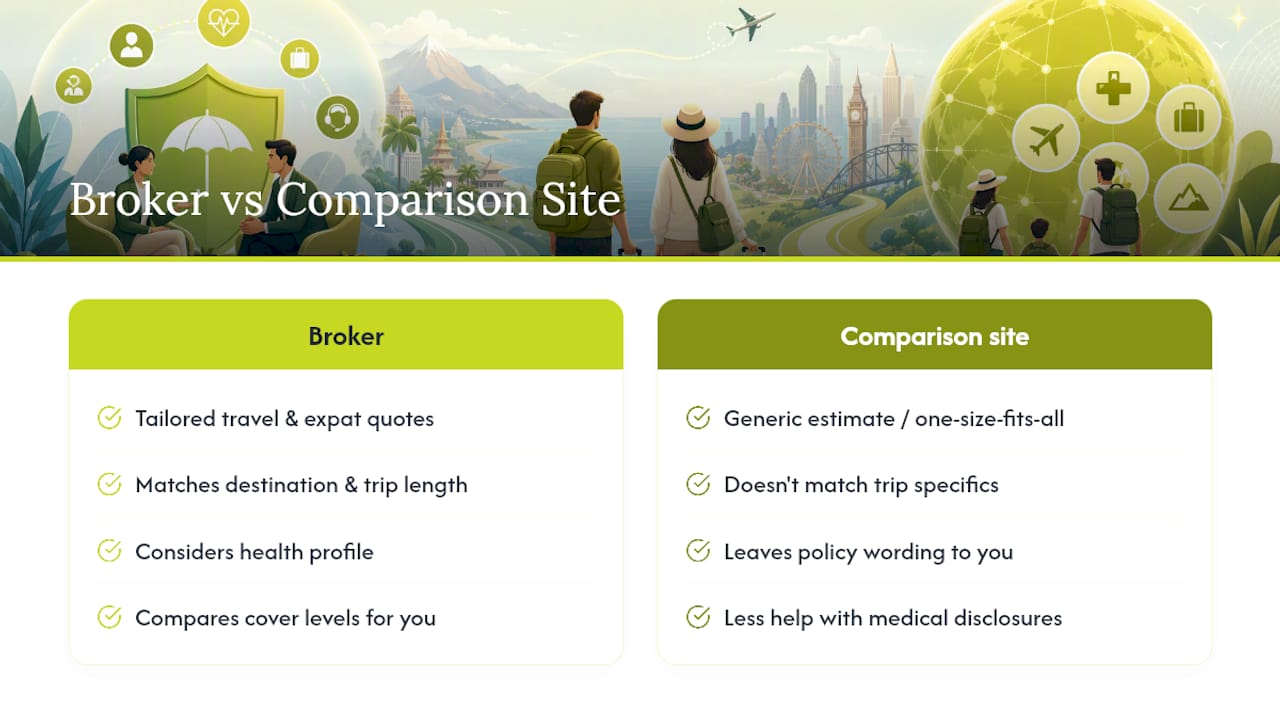
Working out the right percentage is only half the job. The harder part is matching coverage limits, excess, and medical disclosures to your actual trip, which is exactly where a specialist broker earns its keep over a generic comparison site. A specialist broker arranges tailored travel and expat insurance quotes, matching you to a policy built around your destination, trip length, and health profile rather than a one-size-fits-all product.
Whether you need standard travel insurance for a single holiday or something built for pre-existing medical conditions, a broker can compare cover levels for you rather than leaving you to interpret policy wording alone. And if you’re planning travel for a parent or grandparent, UGB and Ekta arrange cover for seniors up to 100 years old, with an additional 10% off using promo code “UGB”.
Request a quote through Unparalleledglobalbenefits’ travel insurance page today and get a comparison based on your actual trip details, not a generic estimate.
This article is general information, not a substitute for advice from a qualified financial advisor. Consult a qualified financial professional about your own circumstances before acting on anything here.
Sources
- How Much Is Travel Insurance? – NerdWallet
- How Much Does Travel Insurance Cost in 2026? – Forbes Advisor
- Average cost of travel insurance — Experian
- Getting travel insurance — Citizens Advice
FAQ
How much does travel insurance typically cost?
Most policies cost 4% to 8% of your total trip cost, with averages centring around 6% to 7% according to NerdWallet. A £1,000 trip typically costs £40 to £80 to insure.
How much should you be paying for travel insurance?
You should aim for a quote within the 4% to 10% range of your trip cost, adjusted for your age, destination, and coverage level. Comparing several quotes from Unparalleledglobalbenefits or another broker helps confirm you’re not overpaying for equivalent cover.
What does Martin Lewis say about travel insurance?
Consumer advice commonly echoed by UK money experts, including guidance from Citizens Advice, stresses checking existing cover through credit cards or home insurance before buying a new policy, and always declaring medical conditions honestly to avoid invalidating a claim.
What medical conditions are not covered by travel insurance?
Standard policies typically exclude undeclared pre-existing conditions and conditions diagnosed or treated shortly before travel unless specifically declared and accepted by the insurer. Specialist policies exist for travellers with ongoing health conditions who need broader cover.
Is annual multi-trip insurance cheaper than single-trip cover?
For travellers making more than two trips a year, annual multi-trip policies are often more economical than buying single-trip cover each time, though most annual policies cap individual trips at 30 to 45 days.