

Travelling or living abroad can be thrilling, but facing a medical emergency in an unfamiliar place changes everything. Here is something many people miss: over 60 percent of standard travel insurance policies fail to cover emergency medical evacuations across international borders. Most think local hospitals or simple travel insurance are enough for any crisis, but the real safety net comes from understanding how to prepare for and navigate medical evacuation procedures. This could save your life when the unexpected happens far from home.
Table of Contents
- Understanding Medical Evacuation Procedures Abroad
- Key Steps in the Medical Evacuation Process
- How to Prepare for a Medical Evacuation
- Essential Contacts and Resources for Medical Evacuations
Quick Summary
| Takeaway | Explanation |
| Prepare essential medical documentation | Gather comprehensive medical history and emergency contacts to facilitate care during evacuation. |
| Ensure adequate insurance coverage | Verify that your travel insurance includes medical evacuation services for emergencies abroad. |
| Know local emergency contacts | Compile local medical services and embassy numbers to ensure swift communication during a medical crisis. |
| Assess medical stability before transport | A thorough medical evaluation is crucial to determine if evacuation is safe and feasible. |
| Establish a communication plan | Create a clear emergency communication strategy that includes multiple contact numbers and documentation. |
Understanding Medical Evacuation Procedures Abroad
Medical evacuation procedures represent a critical safety net for travellers and expatriates encountering serious medical emergencies while abroad. These complex logistical operations ensure individuals receive appropriate medical care when local healthcare facilities cannot provide adequate treatment.
The Fundamental Process of Medical Evacuation
The medical evacuation process begins with a comprehensive assessment of the patient’s medical condition and immediate healthcare requirements. Our guide on emergency medical support highlights the critical initial steps that determine whether evacuation is necessary.
According to the U.S. Department of State, medical evacuation typically involves multiple stakeholders including local physicians, insurance providers, and specialized medical transport services. The attending physician must first confirm the patient’s medical stability for potential air transportation, which serves as a fundamental prerequisite for initiating evacuation procedures.
Key considerations during medical evacuation include:
- Medical Stability: Comprehensive health assessment to determine transportability
- Transportation Method: Selection of appropriate medical transport (air ambulance, commercial flight with medical escort)
- Destination Selection: Identifying the most suitable medical facility for treatment
Critical Documentation and Preparation
Effective medical evacuation requires meticulous documentation and preparation. The Centers for Disease Control and Prevention recommends travellers verify their health insurance coverage for international medical emergencies. This verification process is crucial, as many standard insurance plans do not automatically cover medical evacuation services.
Travellers should prepare comprehensive medical documentation including:
To help you understand the essential documentation needed for a medical evacuation, below is a checklist table summarising the required documents and their status for preparation.
| Document Type | Required? | Prepared (Yes/No) |
| Medical history | Yes | |
| Prescription records | Yes | |
| Vaccination records | Yes | |
| Emergency contacts | Yes | |
| Insurance policy | Yes | |
| Passport and visa | Yes | |
| Local healthcare contacts | Yes |
- Current medical history
- Prescription records
- Emergency contact information
- Insurance policy details
- Passport and visa documentation
Technical Coordination and Logistics
The Divers Alert Network emphasizes the importance of having a structured emergency action plan. This involves establishing communication channels with local emergency medical services, understanding potential search-and-rescue protocols, and having financial provisions for potential evacuation expenses.
Medical evacuation procedures are intricate operations requiring seamless coordination between medical professionals, insurance providers, transportation services, and international regulatory bodies. The process demands rapid decision making, sophisticated logistical planning, and a patient-centered approach to ensure safe and effective medical transport.
Understanding these procedures can significantly reduce stress and uncertainty during medical emergencies abroad, providing travellers with a critical safety mechanism when unexpected health challenges arise.
Key Steps in the Medical Evacuation Process
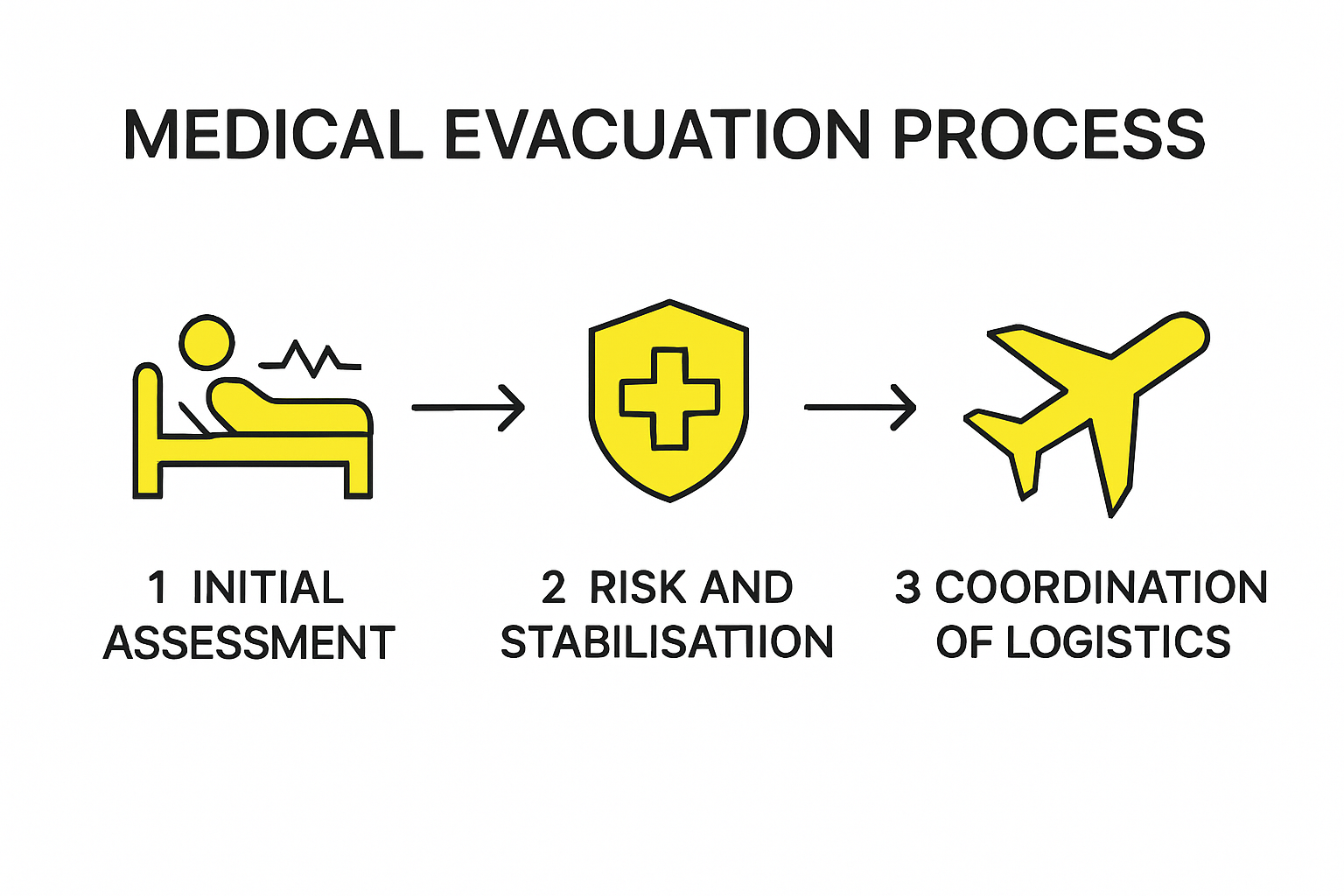
Medical evacuation is a complex and carefully orchestrated process that requires precise coordination and strategic planning to ensure patient safety and effective medical transport. The intricate nature of these procedures demands a systematic approach that prioritizes the patient’s medical needs and logistical requirements.
The following table summarises the key steps involved in the medical evacuation process, giving a clear overview of the actions and considerations at each stage.
| Step | Main Actions | Key Considerations |
| Initial Assessment & Stabilisation | Evaluate condition, stabilise patient | Is patient fit for transport? |
| Coordination & Logistics Preparation | Secure transport, arrange documents, notify parties | Suitable destination, insurance procedures |
| Transportation & Continuous Management | Provide medical care during transit | Ongoing stability, manage complications |
| Arrival & Handover | Transfer to receiving medical facility | Effective transition and communication |
Initial Medical Assessment and Stabilization
The first critical step in medical evacuation begins with a comprehensive medical assessment. According to the Journal of Travel Medicine, this initial phase involves a thorough evaluation of the patient’s medical condition to determine the urgency and feasibility of evacuation. Medical professionals must carefully assess whether the patient is stable enough for transportation and what specific medical interventions might be required during transit.
Key elements of the initial assessment include:
- Medical Condition Evaluation: Detailed examination of the patient’s current health status
- Risk Assessment: Determining potential complications during transportation
- Treatment Stabilization: Preparing initial medical interventions to support patient during evacuation
Coordination and Logistics Preparation
Once the medical assessment is complete, the complex process of coordination begins. The Centers for Disease Control and Prevention highlights the critical importance of precise logistical planning. This stage involves multiple stakeholders including medical professionals, insurance providers, transportation services, and potentially diplomatic representatives.
Our comprehensive guide on emergency medical support provides additional insights into navigating these intricate coordination processes. The preparation phase typically includes:
- Securing appropriate medical transportation
- Identifying suitable receiving medical facilities
- Arranging necessary medical documentation
- Coordinating insurance and financial arrangements
- Preparing specialized medical equipment for transport
Transportation and Continuous Medical Management
The final stage of medical evacuation involves the actual transportation of the patient. This requires specialized medical transport services equipped to provide continuous medical care during transit. Depending on the patient’s condition, this might involve air ambulances, specially equipped commercial flights, or other medical transport options.
Continuous medical management during transportation is crucial. Medical professionals must be prepared to handle potential complications, maintain patient stability, and provide immediate interventions if required.

The transport team must be equipped with appropriate medical equipment, medications, and expertise to manage the patient’s specific medical needs.
Medical evacuation is more than just moving a patient from one location to another. It represents a complex, carefully choreographed process that demands medical expertise, logistical precision, and a patient-centered approach. Understanding these key steps can help travelers and expatriates better prepare for potential medical emergencies and appreciate the sophisticated mechanisms designed to ensure their safety and well-being abroad.
How to Prepare for a Medical Evacuation
Preparing for a potential medical evacuation is a critical aspect of responsible international travel and expatriate living. Proactive planning can significantly reduce stress and complexity during medical emergencies abroad, ensuring faster and more effective response when unexpected health challenges arise.
Documentation and Medical Information Preparation
Comprehensive documentation serves as the foundation of medical evacuation preparedness. Our guide on emergency medical support emphasizes the importance of organizing critical medical information before traveling.
According to the U.S. Department of State, travelers should compile and securely store the following essential documents:
- Comprehensive medical history
- Current prescription medication details
- Vaccination records
- Emergency contact information
- Insurance policy documentation
- Passport and visa copies
- Local healthcare provider contact details
The Centers for Disease Control and Prevention recommends creating digital and physical copies of these documents, ensuring accessibility in various scenarios.
Insurance and Financial Preparation
Securing appropriate medical evacuation insurance is paramount for international travelers. The Travel Medicine and Infectious Disease journal highlights that comprehensive travel insurance should explicitly cover medical evacuation expenses.
Key considerations for insurance preparation include:
- Verifying international medical evacuation coverage
- Understanding policy limitations and exclusions
- Confirming direct billing or reimbursement procedures
- Checking coverage for pre-existing medical conditions
- Ensuring insurance is valid in the specific geographic regions of travel
Health and Logistical Readiness
Beyond documentation and insurance, physical and logistical preparation is crucial. This involves a holistic approach to health risk management and emergency preparedness.
Practical steps for medical evacuation readiness include:
- Obtaining recommended vaccinations
- Carrying a basic medical emergency kit
- Learning basic local language medical terminology
- Researching nearby medical facilities in travel destinations
- Establishing communication protocols with family and emergency contacts
Medical evacuation preparation is not about anticipating disaster but about creating a safety net that provides peace of mind. By investing time in comprehensive planning, travelers can mitigate potential risks and ensure they have robust support systems in place during unexpected medical situations abroad.
Remember, effective preparation transforms potential medical emergencies from overwhelming challenges into manageable situations, allowing travelers to focus on recovery and well-being.
Essential Contacts and Resources for Medical Evacuations
Navigating medical emergencies abroad requires a strategic approach to identifying and accessing critical resources. Understanding the essential contacts and support networks can mean the difference between a challenging medical situation and a well-managed evacuation process.
Government and Diplomatic Contacts
Diplomatic missions play a crucial role in medical evacuation support. Our comprehensive guide on emergency medical support emphasizes the importance of knowing your local embassy or consulate contacts.
Key government resources include:
- Local Embassy/Consulate: Primary point of contact for citizens in medical distress
- Foreign Ministry Assistance Services: Providing guidance and potential support for medical emergencies
- Diplomatic Medical Liaison Offices: Coordinating complex medical evacuation scenarios
The U.S. Department of State recommends registering with your national diplomatic mission before traveling, which enables faster communication during emergencies.
Medical and Emergency Service Contacts
Compiling a comprehensive list of medical and emergency contacts is fundamental to effective medical evacuation preparation. International travelers should develop a multi-layered contact network that includes local and international resources.
Essential medical and emergency contacts include:
- Local emergency medical services
- International medical evacuation providers
- Global emergency assistance hotlines
- International health insurance emergency contact numbers
- Air ambulance and medical transport services
- Translation and medical communication services
Insurance and Support Network Coordination
Effective medical evacuation relies on seamless communication between various stakeholders. International health insurance providers often offer 24/7 global support centres that can coordinate complex medical evacuations.
Key coordination elements involve:
- Establishing direct communication channels with insurance providers
- Understanding pre-authorization procedures for medical evacuations
- Maintaining updated medical and insurance documentation
- Creating a designated emergency contact who can act on your behalf
- Keeping digital and physical copies of critical medical information accessible
The World Health Organization recommends developing a personal emergency communication plan that includes:
- Multiple emergency contact numbers
- Insurance provider emergency contacts
- Local medical facility information
- Family or designated emergency representatives
Medical evacuation preparedness is not about anticipating disaster but creating a robust support system. By proactively establishing these essential contacts and resources, travelers can transform potential medical emergencies from overwhelming challenges into manageable situations, ensuring swift and effective medical support when it matters most.
Frequently Asked Questions
What is the medical evacuation process for travellers?
Medical evacuation involves a thorough assessment of the patient’s medical condition, coordination with various medical and transport services, and transporting the patient to a suitable medical facility when local healthcare cannot provide adequate treatment.
How can I prepare for a potential medical evacuation?
To prepare for a medical evacuation, compile comprehensive medical documentation, verify that your travel insurance includes medical evacuation coverage, and establish emergency contacts and communication plans.
What documentation is needed for medical evacuation?
Essential documentation includes a current medical history, prescription records, vaccination records, emergency contact information, insurance policy details, passport and visa copies, and local healthcare provider contact details.
Why is adequate insurance coverage important for medical evacuation?
Adequate insurance coverage is crucial because many standard travel insurance policies do not cover medical evacuation. It ensures that you have the financial means to access necessary medical transport and care abroad.
Protect Your Peace of Mind Abroad – Secure Medical Evacuation with Confidence
When facing a medical emergency overseas, uncertainty about your safety and access to quality care can be overwhelming. As discussed in this guide, many travellers and expats are caught unprepared without critical documentation or the right insurance coverage for medical evacuations. Gaps in standard travel insurance put both your health and finances at risk, especially when local resources cannot provide advanced treatment.

Experience true peace of mind by choosing expert protection for your global journey. Unparalleled Global Benefits specialises in expat medical and travel insurance that offers reliable medical evacuation solutions. Act now to ensure you are not left vulnerable abroad. Visit our website to explore plans designed for your unique needs. Take the next step towards safer travels today.
Recommended
- What Is Accident Coverage? Essential Guide for World Travellers – Unparalleled Global Benefits
- Qué hacer en caso de accidente en el extranjero 2025 – Unparalleled Global Benefits
- Mental Health and Travel Insurance: Essential Guide for Travellers – Unparalleled Global Benefits
- Types of Travel Insurance: Essential Cover in 2025 – Unparalleled Global Benefits
- Ultimate Vacation Planning Checklist for 2025: US Travelers Guide – Yopki