

TL;DR:
- Travel insurance for seniors over 70 must prioritize high medical and evacuation coverage due to increased health risks. It is essential to buy within 14–21 days of the first trip deposit to secure pre-existing condition waivers. Premiums increase with age and destination, making comparison and early purchase critical for comprehensive protection.
Travel insurance for seniors over 70 is a specialised form of travel health insurance designed to address the heightened medical risks, pre-existing conditions, and higher treatment costs that come with travelling at this age. Standard policies built for younger travellers simply do not provide the coverage limits or condition waivers that older travellers need. Experts recommend a minimum of $100,000 in emergency medical coverage for international trips, with $500,000 advised for those with complex health histories or travel to high-cost destinations. Getting this right before you travel is not optional. It is the single most important financial decision you will make for your trip.
What are the essential coverage features seniors over 70 should prioritise?
Primary medical coverage is the most critical feature to look for in any senior travel policy. With primary coverage, the insurer pays your medical bills abroad directly, without requiring you to first submit a claim to your domestic insurer. This matters enormously for seniors on Medicare, because Medicare provides almost no coverage outside the United States. Without a primary policy, you face complicated reimbursement processes at exactly the moment you can least afford the stress.
Medical evacuation coverage deserves equal attention. Evacuation costs range from $100,000 to $300,000 depending on your location, and a policy with only $50,000 in evacuation cover leaves you dangerously exposed. The recommended minimum for international senior travel is $500,000 in evacuation coverage. If you suffer a cardiac event in a remote part of Southeast Asia or southern Europe, that figure is not excessive. It is realistic.
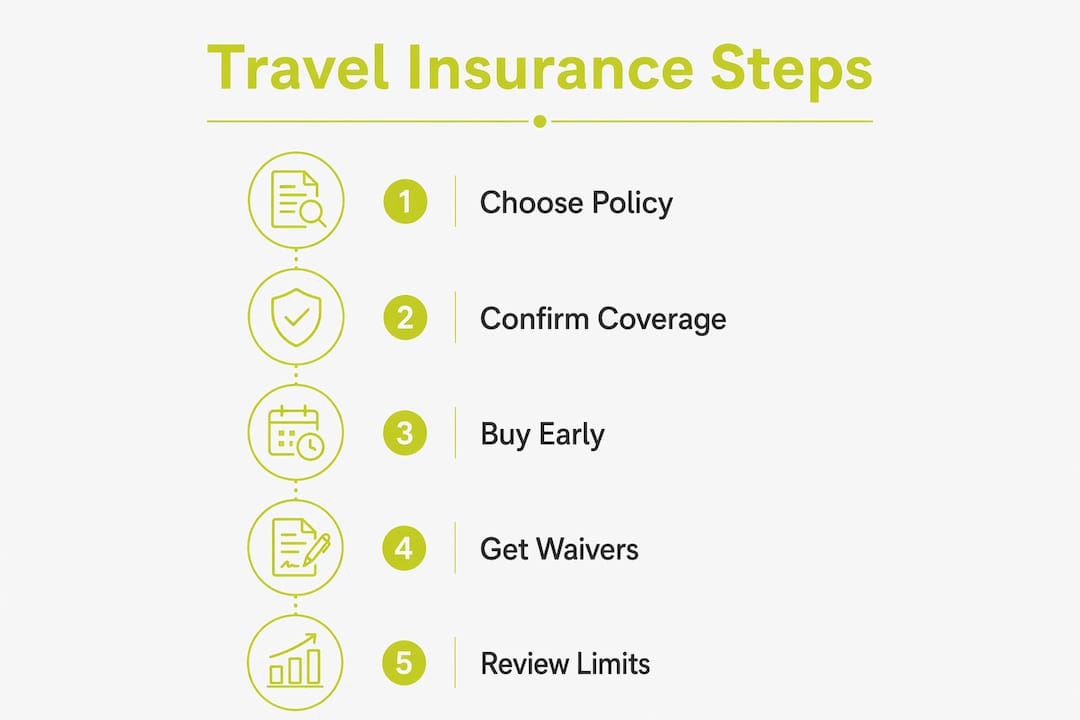
Here are the core coverage features you should confirm before purchasing any policy:
- Primary emergency medical coverage: Minimum $100,000; ideally $250,000 or more
- Medical evacuation: Minimum $500,000 for international travel
- Pre-existing condition waiver: Must be purchased within the required window after your first trip deposit
- Trip cancellation and interruption: Covers non-refundable costs if a health event forces you to cancel or cut short your trip
- 24-hour emergency assistance: A live helpline that can coordinate care and direct payment to hospitals abroad
Trip cancellation cover is particularly valuable for seniors because health unpredictability is higher at this age. A flare-up of an existing condition, a fall, or a sudden hospitalisation can derail plans at any point. Optional add-ons such as Cancel For Any Reason (CFAR) cover give you even greater flexibility, allowing you to cancel for reasons not listed in the standard policy, typically recovering 50–75% of your prepaid costs.
Pro Tip: Always confirm whether your policy is “primary” or “secondary” before purchasing. Secondary policies require you to exhaust your domestic insurance first, which creates delays and complications when you are abroad and need care immediately.
How does age affect travel insurance costs and eligibility?
Premium costs rise significantly with age, and seniors over 70 pay more than any other demographic group. Premiums for seniors over 70 typically range from 8% to 15% of total trip cost, with real quotes for a $6,000, 14-day trip falling between $440 and $606. That range reflects the insurer’s assessment of your age, health history, and destination.

Your destination matters more than many people realise. Travel to the United States, Canada, or Australia carries higher medical cost exposure than travel within Europe, and insurers price accordingly. A trip to Japan or the UAE will attract different rates than the same trip to rural South America. Always get quotes for your specific destination rather than using a general estimate.
| Factor | Impact on premium |
|---|---|
| Age 70–74 | Moderate increase over under-70 rates |
| Age 75–79 | Significant increase; some plans add restrictions |
| Age 80+ | Fewer plans available; higher premiums; some age caps apply |
| Pre-existing conditions | Additional loading or exclusions without a waiver |
| High-cost destination (e.g. USA) | Higher premiums due to medical cost exposure |
Many insurers impose age caps at 79 or 80, meaning coverage either becomes unavailable or is heavily restricted after that point. If you are approaching or past 80, comparing multiple plans is not just advisable. It is necessary to find one that will actually cover you. Unparalleledglobalbenefits works with providers who offer travel insurance for seniors over 80 and beyond.
For seniors who travel more than twice a year, annual multi-trip plans are usually more cost-effective than purchasing separate single-trip policies each time. Annual plans can start at around £95–£150 for younger seniors, though prices increase with age and the level of cover selected. The best annual travel insurance plans for seniors lock in your medical and evacuation limits across all trips for a full year, which simplifies planning considerably.
Pro Tip: Purchase your policy as soon as you make your first non-refundable trip payment. Waiting even a few weeks can cost you the pre-existing condition waiver, which is often the most valuable feature in the entire policy.
What practical steps ensure pre-existing conditions are covered?
The pre-existing condition waiver is the feature most seniors overlook until it is too late. The window to purchase this waiver is typically 14 to 21 days after your first non-refundable trip payment, such as a flight deposit or hotel booking. Missing that window means any claim related to a pre-existing condition will almost certainly be denied, regardless of how stable that condition has been.
Follow these steps to protect yourself:
- Book your policy immediately after your first deposit. Do not wait until your full itinerary is confirmed. The clock starts the moment you make any non-refundable payment.
- Understand what “stable” means in your policy. Most insurers define a condition as stable if there have been no new symptoms, no change in medication, and no new treatment or investigation in the preceding 60 to 180 days. Read this definition carefully.
- Disclose every condition honestly. Non-disclosure is the most common reason claims are denied. List every diagnosed condition, even those you consider minor or well-managed.
- Speak with your GP before travelling. Ask your doctor to confirm in writing that you are fit to travel and that your conditions are stable. This documentation supports any future claim.
- Look for policies with extended waiver windows. Some specialist senior travel insurers offer waiver windows of up to 21 days, or even flexible terms for travellers who book far in advance.
The consequences of missing the waiver window are severe. If you have a heart condition and suffer a cardiac event abroad without a waiver in place, your insurer can legally deny the entire medical claim. Travel health insurance for seniors with a valid pre-existing condition waiver is the difference between a covered claim and a bill that runs into tens of thousands of pounds.
Pro Tip: Set a calendar reminder for the day you make your first trip payment. Label it “Buy travel insurance today.” That single habit will protect you from the most common and costly mistake in senior travel planning.
Why does domestic travel insurance matter for seniors too?
Many seniors assume that domestic travel insurance is unnecessary because their public health cover will protect them at home. This assumption is wrong, and it can be expensive. Domestic travel insurance covers unexpected costs such as emergency transport, trip cancellation, and lost luggage, none of which are typically covered by public health plans.
The risks that make overseas travel insurance for seniors essential apply domestically as well. A medical event far from your local hospital may require an emergency air ambulance, which can cost thousands of pounds and is rarely covered by standard NHS provision for non-emergency transport. If your travelling companion needs accommodation while you are hospitalised, that cost falls entirely on your family without domestic travel cover.
Domestic policies for seniors typically include:
- Emergency medical transport, including air ambulance
- Trip cancellation due to illness before departure
- Companion accommodation if you are hospitalised away from home
- Lost or delayed luggage cover
- Non-refundable deposit protection for cancelled bookings
Domestic coverage protects against costly gaps that most seniors do not anticipate until they face them. A broken hip in a Scottish Highlands hotel is not covered by your travel plans. A domestic travel policy is. Think of it as the same protection you would want abroad, applied to every trip you take within the UK.
Key takeaways
The most effective travel insurance for seniors over 70 combines primary medical coverage of at least $100,000, a $500,000 evacuation limit, and a pre-existing condition waiver purchased within 14–21 days of your first trip deposit.
| Point | Details |
|---|---|
| Prioritise primary medical cover | Primary coverage pays abroad directly, avoiding delays from domestic insurance claims processes. |
| Secure evacuation cover of $500,000 | Evacuation costs can reach $300,000; lower limits leave you financially exposed in a serious emergency. |
| Buy within the waiver window | Purchase your policy within 14–21 days of your first deposit to secure pre-existing condition cover. |
| Compare plans if you are over 75 | Age caps and restrictions increase after 79; comparing multiple plans finds the best available cover. |
| Consider annual plans for frequent travel | Annual multi-trip policies cost less than multiple single-trip policies for seniors travelling twice or more per year. |
What I have learned from years of senior travel insurance
I have spent years helping seniors navigate travel insurance decisions, and the pattern I see most often is this: people focus on price and overlook the features that actually matter. A policy that costs £80 less but carries secondary medical coverage and no pre-existing condition waiver is not a bargain. It is a liability.
The single most underestimated risk in senior travel is medical evacuation. Most people picture a helicopter ride and think it sounds dramatic. In practice, a medically equipped repatriation flight from Southeast Asia or the Caribbean costs more than most people earn in a year. The risks of cardiac events and falls during travel are real and well-documented. Seniors who travel without $500,000 in evacuation cover are taking a risk that no amount of careful planning can offset.
My other strong view is on timing. The 14-to-21-day waiver window is the most consequential deadline in travel insurance, and almost nobody knows it exists until they miss it. I have seen seniors with well-managed diabetes, hypertension, or atrial fibrillation lose their entire claim because they bought their policy three weeks after their deposit. The condition did not change. The timing did. That is a painful and entirely avoidable outcome.
If you travel more than twice a year, look seriously at best annual travel insurance plans for seniors. The cost saving is real, and the convenience of not having to re-disclose conditions for every trip is underrated. Get the right cover once, and travel with confidence for the full year.
— Coert
How Unparalleledglobalbenefits supports senior travellers
Unparalleledglobalbenefits specialises in international health insurance for travellers with complex needs, including seniors over 70 with pre-existing conditions. The platform connects you with plans that carry high medical and evacuation limits, flexible waiver terms, and genuine primary coverage, not the watered-down secondary policies that dominate the general market.

Planning a trip for yourself, a resident, or visiting family? UGB + Ekta can arrange travel insurance for seniors up to 100 years old. Just click here: https://ektatraveling.com/?partner_uid=808 and add the promo code “UGB” to receive an additional 10% discount. For a broader view of your international coverage options, the travel insurance guide on the Unparalleledglobalbenefits site is a practical starting point.
Watch this short video for more guidance on senior travel health cover:
https://youtu.be/bjzvma7Sh1g
FAQ
What is the minimum medical coverage for seniors over 70 travelling abroad?
Experts recommend a minimum of $100,000 in emergency medical coverage for international travel, with $500,000 advised for seniors with complex health histories or travel to high-cost destinations such as the United States.
When must I buy a pre-existing condition waiver?
You must purchase the waiver within 14 to 21 days of your first non-refundable trip payment. Missing this window typically results in automatic denial of any claim related to a pre-existing condition.
Does Medicare cover medical costs abroad?
Medicare provides almost no coverage outside the United States. Seniors travelling internationally require an independent travel medical insurance policy with primary coverage to avoid large out-of-pocket medical bills.
Is travel insurance over 75 harder to obtain?
Cover becomes more restricted after age 75, and many standard plans impose age caps at 79 or 80. Specialist senior travel insurers, including those accessible through Unparalleledglobalbenefits, offer plans for seniors up to 100 years old.
Are annual travel insurance plans worth it for seniors?
Annual multi-trip plans are usually more cost-effective for seniors who travel more than twice a year, often costing less than two separate single-trip policies while providing consistent medical and evacuation limits across all trips.
Recommended
- Holiday insurance for the elderly: 2026 guide – Unparalleled Global Benefits
- Overseas travel insurance for seniors: 2026 guide – Unparalleled Global Benefits
- Travel Medical Insurance for Seniors Over 70 – Ensuring Global Health Security – Unparalleled Global Benefits
- Travel insurance for seniors on Medicare: 2026 guide – Unparalleled Global Benefits