

TL;DR:
- World Trips student insurance offers international students protection against medical emergencies and travel risks during their studies abroad. It covers hospital stays, repatriation, liability, and optional extras, with costs typically ranging from €1 to €2 per day depending on destination and coverage level. Properly choosing a plan that meets visa and university requirements ensures comprehensive protection and avoids costly gaps during emergencies.
World trips student insurance is a specialised travel and health insurance designed to protect international students against medical emergencies and travel risks during their studies abroad. The industry term for this category is international student health insurance, and the two phrases describe the same essential product. A well-chosen plan covers hospitalisation, medical evacuation, repatriation, and personal liability, while also satisfying visa and university compliance requirements. Costs typically range from €1 to €2 per day depending on your destination and the level of cover you select. Choosing the right plan from the start saves you from costly gaps in protection when you need it most.
What does world trips student insurance typically cover?
Student travel insurance is defined by four core coverage pillars: medical emergencies, repatriation, personal liability, and travel protection. Each pillar addresses a distinct risk that students face when living and studying abroad.
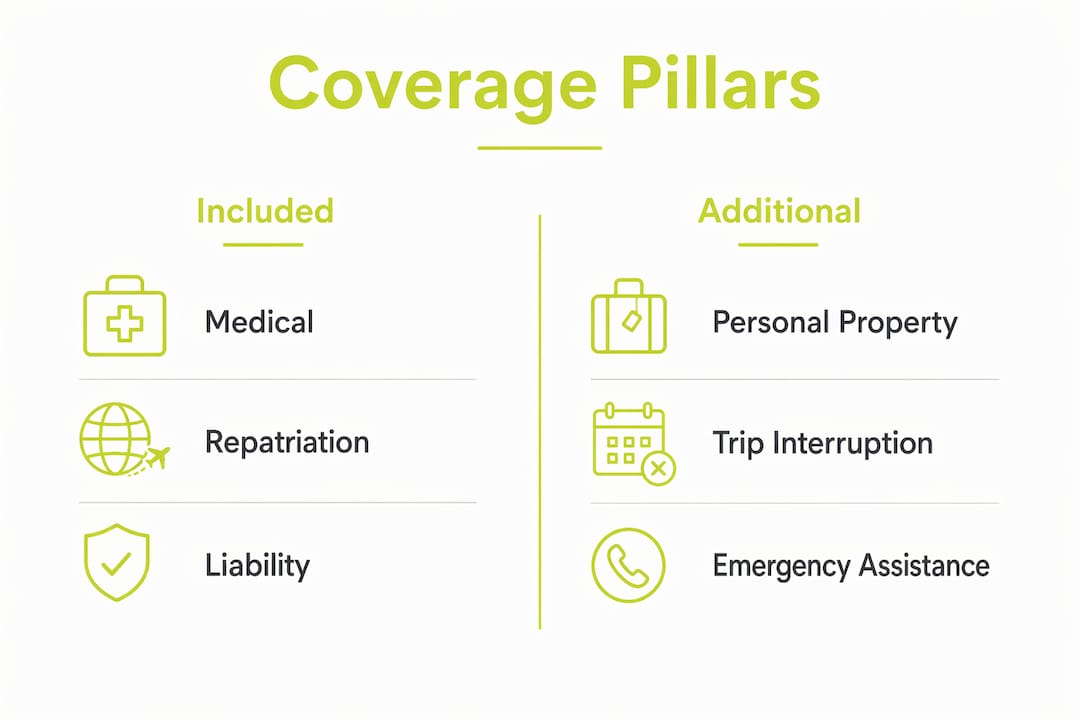
Medical emergency coverage is the foundation of any plan. A solid policy covers inpatient hospitalisation, outpatient consultations, prescription medicines, and emergency dental treatment. The coverage limit matters enormously. Actual cost coverage is the preferred standard for high-cost healthcare countries, because a fixed cap of €100,000 can be exhausted quickly in the United States or Canada. Students heading to North America should prioritise plans that pay actual medical costs rather than capped amounts.
Repatriation and medical evacuation are non-negotiable add-ons for long-haul destinations. Repatriation covers the cost of returning your remains or transporting you home if you suffer a serious illness. Medical evacuation covers emergency transport to the nearest adequate medical facility. These costs can reach tens of thousands of pounds without insurance.
Personal liability protection covers legal costs and compensation if you accidentally injure someone or damage property. Liability coverage is often mandatory and recommended at €1,500,000 to €4,500,000 or above. Baggage protection and trip cancellation are common optional add-ons worth considering for longer study periods.
- Medical emergency cover: hospitalisation, outpatient care, prescriptions
- Repatriation and medical evacuation: essential for destinations outside Europe
- Personal liability: recommended at €1,500,000 minimum
- Baggage and personal effects: optional but valuable for extended trips
- Mental health support: increasingly included in modern student plans
Pro Tip: Check whether your plan offers direct billing to hospitals. A plan that pays the provider directly means you do not need to fund treatment upfront and claim back later, which is critical during a genuine emergency.
How do insurance requirements vary by country and visa?
Insurance requirements for international students differ significantly by destination country and visa type. Checking the rules for your specific location before you buy any policy is the single most important step in the selection process.
United States
The United States has the most detailed federal requirements for student visa holders. US J-1 visa regulations mandate at least $100,000 in medical benefits per accident or illness, $25,000 for repatriation, and $50,000 for medical evacuation, with a maximum deductible of $500. These are federal minimums. Many US universities impose additional requirements through their own Student Health Insurance Plans (SHIPs), and waiver acceptance criteria for private insurance can be rigid and specific. Always check your university’s waiver policy before purchasing a private plan.

F-1 visa holders face different rules. F-1 students are not subject to the same federal minimums as J-1 holders, but their universities typically mandate enrolment in the institutional SHIP or an approved equivalent.
United Kingdom, Germany, and Australia
| Country | Requirement | Approximate Cost |
|---|---|---|
| United Kingdom | Immigration Health Surcharge (IHS) paid with visa application | £1,035 per year |
| Germany | Statutory student health insurance for those under 30 | €120–€130 per month |
| Australia | Overseas Student Health Cover (OSHC) mandatory for visa | Varies by provider and duration |
| Canada | Provincial health plans vary; most universities require supplemental cover | Varies by province and institution |
The UK’s IHS grants access to the NHS, but additional costs apply for prescriptions, dental care, and optical treatment. Students in the UK often purchase supplemental cover to fill these gaps. Germany’s statutory scheme is comprehensive for routine care but may not cover repatriation or travel emergencies outside Germany.
Pro Tip: Never assume that paying the IHS or enrolling in a statutory scheme gives you full travel protection. These schemes cover healthcare in the host country only. You still need separate travel insurance for trips to other countries during your studies.
What does student travel insurance cost and how should you budget?
Student travel insurance is genuinely affordable when you understand what drives the price. Daily costs range from €1 to €2 depending on your destination and the level of cover you select. That translates to roughly €30–€60 per month for a standard plan covering Europe, and more for destinations with expensive healthcare systems.
Several factors push the price up or down:
- Destination: The USA and Canada attract the highest premiums due to healthcare costs.
- Coverage level: Basic plans with high deductibles cost less upfront but expose you to larger out-of-pocket expenses.
- Deductible amount: A plan with a €500 deductible costs less per month than one with a €0 deductible, but you pay more when you make a claim.
- Optional add-ons: Mental health cover, dental, and baggage protection each add to the monthly premium.
- Duration: Longer study periods sometimes attract better monthly rates than short-term plans.
Plans with low premiums but high deductibles can leave students financially exposed when they need frequent medical care. A student with a chronic condition or regular prescriptions will almost always save money with a lower deductible plan, even if the monthly premium is higher.
Underinsurance is the most common and most costly mistake students make. A plan that costs €1 per day but caps medical cover at €30,000 is not adequate for a year in the United States. Spend a few extra euros per day to secure a plan with actual cost coverage and a deductible you can realistically afford to pay.
How to choose the best student insurance plan for your needs
Selecting the right study abroad insurance plan requires a structured approach. Work through these steps before you commit to any policy.
-
Check your visa and university requirements first. Confirm the mandatory minimums for your visa category and your institution’s SHIP waiver criteria. University requirements vary and must be verified directly with the international student office.
-
Match your coverage limit to your destination’s healthcare costs. Students heading to the USA need actual cost coverage, not a fixed cap. Students in Europe can typically manage with lower limits, but repatriation cover remains important everywhere.
-
Evaluate the deductible versus premium trade-off honestly. If you have a pre-existing condition or expect regular medical visits, a low deductible plan is more cost-effective despite the higher monthly premium.
-
Confirm mental health, prescription, and repatriation cover. Modern study abroad insurance plans increasingly include mental health support. Verify that your plan covers therapy sessions and psychiatric care, not just physical emergencies.
-
Check for multi-country coverage. Multi-country travel cover protects you during weekend trips, holidays, and semester breaks across different nations without requiring a separate policy for each destination. This is particularly valuable for students based in Europe who travel frequently.
-
Verify the claims process and direct billing options. A plan that pays hospitals directly removes the burden of upfront payment during a crisis. Check whether your insurer has a 24-hour emergency helpline and a clear digital claims process.
-
Plan for policy expiry and renewal. Long study programmes often extend beyond the initial policy period. Confirm that your plan can be renewed or extended without a new underwriting process, especially if your health changes during your studies.
Pro Tip: Ask your insurer for a certificate of insurance that explicitly states your coverage limits and deductible. Many universities require this document as part of the waiver application process, and having it ready saves weeks of back-and-forth.
For a detailed breakdown of how to compare plans across destinations, the student insurance comparison guide at Unparalleledglobalbenefits covers premiums and costs across multiple countries in one place.
Planning a trip for yourself, a resident, or visiting family? UGB + Ekta can arrange travel insurance for seniors up to 100 years old. Just click here: https://ektatraveling.com/?partner_uid=808 and add the promo code “UGB” to receive an additional 10% discount.
Key takeaways
The most effective approach to world trips student insurance is to verify visa and university requirements first, then match your coverage limit and deductible to the actual healthcare costs of your destination.
| Point | Details |
|---|---|
| Verify requirements early | Check visa minimums and university waiver criteria before purchasing any plan. |
| Match cover to destination | Actual cost coverage is necessary for the USA; fixed caps often fall short in high-cost systems. |
| Deductible trade-offs matter | Low deductible plans cost more monthly but protect students with frequent medical needs. |
| Multi-country cover is valuable | One policy covering multiple nations removes the need for separate plans during travel breaks. |
| Direct billing reduces financial risk | Plans that pay providers directly prevent large upfront costs during medical emergencies. |
Coert’s perspective on student insurance for world trips
Most students I speak with make the same two mistakes. They buy the cheapest plan available, and they assume it covers everything. Neither assumption holds up when a real emergency occurs.
The gap between travel insurance and international student health insurance is wider than most people realise. A basic travel policy might cover a broken leg in Spain. It will not satisfy a US university’s SHIP waiver requirements, and it will not cover six months of outpatient care for a chronic condition. These are fundamentally different products, and conflating them is expensive.
The deductible question is where I see the most financial pain. A student who buys a plan with a $500 deductible to save €10 per month, then visits a US emergency room twice in one semester, has paid that saving back and more. Run the numbers for your actual health situation before you decide.
My strongest advice is this: treat insurance as a compliance document first and a financial safety net second. Get the certificate of insurance your university needs, confirm it meets your visa requirements, and then check whether the underlying cover is genuinely adequate. The international student health insurance guide at Unparalleledglobalbenefits walks through country-specific mandates in detail if you want to go deeper on any destination.
One more thing: check your policy’s expiry date against your return flight. Students who extend their stay informally, for a graduation ceremony or a final trip, often travel uninsured for the last two weeks. That is exactly when something goes wrong.
— Coert
International student insurance options from Unparalleledglobalbenefits
Choosing the right cover for a year abroad does not need to be complicated. Unparalleledglobalbenefits offers international insurance solutions built specifically for students and travellers who need plans that satisfy visa requirements, meet university standards, and provide genuine protection across multiple countries.
Whether you are heading to the United States, Germany, Australia, or anywhere else, the international health insurance guide at Unparalleledglobalbenefits gives you a clear starting point for comparing plan types, coverage limits, and deductible options. You can also explore travel insurance options for shorter trips and semester breaks. Request a quote directly through the site and get a certificate of insurance ready for your university application.
For travel insurance options that include destinations across Latin America, this guide to travel insurance for Mexico is a useful external reference for students planning regional travel.
Watch this short video for more guidance on international student insurance:
https://youtu.be/bjzvma7Sh1g
FAQ
What is world trips student insurance?
World trips student insurance is an international student health insurance product that covers medical emergencies, repatriation, personal liability, and travel risks for students studying or travelling abroad. It is designed to meet both visa requirements and university compliance standards.
How much does student travel insurance cost per day?
Student travel insurance costs generally range from €1 to €2 per day, depending on your destination and the level of coverage you select. Destinations with expensive healthcare systems, such as the United States, attract higher premiums.
What are the US J-1 visa insurance requirements?
US J-1 visa regulations require at least $100,000 in medical benefits per accident or illness, $25,000 for repatriation, $50,000 for medical evacuation, and a maximum deductible of $500. These are federal minimums; your university may impose stricter standards.
Does the UK Immigration Health Surcharge cover everything?
The UK IHS costs £1,035 per year and grants access to the NHS, but it does not fully cover prescriptions, dental care, or optical treatment. Students in the UK often need supplemental cover for these services and for travel outside the country.
Can one student insurance plan cover travel to multiple countries?
Yes. Multi-country student insurance plans cover travel across different nations during weekends, holidays, and semester breaks without requiring separate policies for each destination. This is particularly useful for students based in Europe who travel frequently during their studies.
Recommended
- International students insurance: your 2026 guide – Unparalleled Global Benefits
- International student health insurance: 2026 guide – Unparalleled Global Benefits
- Multi-country travel insurance: your 2026 guide – Unparalleled Global Benefits
- Student travel insurance guide: cover, costs & tips – Unparalleled Global Benefits