

TL;DR:
- Comparing total costs including deductibles and out-of-pocket expenses is essential for choosing private health insurance.
- Focusing only on premiums can be misleading because plan coverage, region, and deductibles greatly impact expenses.
Private health insurance price comparison is defined as the process of evaluating premiums, deductibles, coverage scope, and network inclusion together to identify the most cost-effective policy for your needs. Comparing only monthly premiums is misleading. Total cost must include deductibles, copays, out-of-pocket maximums, and network acceptance. For individuals living or working abroad, this process carries extra weight. Regional coverage choices, plan tiers, and waiting periods can shift your real annual cost dramatically. Getting the comparison right from the start saves you money and protects you when it matters most.
What factors influence private health insurance costs beyond monthly premiums?
The monthly premium is the most visible cost, but it rarely tells the full story. Deductible size is the dominant factor in premium pricing. Balancing your deductible against your expected medical use is the single most powerful lever you have.

For expats, increasing the deductible from $1,000 to $5,000 can reduce premiums by 30–40%. That saving is real, but it comes with higher out-of-pocket exposure if you need significant care. A mid-tier worldwide plan excluding the USA typically costs $155–$240 per month at age 65, which illustrates how deductible choices shift that figure considerably.
Regional coverage is the second major cost driver. Including USA coverage can increase expat international health insurance premiums by 40–80%. If you spend little or no time in the United States, paying for USA inclusion is often money wasted. This is one of the most common and costly oversights in international health cover comparison.
Plan tiers also shape your costs significantly. In Australia, for example, premiums for singles range from around $95 to $360 per month, depending on whether you hold a Basic or Gold policy. Government rebates apply based on income and age, which adds another layer to the true cost calculation. Age at entry and excess choices interact with tier selection to produce a final premium that can vary widely between providers.
Key cost factors to assess when you compare health insurance quotes:
- Deductible (excess): Higher excess lowers your premium but raises your risk if you claim frequently.
- Coverage region: Worldwide including USA costs significantly more than worldwide excluding USA.
- Plan tier: Basic, Silver, and Gold tiers reflect different benefit scopes and price points.
- Age at entry: Premiums rise with age; locking in a plan earlier can limit long-term cost growth.
- Waiting periods: Pre-existing condition clauses affect when you can actually claim, not just what you pay.
Pro Tip: Request quotes at two different deductible levels side by side. The premium difference often reveals whether the higher deductible is genuinely worth the saving for your expected usage.
How do comparison tools help when you compare health insurance quotes?
Comparison platforms let you gather multiple quotes quickly and place them side by side. The best tools go beyond premium display. They show deductibles, copayment structures, network coverage, waiting periods, and annual benefit limits in a single view. That breadth is what makes them genuinely useful for private medical insurance comparison.
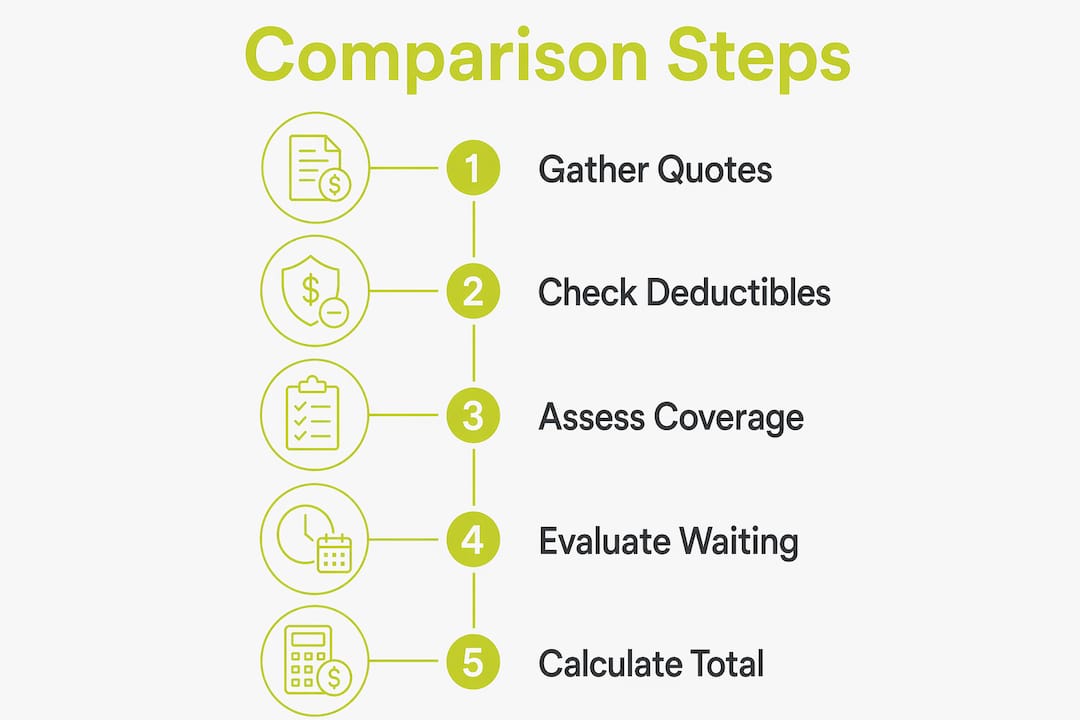
When you use any comparison tool, record these details for every plan you review:
| Feature | What to check |
|---|---|
| Monthly premium | Total cost after any applicable rebate or subsidy |
| Annual deductible | Amount you pay before the insurer contributes |
| Copayment structure | Fixed fee or percentage you pay per consultation or treatment |
| Coverage region | Whether USA is included and which countries are covered |
| Waiting periods | Time before pre-existing conditions are covered |
| Out-of-pocket maximum | The ceiling on your annual personal expenditure |
| Network hospitals | Whether your preferred providers are in-network |
Hidden costs are where many people get caught out. Waiting periods for pre-existing conditions vary between insurers and are regulated differently by country. In India, for instance, regulations introduced in 2024 capped the pre-existing disease waiting period at 36 months, down from 48. That cap matters if you have a chronic condition and need to know when you can claim. Always check the waiting period clause before you commit.
Pro Tip: Use a comparison tool’s filter function to exclude USA coverage if you do not plan to spend time there. The premium drop is often substantial and the coverage you lose is irrelevant to your actual situation.
How to compare medical insurance plans step by step for international cover
A structured method produces far better results than browsing quotes at random. Follow these steps to perform a thorough health cover comparison.
- Assess your health profile and expected usage. List any pre-existing conditions, regular prescriptions, and the frequency of medical visits you anticipate. This shapes which plan tier and deductible level suits you.
- Define your coverage region. Decide whether you need worldwide cover including the USA or a worldwide excluding USA plan. USA-inclusive premiums at age 65 are about 30–50% higher than equivalent plans without USA cover.
- Gather quotes from at least three providers. Use comparison platforms and direct insurer websites. Record each quote in a consistent format so you can compare like with like.
- Calculate your estimated total annual cost. The formula is straightforward: (monthly premium × 12) + estimated out-of-pocket expenses. Simulating low, moderate, and high usage scenarios helps you identify which plan is cheapest across different levels of medical need.
- Check coverage exclusions and network fit. Confirm that your preferred hospitals and specialists are in-network. Verify which treatments are excluded outright.
- Review tariff and benefit structure, not just the brand. In German private health insurance, tariff structure defines benefits and long-term costs more than provider brand or entry premium. This principle applies internationally. A well-structured tariff from a lesser-known insurer can outperform a headline name with a weak benefit schedule.
- Start early. Starting comparisons at least two months before your move date is strongly advised. International underwriting takes time, and delays can leave you without cover from day one.
Use this table to record and compare your shortlisted plans:
| Plan name | Annual premium | Deductible | Region | Waiting period | Estimated annual total |
|---|---|---|---|---|---|
| Plan A | £X,XXX | £X,XXX | Worldwide ex-USA | 0 months | £X,XXX |
| Plan B | £X,XXX | £X,XXX | Worldwide inc. USA | 6 months | £X,XXX |
| Plan C | £X,XXX | £X,XXX | Regional | 12 months | £X,XXX |
Fill in your actual quotes to see the true cost difference between options. The estimated annual total column is the number that matters most. You can find real-world plan examples that illustrate how these figures play out for expats at different ages and locations.
Common mistakes to avoid when comparing private health insurance internationally
The most expensive mistake in any private health insurance comparison is choosing the lowest premium without reading the deductible. A plan with a £200 monthly premium and a £5,000 deductible costs far more than it appears if you need regular care. The premium saving disappears with a single hospital admission.
Watch out for these specific pitfalls:
- Paying for USA coverage you will not use. USA coverage is often a costly addition that many expats do not need. If your life is based in Europe or Asia, exclude it and redirect the saving to a lower deductible.
- Ignoring network restrictions. A plan may cover a procedure in principle but exclude the only hospital in your area that performs it. Always verify network access before signing.
- Overlooking waiting periods. A low premium plan with a 24-month waiting period for pre-existing conditions may leave you unprotected for nearly two years. Check this clause for every plan you shortlist.
- Treating brand as a proxy for value. Brand name alone is a poor indicator of value in private insurance. Tariff and benefit detail determine real performance. A well-known insurer with a weak tariff will disappoint at the point of claim.
- Leaving comparison too late. Waiting until the week before your move creates real risk. International underwriting takes time, and starting at least two months ahead prevents unintentional coverage gaps.
Pro Tip: Read the policy exclusions list before you read the benefits list. Knowing what a plan does not cover is more revealing than knowing what it does.
You can also review types of expat insurance to understand which product category fits your situation before you start comparing prices.
Want a quick visual overview of expat health insurance? Watch this:
https://youtu.be/bjzvma7Sh1g
Key takeaways
Effective private health insurance price comparison requires evaluating total annual cost, including deductibles and out-of-pocket expenses, not just the monthly premium.
| Point | Details |
|---|---|
| Total cost beats headline premium | Calculate (monthly premium × 12) plus estimated out-of-pocket costs to find the true annual figure. |
| Deductible is your biggest lever | Raising your deductible from $1,000 to $5,000 can cut premiums by 30–40%, but increases your risk if you claim often. |
| USA coverage adds 40–80% to premiums | Only pay for USA inclusion if you genuinely expect to use healthcare there. |
| Tariff structure matters more than brand | A well-structured plan from a smaller insurer often outperforms a big-name policy with weak benefit terms. |
| Start comparing two months early | International underwriting takes time; beginning early prevents uninsured gaps from your first day abroad. |
What I have learned from years of international insurance comparisons
The number that actually matters is not on the front page
Most people fixate on the monthly premium because it is the first number they see. After years of working with expats and internationally mobile individuals, I can tell you that the monthly premium is almost never the number that determines whether a plan was good value. The deductible, the network, and the benefit schedule are what you feel when something goes wrong.
I have seen clients choose a plan that saved them £80 per month on premium, only to face a £4,000 deductible on their first hospitalisation. The maths did not work in their favour. The plan that looked expensive on paper was actually cheaper over the year once you factored in what they paid out of pocket.
The other thing I have learned is that timing is not optional. Clients who start comparing plans in the week before their move almost always end up with a gap in cover or a plan they chose under pressure. Two months is the minimum. Three is better. International underwriting is not instant, and rushing it produces poor decisions.
My honest advice: build a simple spreadsheet with three usage scenarios, low, moderate, and high. Drop each plan’s numbers into it. The plan that wins across all three scenarios is almost always the right choice, regardless of what the premium looks like on its own.
— Coert
How Unparalleledglobalbenefits simplifies your international health cover search
Finding the right international health plan takes time, and the variables are genuinely complex. Unparalleledglobalbenefits specialises in exactly this process, helping expats, travellers, and internationally mobile individuals compare plans that match their real coverage needs and budget.
The team at Unparalleledglobalbenefits works across multiple international insurers, which means you get a side-by-side view of plans rather than a single-provider pitch. Whether you need essential cover for expats abroad or a full breakdown of international health insurance options, the platform provides clear guidance and personalised quotes. For a thorough grounding in how international health insurance works before you compare, the complete international health insurance guide is the right starting point.
Planning a trip for yourself, a resident, or visiting family? UGB + Ekta can arrange travel insurance for seniors up to 100 years old. Just click here: https://ektatraveling.com/?partner_uid=808 and add the promo code “UGB” to receive an additional 10% discount.
FAQ
What does private health insurance price comparison actually involve?
Private health insurance price comparison means evaluating premiums, deductibles, copays, coverage regions, and waiting periods together. Comparing premiums alone is misleading because the deductible and out-of-pocket maximum determine your true annual cost.
How much does including USA coverage add to international health insurance premiums?
Including USA coverage increases international health insurance premiums by approximately 40–80%. If you do not plan to use healthcare in the United States, excluding it is one of the fastest ways to reduce your premium.
How far in advance should I start comparing international health insurance plans?
Start your comparison at least two months before your move date. International underwriting takes time, and starting late risks leaving you without cover from your first day in a new country.
Does a higher deductible always mean a better deal?
A higher deductible lowers your monthly premium but raises your financial exposure if you need significant medical care. Raising the deductible from $1,000 to $5,000 can cut premiums by 30–40%, but this only benefits you if your actual medical use remains low.
Is a well-known insurer always the safest choice?
No. Brand name alone is a poor indicator of value in private health insurance. The tariff and benefit structure determine real performance. A lesser-known insurer with a strong tariff often delivers better value than a recognised brand with weak benefit terms.
Recommended
- Compare student health insurance: your 2026 guide – Unparalleled Global Benefits
- Top travel insurance policies: coverage comparisons 2026 – Unparalleled Global Benefits
- Multi-country travel insurance: your 2026 guide – Unparalleled Global Benefits
- How to compare medical insurance plans abroad – Unparalleled Global Benefits