

TL;DR:
- Medical emergencies abroad can cost hundreds of thousands of dollars without insurance.
- Travel insurance covers urgent medical treatment, evacuation, trip cancellation, and personal liability.
- Many travelers rely on credit cards, but these often have significant coverage gaps and exclusions.
Imagine landing in hospital abroad with a bill exceeding $100,000. It sounds unlikely until you read about Alberta travellers facing exactly that after a medical emergency overseas, with insurers covering only a portion due to coverage gaps. Travel insurance is not a luxury or an afterthought. It is the single most important item on your packing list. Whether you are heading to Florida for a fortnight or relocating to Japan for a year, the financial and personal risks of travelling uninsured are far greater than most people realise. This guide walks you through the real costs, the real coverage, and the real gaps so you can travel with genuine confidence.
Table of Contents
- The true cost of emergencies abroad
- What travel insurance really covers (and what it doesn’t)
- Why some travel coverage isn’t enough: The gaps you need to know
- How to choose the right policy for your travel
- What most travellers miss about insurance (that could cost thousands)
- Travel smarter: Secure the right insurance for your next trip
- Frequently asked questions
Key Takeaways
| Point | Details |
|---|---|
| Medical costs abroad are immense | A single emergency can cost you more than a year’s salary if you travel uninsured. |
| Not all insurance is equal | Exclusions, limitations, and timing of purchase can determine whether your policy pays out. |
| Read the fine print | Claim denials are common if you miss details about pre-existing conditions or covered activities. |
| Choose your policy wisely | Carefully match your needs with the right cover, especially for complex or adventure travel. |
The true cost of emergencies abroad
Most travellers assume their domestic health policy will follow them overseas. It almost certainly will not. As the US State Department confirms, standard health insurance typically does not cover treatment abroad, leaving you personally liable for every bill.
The numbers can be staggering. A single night in a US hospital can cost upwards of £5,000. A stroke requiring emergency evacuation from a remote destination can exceed £2 million. These are not worst-case scenarios invented to frighten you. They are documented, real-world outcomes.
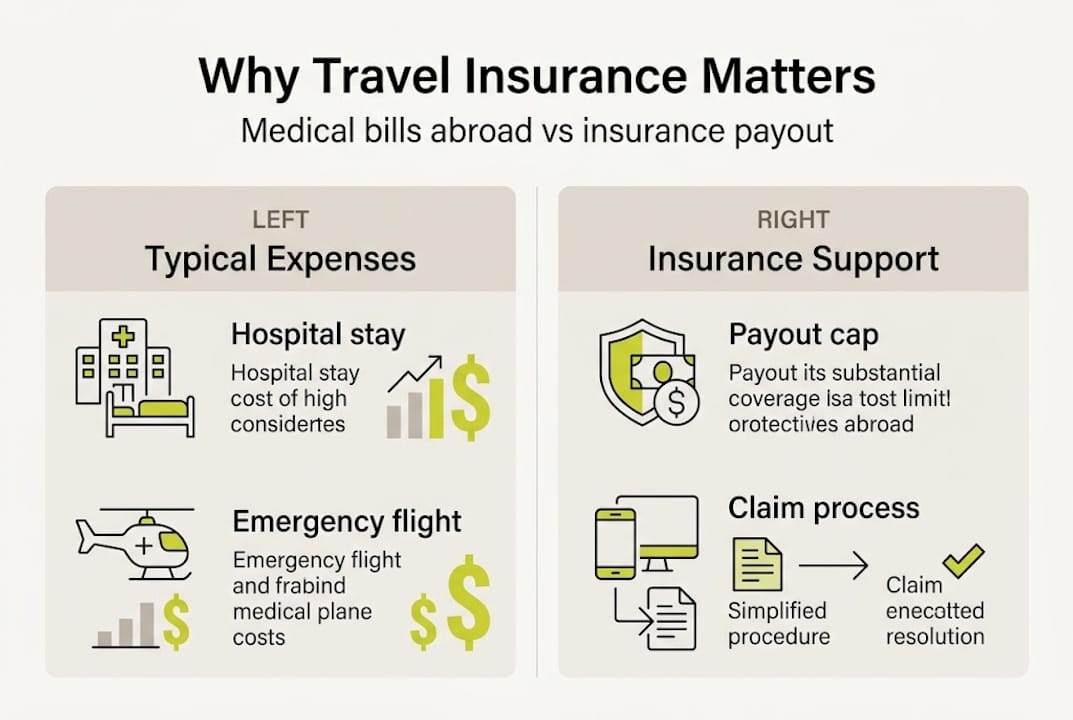
In the UK, insurers paid out £472 million in travel claims in 2024, covering more than 500,000 individual claims. Medical emergencies accounted for 34% of all payouts, with an average medical claim of £1,528. Yet some single US-based claims exceeded £1 million. That contrast tells you everything about the unpredictability of medical costs abroad.
Here is a quick breakdown of typical emergency costs by category:
| Emergency type | Estimated cost abroad |
|---|---|
| Broken leg (US) | £15,000 to £40,000 |
| Appendix surgery (Thailand) | £3,000 to £8,000 |
| ICU stay, one week (USA) | £50,000 to £150,000 |
| Medical evacuation (remote) | £50,000 to £250,000 |
| Stroke treatment and repatriation | Up to £2 million |
“Even a short hospital stay abroad can cost more than the entire holiday itself. Without insurance, that bill lands directly on you.”
Beyond hospital treatment, consider the costs that often go unnoticed. Emergency repatriation, meaning the cost of flying you home in a medically equipped aircraft, is rarely covered by airlines and can reach six figures alone. Knowing your medical emergency essentials before you travel gives you a framework for acting quickly when time matters most. Similarly, understanding evacuation cover in detail ensures you are not caught off guard by what your policy actually includes.
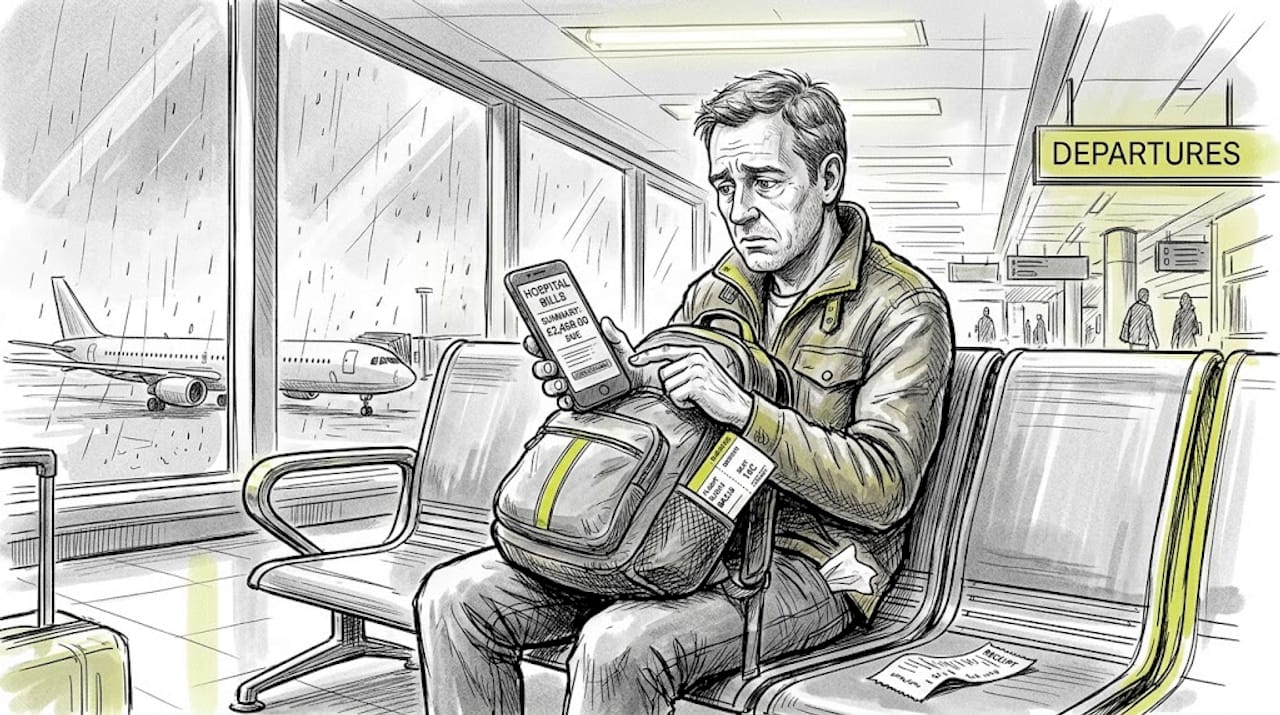
The bottom line is simple. No matter how healthy you are or how short your trip, the financial exposure of travelling without insurance is a risk that rarely makes sense to take. Now that you have seen just how easily costs can skyrocket, let us explore how travel insurance closes these gaps.
What travel insurance really covers (and what it doesn’t)
With the basics of what is at stake, let us clarify exactly what travel insurance does and does not cover, so you can travel smarter.
A standard travel insurance policy typically includes the following core benefits:
- Emergency medical treatment abroad, including hospitalisation and surgery
- Medical evacuation and repatriation, covering transport home if required
- Trip cancellation, reimbursing pre-paid costs if you cannot travel due to illness or a covered event
- Trip interruption, covering costs if your journey is cut short unexpectedly
- Lost, stolen, or delayed baggage, with limits per item and in total
- Travel delay, providing daily allowances if flights are significantly disrupted
- Personal liability, covering legal costs if you accidentally injure someone or damage property
However, what policies exclude is just as important as what they include. Pre-existing condition waivers are time-sensitive, meaning you must purchase cover within a specified window after booking to qualify. War and civil unrest exclusions are standard across virtually all policies. Adventure sports such as skiing, scuba diving, or mountain climbing typically require a separate rider.
One option worth knowing about is “Cancel for Any Reason” cover, often abbreviated as CFAR. This add-on gives you the flexibility to cancel your trip for reasons not covered under a standard policy, though it usually reimburses only 50 to 75 percent of your pre-paid costs rather than the full amount.
Pro Tip: Read the exclusions section of your policy first, not last. Most claim denials stem from travellers not realising a condition, activity, or destination was excluded from the outset.
If you have a pre-existing condition, do not assume you are uninsurable. Specialist cover with medical conditions exists and can provide meaningful protection when arranged correctly. It is also worth understanding the distinction between health versus travel insurance, as the two serve different purposes and should not be confused.
Knowing what is included and excluded puts you in a far stronger position when comparing policies and submitting claims.
Why some travel coverage isn’t enough: The gaps you need to know
Knowing what travel insurance offers, it is crucial to address the myth that any cover will do.
Many travellers rely on the travel insurance attached to their credit card or bundled with an airline booking. While these policies can provide a basic safety net, they are frequently insufficient for real-world emergencies. Credit card and airline plans are often gap-filled, with strict eligibility windows, low payout limits, and significant exclusions buried in the fine print.
Here are the most common gaps to watch for:
- Low medical limits: Many credit card policies cap medical cover at £10,000 to £25,000, which barely covers a week in a US hospital
- No evacuation cover: Repatriation is frequently excluded or capped at a level that does not reflect actual costs
- Activity exclusions: Most bundled policies exclude adventure sports entirely, even relatively common activities like cycling or snorkelling
- Strict trip duration limits: Credit card cover often applies only to trips under 30 days, leaving longer travellers exposed
- Pre-existing condition exclusions: These are almost always excluded unless you have purchased a specific waiver
- Undeclared conditions: Failing to declare a condition, even one you consider minor, can invalidate your entire claim
Pro Tip: Before your trip, call your insurer and ask directly whether your planned activities and destination are covered. Request confirmation in writing. A five-minute phone call can prevent a five-figure claim denial.
If you are travelling frequently or living abroad, understanding how to get medical insurance abroad is essential. There are also key differences between travel and health insurance that affect which product you actually need for your circumstances.
The lesson here is not to avoid credit card insurance altogether. It is to treat it as a supplement, not a substitute.
How to choose the right policy for your travel
To get the safety net you need, here is how to smartly select, review, and fine-tune your insurance cover before you board.
-
Assess your trip type and destination first. A city break in Europe carries very different risks to a trekking expedition in Nepal. Your destination determines the level of medical cover, evacuation provision, and activity riders you will need.
-
Identify your personal risk factors. Are you travelling with a pre-existing condition? Do you plan to hire a motorbike, ski, or surf? Are you travelling alone or with dependants? Each factor shapes the policy you need.
-
Shortlist providers with strong claims records. Look for insurers with transparent claims processes and positive customer feedback specifically around claim handling, not just pricing.
-
Compare extras carefully. CFAR cover, adventure riders, valuables cover, and pre-existing condition waivers are not standard. Confirm whether each is included or available as an add-on, and what the cost difference is.
-
Check what documentation you need to claim. Most policies require original receipts, medical reports, police reports for theft, and proof of travel. Knowing this in advance means you can gather evidence in the moment rather than scrambling afterwards.
-
Review annually, not just once. Pre-existing waivers and CFAR options change year to year. A policy that suited you in 2024 may have different terms in 2026.
Pro Tip: Expensive does not always mean better. A mid-range policy with clear exclusions and a strong claims reputation will serve you far better than a premium policy with vague terms and a history of disputes.
For those living or working abroad long-term, exploring travel medical insurance for expats is a logical next step, as standard travel policies may not provide the ongoing cover that expatriate life demands.
What most travellers miss about insurance (that could cost thousands)
Here is something we see repeatedly: experienced travellers, people who have been to dozens of countries, still get caught out by insurance oversights. Why? Because they assume familiarity equals safety.
The most common and costly mistake is purchasing a policy too late. Many pre-existing condition waivers and CFAR options must be bought within 14 to 21 days of your initial trip deposit. Miss that window and those protections simply do not exist, regardless of how much you pay for the policy.
Another persistent risk is the “my credit card covers this” assumption. Credit card benefits change quietly every year. What was included last year may have been quietly removed or capped. Checking your card’s current terms, not the ones you read three years ago, is non-negotiable.
Policy exclusions also evolve. Insurers update their terms annually, and advice that was accurate in 2024 may be dangerously out of date now. We always recommend reading the current policy wording, not a summary or a comparison site snippet.
Our practical advice: use the detailed health insurance guide to cross-check your chosen policy against your real travel plans. And if you are uncertain whether something is covered, contact the insurer directly before you travel. Ask the specific question. Get the answer in writing. That single step has saved travellers thousands.
Travel smarter: Secure the right insurance for your next trip
Understanding the risks is only half the journey. The other half is finding a policy that genuinely matches your needs, without overpaying or leaving critical gaps.
At Unparalleled Global Benefits, we specialise in helping travellers, expats, and families find insurance that actually works when they need it most. Whether you are looking for a clear explanation through our international health insurance guide, exploring options for long-term stays via expat health insurance, or simply want to understand how travel insurance works before committing, we have the resources and expertise to guide you. Start with a quote or browse our coverage options today.
Frequently asked questions
Does travel insurance cover pre-existing medical conditions?
Some policies offer limited cover for pre-existing conditions, but you must declare these and purchase cover soon after booking to qualify. Pre-existing waivers are time-sensitive, so acting quickly after booking is essential.
Why isn’t credit card travel insurance enough?
Credit card and airline plans are often insufficient, with low medical limits, activity exclusions, and gaps that leave travellers exposed during serious emergencies.
How much does medical care abroad really cost?
Medical bills can run into the tens or even hundreds of thousands of pounds, with some US claims exceeding £1 million in documented cases.
What types of exclusions should I check for in my policy?
Common exclusions include war, civil unrest, adventure sports, and undeclared pre-existing conditions. War and adventure exclusions are standard across most policies, so specialist riders are often necessary.
Recommended
- Choosing travel insurance: expert guidance for global trips – Unparalleled Global Benefits
- Adventure insurance guide 2026: stay safe on trips abroad – Unparalleled Global Benefits
- Travel health insurance guide: secure medical cover abroad – Unparalleled Global Benefits
- Types of Travel Insurance: Essential Cover in 2025
- Warum Reiseversicherungen für Disneyreisen unverzichtbar sind – 2000-reisen