

Over one third of British solo travelers encounter unexpected challenges on one-way journeys abroad. Planning international travel without a set return date means facing real risks like unpredictable medical emergencies or sudden trip cancellations. Choosing the right travel insurance matters for those exploring foreign countries independently. This guide helps you compare comprehensive insurance options so you can travel with confidence, knowing you are protected against unforeseen situations wherever your adventure takes you.
Table of Contents
- Step 1: Assess Your Trip And Coverage Needs
- Step 2: Research Tailored One Way Travel Insurance Plans
- Step 3: Compare Policies And Check Exclusions
- Step 4: Request Quotes And Review Policy Documents
- Step 5: Verify Your Coverage Before Departure
Quick Summary
| Key Point | Explanation |
|---|---|
| 1. Assess trip details and insurance needs | Evaluate your destination, activities, duration, and health risks to select appropriate coverage. |
| 2. Research specialised one way insurance plans | Look for policies that cater to one way travel, offering comprehensive coverage for emergencies and trip interruptions. |
| 3. Compare policy exclusions and details | Scrutinise policies for exclusions and limits, ensuring comprehensive protection before making a selection. |
| 4. Request multiple quotes and review carefully | Collect quotes from various providers and examine policy details thoroughly to ensure the best coverage for your travel needs. |
| 5. Verify insurance coverage before departure | Confirm coverage details with your provider, ensuring it matches your travel plans and includes necessary emergency provisions. |
Step 1: Assess your trip and coverage needs
Preparing for a one-way trip requires strategic insurance planning to protect yourself against unexpected challenges. Understanding your specific travel circumstances will help you select the most appropriate insurance coverage.
Begin by comprehensively evaluating your trip details and personal requirements. The U.S. Department of State recommends carefully assessing your destination, planned activities, trip duration, and existing medical conditions to determine the most suitable insurance protection. Consider critical factors such as the regions you will visit, potential health risks, and the nature of your travel whether for work, study, or personal exploration.
Carefully review the specific medical and travel risks associated with your destination. Some insurance policies have specific exclusions for particular countries or regions, so understanding these nuances is crucial. Check whether your current health insurance provides international coverage and identify potential gaps that a comprehensive travel insurance plan could fill.
Expert advice: Research and compare multiple insurance providers, focusing on policies that offer flexible coverage options tailored to one-way travel scenarios.
Here’s a summary of key factors to assess before selecting one way travel insurance:
| Assessment Factor | Why It Matters | Typical Considerations |
|---|---|---|
| Destination Risks | Determines required coverage level | Regional health, safety, and advisories |
| Trip Duration | Affects policy flexibility | Short-term vs. indefinite travel plans |
| Medical Conditions | Impacts eligibility and coverage | Pre-existing illnesses and declarations |
| Coverage Gaps | Identifies need for additional protection | International medical, evacuation, interruptions |
Step 2: Research tailored one way travel insurance plans
Researching the right one way travel insurance requires a strategic approach to protect your unique travel circumstances. This step involves identifying specialised insurance options that accommodate your specific journey and potential risks.
Start by exploring insurance plans specifically designed for one way travellers. The U.S. State Department highlights the availability of specialised travel insurance options suitable for extended or indefinite trips. These policies provide comprehensive coverage that extends beyond traditional round trip plans, addressing health emergencies, trip interruption risks, and potential evacuation scenarios for travellers with open ended itineraries.
When researching insurance plans, pay close attention to coverage details that match your specific travel profile. Look for policies that offer flexibility in duration, comprehensive medical coverage, emergency medical evacuation, and protection against trip cancellation or interruption. Compare multiple providers, examining their specific terms for one way travel, pre existing medical condition clauses, and the geographical regions covered.
Carefully review policy exclusions and understand the precise terms of coverage. Some insurance plans have specific restrictions or additional requirements for one way travel that differ from standard round trip policies. Consider factors like your destination’s healthcare infrastructure, potential political instability, and personal health circumstances when selecting your insurance.
Expert advice: Request detailed policy documentation and schedule a consultation with insurance providers to clarify any complex terms or coverage nuances specific to your one way travel scenario.
Step 3: Compare policies and check exclusions
Comparing travel insurance policies requires meticulous attention to detail to ensure comprehensive protection for your unique one way journey. This critical step will help you identify the most suitable coverage that matches your specific travel needs and potential risks.
The UK government advises travelers to scrutinise insurance policies carefully, examining coverage limits and understanding critical exclusions. Typical policy exclusions often include pre existing medical conditions not previously declared, adventurous sporting activities, and travel to regions under official government advisories. Pay particular attention to coverage duration, geographical restrictions, and specific circumstances that might invalidate your insurance.
When comparing policies, create a systematic approach to evaluation. Review each policy thoroughly by comparing coverage amounts for medical emergencies, trip interruption, medical evacuation, and personal property protection. Examine the fine print regarding medical condition declarations, age restrictions, and activity limitations. Request detailed documentation from multiple insurance providers to understand the nuanced differences between their offerings.
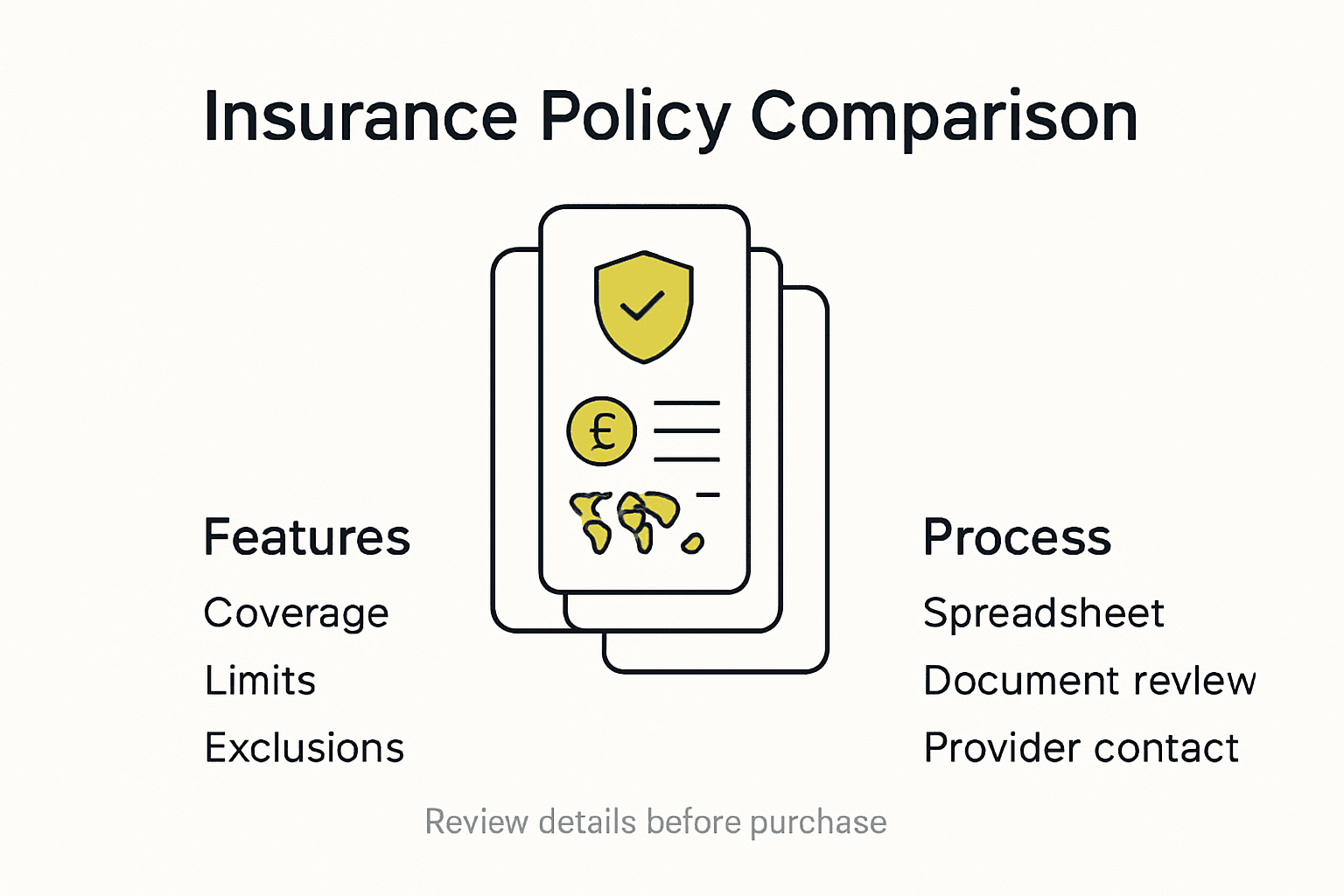
Consider creating a comparison spreadsheet that tracks key policy features such as coverage limits, excess amounts, geographical scope, and specific exclusions. This methodical approach will help you identify the most comprehensive insurance plan that aligns with your unique travel requirements and provides robust protection against potential risks.
Expert advice: Always request a written summary of policy exclusions and maintain open communication with your insurance provider to clarify any ambiguous terms or conditions.
Use this table to compare typical travel insurance policy features for one way trips:
| Policy Feature | Importance for One Way Travel | Consider When Comparing |
|---|---|---|
| Medical Cover | Essential for emergencies | Coverage limit, exclusions |
| Trip Interruption | Critical for open-ended trips | Terms for ongoing journeys |
| Geographical Scope | Ensures full coverage abroad | Regions included, restricted areas |
| Duration Flexibility | Necessary for non-fixed return | Ability to extend or adjust coverage |
Step 4: Request quotes and review policy documents
Navigating the process of requesting travel insurance quotes requires a systematic approach to ensure you secure comprehensive coverage for your one way journey. This crucial step involves gathering multiple insurance options and meticulously examining their details.

Travel insurance experts recommend obtaining multiple quotes from reputable sources to compare coverage options and understand potential premiums. Begin by reaching out to several insurance providers specialising in international and one way travel coverage. Prepare a comprehensive list of your specific travel requirements including destination, duration, planned activities, and any pre existing medical conditions that might impact your coverage.
When reviewing policy documents, adopt a forensic approach to understanding the fine print. Scrutinise each document for coverage limits, exclusions, claim procedures, and emergency assistance services. Pay special attention to details such as medical evacuation provisions, trip cancellation protections, and geographical restrictions. Create a comparative spreadsheet that allows you to evaluate each policy side by side, highlighting key differences in coverage, cost, and specific terms.
Ensure you request comprehensive documentation from each potential insurance provider. This should include detailed policy wording, terms and conditions, and a clear breakdown of what is and is not covered. Do not hesitate to contact insurance representatives directly to clarify any ambiguous clauses or seek additional information about specific coverage scenarios relevant to your one way travel plans.
Expert advice: Always request a digital and printed copy of the full policy document and read through it completely before making a final decision.
Step 5: Verify your coverage before departure
Securing your travel insurance is only the first step ensuring comprehensive protection for your journey. This critical phase involves meticulously confirming every detail of your coverage to prevent potential complications during your travels.
The U.S. Department of State recommends confirming insurance coverage validity immediately before travelling, checking that all aspects of your trip are comprehensively covered. Begin by thoroughly reviewing your policy documents, ensuring that your specific travel destinations, planned activities, and potential medical scenarios are fully included. Make digital and physical copies of your insurance documentation and store them in multiple secure locations accessible during your journey.
Contact your insurance provider to verify specific details about your coverage. Confirm emergency contact numbers, understand the precise procedures for medical claims or emergency assistance, and clarify any potential grey areas in your policy. Check that your coverage extends to all regions you plan to visit and includes provisions for medical evacuation, trip interruption, and potential healthcare needs specific to your travel circumstances.
Register your travel plans with relevant consular services and inform trusted family members or contacts about your insurance details. Keep a readily accessible list of emergency contact numbers for your insurance provider, local emergency services in your destination countries, and your national embassy or consulate. Ensure your mobile phone is set up to receive international calls and messages in case urgent communication is required.
Expert advice: Create a digital folder with encrypted copies of your insurance documents and emergency contact information that can be accessed from any device worldwide.
Secure Your One Way Journey with Tailored Insurance Solutions
Planning a one way trip presents unique challenges such as finding flexible, comprehensive coverage that safeguards against unexpected medical emergencies, evacuation needs, and trip interruptions. This article highlights the importance of assessing destination risks, understanding coverage exclusions, and verifying your insurance policy before departure. At Unparalleled Global Benefits, we understand these concerns and offer personalised insurance plans designed specifically for travellers with open ended itineraries. Our expert support helps you navigate complex policy terms, ensuring you enjoy peace of mind during every step of your international journey.

Don’t leave your one way trip to chance. Explore our flexible options tailored to expatriates, travellers, and visitors at Uncategorised Archives – Unparalleled Global Benefits and discover comprehensive protection designed to meet your unique travel needs. Visit Unparalleled Global Benefits today to request a personalised quote and take the stress out of your international travel insurance planning.
Frequently Asked Questions
How do I assess my travel insurance needs for a one way trip?
To assess your travel insurance needs, evaluate your destination, trip duration, planned activities, and any existing medical conditions. Consider factors such as regional health risks and ensure your coverage aligns with your specific travel plans by thoroughly reviewing your requirements.
What should I look for in one way travel insurance plans?
When searching for one way travel insurance plans, focus on policies that offer flexible coverage specific to your travel profile. Pay attention to medical coverage, emergency evacuation options, and any clauses regarding pre-existing conditions to ensure comprehensive protection for your journey.
How can I compare different travel insurance policies?
To compare travel insurance policies, create a systematic approach by reviewing coverage amounts, exclusions, and geographical restrictions. Track key features using a comparison spreadsheet, which will help you identify the best plan suited to your specific needs and minimise risks during your one way trip.
What details should I verify before I depart?
Before departure, confirm every detail of your insurance coverage, including emergency contact numbers, claim procedures, and ensured protection for all regions of travel. Maintain both digital and physical copies of your policy documents in accessible but secure locations to avoid issues while travelling.
How do I request quotes for one way travel insurance?
To request quotes for one way travel insurance, contact multiple insurance providers and prepare a detailed list of your travel requirements. Look for policies that offer the coverage you need, ensuring you receive comprehensive information to help you make an informed decision before securing your insurance.
Recommended
- Understanding Single Trip Travel Insurance for Secure Travel – Unparalleled Global Benefits
- Single Trip Medical Travel Insurance Explained: Global Impact – Unparalleled Global Benefits
- Trip Insurance: Complete Cover Explained – Unparalleled Global Benefits
- Why Travel Insurance is Essential for Every Journey