

Choosing the right insurance plan for a global lifestyle sounds straightforward at first. Yet surprisingly, over 60 percent of people make costly mistakes because they misunderstand plan details or overlook exclusions. You might expect the trickiest part to be price comparison, but the real challenge is actually sifting through complex terms and finding features that truly match your international needs.
Table of Contents
- Key Features Of Insurance Plans Explained
- Factors To Consider For Different Lifestyles
- Step-By-Step Guide To Comparing Options
- Common Mistakes When Choosing Insurance
Quick Summary
| Takeaway | Explanation |
| Understand key insurance features | Key elements like coverage limits and emergency services are crucial in global insurance plans. |
| Tailor plans to lifestyle needs | Choose insurance that aligns with personal health requirements, career demands, and travel frequency. |
| Conduct thorough research before selection | Self-assess your health and insurance needs to make informed choices. |
| Utilise structured comparison techniques | Create a comparison matrix to weigh plan options against essential criteria. |
| Avoid common selection mistakes | Recognise pitfalls like overlooking exclusions or not clarifying plan details to ensure adequate coverage. |
Key Features of Insurance Plans Explained
Comparing insurance plans for global lifestyles requires a comprehensive understanding of key features that determine the effectiveness and value of your coverage. Navigating the complex world of international insurance demands careful analysis of specific components that protect you across different regions and scenarios.
Understanding Coverage Structures
Insurance plans for global travellers and expatriates come with distinct coverage structures that vary significantly from traditional local health insurance. Research from the Commonwealth Fund highlights that international medical insurance plans typically offer more flexible frameworks designed to accommodate diverse medical needs across multiple countries.
The fundamental elements of comprehensive insurance plans include several critical components. Comprehensive coverage generally encompasses medical treatments, emergency services, hospitalization, and often includes provisions for pre-existing conditions. According to the University of California, San Diego, understanding specific terms like deductibles, coinsurance, and coverage limits becomes paramount when evaluating global insurance options.
Evaluating Essential Plan Features
When comparing insurance plans, several key features demand thorough examination. Medical coverage limits represent the maximum amount an insurer will pay for medical services, which is crucial for international travellers who might encounter varying healthcare costs across different regions. Some plans offer unlimited coverage, while others set specific monetary thresholds.
Additional critical features include:
- Emergency medical evacuation providing transport to appropriate medical facilities
- Repatriation coverage ensuring return to home country for extensive medical treatment
- Direct billing arrangements with international healthcare providers
Global lifestyle insurance plans distinguish themselves by offering adaptable frameworks that traditional domestic insurance rarely provides. Insights from Public Health International suggest that understanding these nuanced differences can significantly impact your financial protection and healthcare accessibility.
To help you evaluate the most important features when comparing international insurance plans, the following table summarises key coverage elements and their role in providing comprehensive protection for global professionals and travellers.
| Feature | Description |
| Coverage Limits | Maximum amount the insurer pays for medical services |
| Emergency Medical Evacuation | Transports you to the nearest suitable medical facility |
| Repatriation Coverage | Covers return to home country for extended treatment |
| Direct Billing Arrangements | Payment handled directly between insurer and healthcare provider |
| Inclusion of Pre-existing Conditions | Coverage for existing health issues, varies by plan |
| Network of International Providers | Access to care across different countries |
| Exclusion Clauses | Services or scenarios not covered by the plan |
For those considering international coverage, our comprehensive guide on travel insurance offers deeper insights into selecting the most suitable plan for your specific global mobility needs.
Each insurance plan represents a unique combination of protection, flexibility, and financial security. Careful comparison of these key features ensures you select a plan that not only meets your immediate medical requirements but also provides robust support throughout your international journey.
Factors to Consider for Different Lifestyles
Selecting the right insurance plan requires a nuanced approach that accounts for the unique characteristics of various global lifestyles. Different professional roles, travel frequencies, and personal circumstances demand tailored insurance solutions that provide comprehensive protection and flexibility.
Professional Mobility and Insurance Needs
Professionals working internationally face distinct insurance challenges that require strategic planning. According to the U.S. Department of State, understanding policy exclusions and coverage details becomes critical for individuals with dynamic career paths. Digital nomads, international consultants, and remote workers need insurance plans that offer:
- Global coverage across multiple jurisdictions
- Seamless medical network in different countries
- Flexible payment structures adaptable to irregular income patterns
Engineers, healthcare professionals, and educators working abroad must pay special attention to specialized coverage requirements. Research from GuideStone emphasizes the importance of evaluating personal health needs and understanding comprehensive coverage options that extend beyond basic medical treatment.
Age and Life Stage Considerations
Insurance requirements dramatically shift across different life stages. Young professionals might prioritize affordable plans with emergency coverage, while mid-career individuals need more comprehensive health protection. AARP’s comprehensive insurance checklist highlights the necessity of assessing potential future health needs and financial implications when selecting insurance plans.
Key factors to consider include:
- Long-term health projections
- Potential family expansion
- Career mobility potential
- Current and anticipated healthcare requirements
Frequent travellers and expatriates require insurance plans that offer robust international coverage, including emergency medical evacuation, comprehensive health services, and provisions for unexpected medical complications. Read our comprehensive guide on travel insurance for deeper insights into selecting the most appropriate protection for your global lifestyle.
Ultimately, choosing the right insurance plan transcends a one-size-fits-all approach. It demands careful consideration of individual circumstances, professional requirements, and potential future scenarios. Thorough research, comparative analysis, and a forward-thinking perspective are essential in securing insurance coverage that provides genuine peace of mind across diverse global environments.
Step-by-Step Guide to Comparing Options
Comparing international insurance plans requires a systematic approach that empowers global professionals and travellers to make informed decisions. This comprehensive guide breaks down the complex process of evaluating insurance options into manageable, strategic steps.
Initial Research and Assessment
Begin by conducting a thorough self-assessment of your specific insurance requirements. Research from the National Association of Health Underwriters recommends creating a detailed profile of your medical history, anticipated healthcare needs, and potential international travel or relocation plans.
Key initial evaluation criteria include:
- Personal health conditions
- Frequency of international travel
- Potential geographic coverage requirements
- Budget constraints
Gather comprehensive documentation including medical records, travel history, and current health status. This foundational research provides a critical baseline for comparing potential insurance plans effectively.
Comparative Analysis Techniques
Developing a structured comparison framework is essential for navigating multiple insurance options. Experts from the International Health Insurance Association suggest creating a comprehensive comparison matrix that evaluates multiple dimensions of potential insurance plans.
Critical comparison parameters should include:
- Coverage limits and monetary thresholds
- Emergency medical evacuation provisions
- Geographic coverage extent
- Cost structures and premium calculations
- Exclusions and waiting periods
- Claims processing mechanisms
Quantitative comparison involves systematically scoring each plan across these dimensions, assigning weighted values to different features based on your personal priorities. This approach transforms subjective decision-making into an objective, data-driven process.
Final Selection and Verification
After narrowing down potential options, conduct a final comprehensive review. Our detailed guide on selecting international insurance provides additional insights into making your ultimate selection.
Recommended final verification steps include:
- Requesting detailed policy documentation
- Confirming exact coverage terms with insurance representatives
- Verifying network healthcare providers in potential destinations
- Understanding precise claims submission procedures
- Reviewing customer support accessibility
Successful insurance plan comparison transcends mere price consideration. It requires a holistic approach that balances comprehensive coverage, financial feasibility, and alignment with individual lifestyle requirements. Patience, meticulous research, and a systematic evaluation process are your most valuable tools in securing optimal international insurance protection.
The following table outlines a step-by-step process for systematically comparing global insurance options, based on best practices described in this article. It can be used as a practical checklist during your insurance selection journey.
| Step | Objective |
| 1. Conduct Self-Assessment | Identify your medical needs and travel requirements |
| 2. Gather Documentation | Collect records on health, travel, and coverage needs |
| 3. Create Comparison Matrix | Score plans on coverage, costs, and features |
| 4. Shortlist Options | Narrow down to the most suitable plans |
| 5. Request Detailed Policy Docs | Review terms and clarify exclusions |
| 6. Verify Network Providers | Confirm access to care in your key locations |
| 7. Confirm Claims & Support Details | Understand procedures and support accessibility |
| 8. Make Informed Final Selection | Choose plan based on evidence and full assessment |

Common Mistakes When Choosing Insurance
Navigating the complex world of international insurance requires careful consideration and strategic decision-making. Many global professionals and travellers inadvertently make critical errors that can compromise their financial protection and healthcare access.
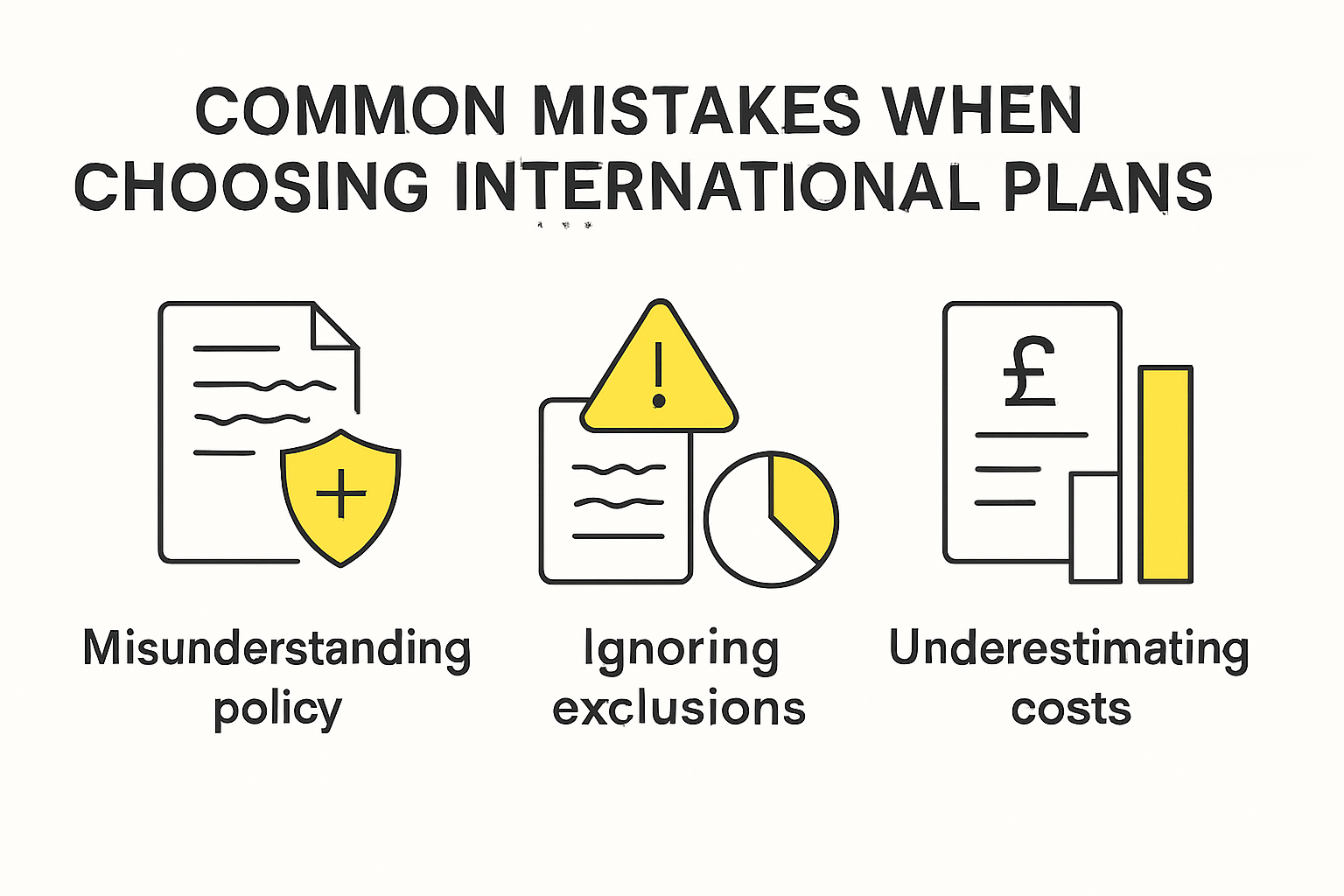
Misunderstanding Plan Complexity
Research from Carnegie Mellon University reveals that the complexity of health insurance plans often leads consumers to make costly mistakes. Many individuals select insurance plans without fully comprehending the intricate details that significantly impact their coverage.
Common misconceptions include:
- Overlooking total cost of coverage beyond monthly premiums
- Assuming all medical services are automatically included
- Failing to understand network restrictions
- Neglecting to review exclusion clauses
Insights from the Journal of Health Economics demonstrate that consumers frequently misunderstand plan attributes, often making suboptimal choices influenced by the presentation order of insurance options rather than objective analysis.
Financial and Coverage Pitfalls
Global professionals must be particularly vigilant about potential financial vulnerabilities in their insurance selections. Our comprehensive guide on understanding insurance differences highlights the critical distinctions between various insurance types that many people overlook.
Key financial mistakes include:
- Selecting plans with inadequate international coverage
- Underestimating potential out-of-pocket expenses
- Ignoring emergency medical evacuation provisions
- Failing to account for pre-existing condition limitations
Strategic Approach to Avoiding Errors
The NCBI Bookshelf recommends comprehensive evaluation strategies to mitigate common insurance selection errors. This involves developing a critical approach that goes beyond surface-level comparisons.
Practical strategies for avoiding mistakes include:
- Conducting thorough personal health assessments
- Creating a detailed comparison matrix
- Consulting with insurance specialists
- Carefully reading entire policy documentation
- Asking explicit questions about coverage limitations
The consequences of hasty or uninformed insurance decisions can be financially devastating, particularly for global professionals who require comprehensive international coverage. Each insurance plan represents a complex financial instrument that demands careful, methodical evaluation.
Understanding these common pitfalls empowers individuals to make more informed choices. The goal is not just to purchase insurance, but to secure a robust safety net that provides genuine protection across diverse international environments. Patience, detailed research, and a critical approach are the most effective tools in navigating the intricate world of global insurance options.
Frequently Asked Questions
What key features should I consider when comparing insurance plans for global lifestyles?
When comparing insurance plans, consider essential features such as coverage limits, emergency medical evacuation, repatriation coverage, inclusion of pre-existing conditions, and network of international healthcare providers.
How can I evaluate which insurance plan best suits my professional mobility needs?
Evaluate your professional mobility needs by selecting a plan that offers global coverage, a seamless medical network in different countries, and flexible payment structures that accommodate your income patterns and travel frequency.
What are common mistakes to avoid when choosing an international insurance plan?
Common mistakes include overlooking total costs beyond premiums, failing to understand network restrictions, neglecting exclusion clauses, and underestimating out-of-pocket expenses for medical treatments.
How can I conduct a thorough evaluation of potential insurance plans?
Conduct a thorough evaluation by creating a comparison matrix that considers parameters such as coverage limits, emergency evacuation provisions, geographic coverage, costs, exclusions, and claims processing mechanisms.
Ready to Avoid Costly Insurance Mistakes in Your Global Journey?
Comparing international insurance plans can feel overwhelming, especially when a single misreading of coverage limits or exclusions could put your finances and health at risk. If you have ever worried about navigating complex terms or finding a plan that really fits a mobile lifestyle, you are not alone. As explored in our article, understanding features such as emergency medical evacuation and global coverage is essential for true peace of mind abroad.

Take control of your health and security with specialists who truly understand expat and worldwide travel needs. Explore Unparalleled Global Benefits now and see how our team can guide you towards the right coverage. Do not wait until it is too late – visit our main site or read more about the difference between travel and health insurance to find a plan that really matches your lifestyle. Your next adventure deserves real protection.
Recommended
- Understanding the Difference Between Travel and Health Insurance 2025 – Unparalleled Global Benefits
- Know Your Product – Unparalleled Global Benefits
- Choose Plan 2 – Unparalleled Global Benefits
- Choose Plan 3 – Unparalleled Global Benefits
- The Importance of Comprehensive Insurance Options – Summer Yacht Charters
- Best Trip Planning Apps for US Travelers in 2025 – Yopki