

TL;DR:
- Travel insurance is essential for study abroad students because it covers trip cancellations, emergency evacuations, and personal liability, unlike student health insurance. It should include at least $100,000 in medical protection, repatriation, and coverage for belongings and mental health emergencies. Students should buy insurance before departure and choose flexible subscription plans for comprehensive protection.
Travel insurance for study abroad is a specialised coverage that protects international students against travel-related risks, including trip cancellations, lost luggage, and emergency medical evacuations. It is distinct from student health insurance, which covers ongoing medical care and satisfies visa requirements. Both types of cover serve different purposes, and many students need both. Getting this distinction right before you depart can save you from denied claims, visa complications, and bills that run into tens of thousands of pounds.
Why do students need travel insurance alongside student health insurance?
Mistaking travel insurance for student health insurance is one of the most common and costly errors international students make. The two products cover fundamentally different risks, and relying on one to do the job of the other leaves serious gaps in your protection.
Student health insurance covers your ongoing medical needs while you live abroad. It satisfies visa mandates, pays for GP visits, hospital stays, and prescription medicines, and is often a condition of university enrolment. In the UK, for example, the Immigration Health Surcharge costs £1,035 per year and must be paid as part of the visa application. Failure to hold compliant health insurance risks visa rejection before you even board a plane.
Travel insurance, by contrast, covers what happens during the journey itself and around it. Consider what you stand to lose without it:
- A cancelled flight due to illness before departure, with non-refundable accommodation already booked
- A stolen laptop and passport in a busy European train station
- A skiing accident during a semester break that requires emergency helicopter evacuation
- A mental health crisis that requires repatriation to your home country
None of these scenarios fall under a standard student health insurance policy. That is precisely the gap travel insurance fills.
Pro Tip: Check your university’s insurance requirements carefully. Many institutions mandate specific travel insurance certificates alongside health cover, and some require documents in the host country’s language.
What coverage should student travel insurance include?
The minimum coverage thresholds for study abroad are not arbitrary. Recommended minimums include £100,000 (or equivalent) for emergency medical treatment and evacuation, and personal liability cover ranging from €1,500,000 to €4,500,000. These figures reflect the real cost of serious medical emergencies and legal claims in countries where healthcare is expensive.

Core coverage components
A policy worth buying for study abroad should include all of the following:
- Emergency medical and evacuation cover: At least $100,000 to cover hospitalisation and air ambulance costs abroad
- Repatriation at actual cost: This is critical. The European Health Insurance Card (EHIC) does not cover repatriation or private care, making it insufficient on its own
- Personal liability: Up to €4,500,000 to protect you if you accidentally injure someone or damage property
- Trip cancellation and interruption: Reimburses non-refundable costs if your programme is cut short
- Lost, stolen, or damaged belongings: Particularly important for electronics such as laptops and tablets, which are central to student life
- Emergency dental treatment: Often overlooked, but dental emergencies abroad can be expensive
- Mental health emergencies: Coverage for psychological crises is increasingly included in quality policies and should not be skipped
- Multi-country cover: Many students travel across borders during semester breaks, so your policy must follow you
Pro Tip: Read the deductible terms carefully. Policy details like deductibles per medical consultation and annual limits often matter more than the headline premium price.
The table below shows how coverage categories compare across basic and more thorough student policies:
| Coverage category | Basic policy | Thorough student policy |
|---|---|---|
| Emergency medical | Limited | $100,000+ |
| Repatriation | Not included | At actual cost |
| Personal liability | Not included | Up to €4,500,000 |
| Mental health | Not included | Included |
| Electronics theft | Not included | Included |
| Multi-country travel | Single country | Europe or worldwide |
How much does travel insurance study abroad typically cost?
Students aged 18–28 pay between $40 and $150 per month for study abroad travel insurance. That range reflects differences in destination, coverage level, and policy structure. To put it in perspective, a single emergency medical evacuation from Southeast Asia can cost upwards of $50,000. A monthly premium is modest by comparison.
Subscription models versus fixed-term policies
Two main pricing structures exist for student overseas health insurance and travel cover. Fixed-term semester policies cover a set period, typically four months, and cost roughly $300–$600 for that duration. Subscription-based models charge monthly and renew automatically.
Subscription models offer a clear advantage for students whose plans may shift. If your programme extends by a month or your return flight changes, a subscription policy adjusts without renegotiation. Fixed-term policies require formal amendments, which can be slow and sometimes costly.
Factors that push your premium higher include:
- Destinations with expensive healthcare systems (the United States, Switzerland, Australia)
- Higher medical coverage limits
- Inclusion of adventure sports or winter sports cover
- Pre-existing medical conditions declared at the time of purchase
- Longer policy duration
The most cost-effective approach for most students is a subscription model that covers the full duration of study, including travel days before and after the academic term.
When should you buy your travel insurance before studying abroad?
Buying insurance before you depart is not just good practice. It is the only way to guarantee full protection. Policies purchased after your trip has started may exclude trip cancellation benefits entirely and often impose waiting periods before medical cover activates.
Pre-existing conditions present a particular risk. If you develop a health issue between booking your flights and purchasing insurance, that condition may be excluded from coverage. Buying your policy immediately after booking your programme locks in protection from that point forward.
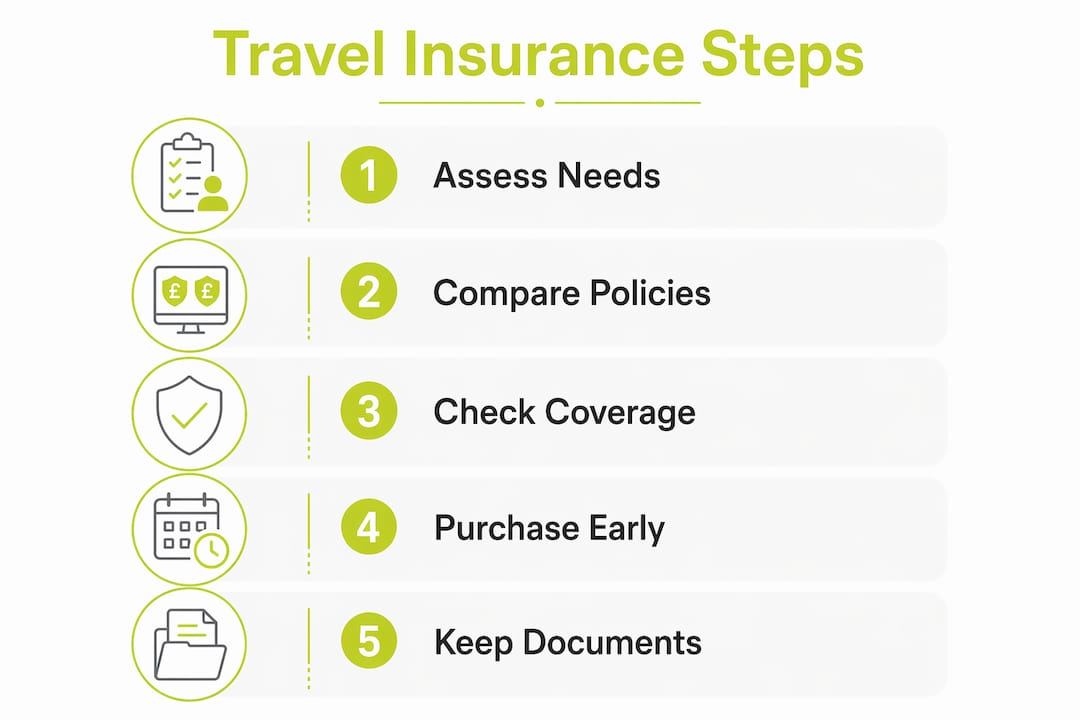
Follow these steps to secure your cover correctly:
- Confirm your university’s requirements. Many institutions specify minimum coverage levels and require certificates in the host country’s language. Visa and university mandates often require proof of compliant insurance upon arrival.
- Choose your policy structure. Decide between a fixed-term policy and a subscription model based on how certain your programme dates are.
- Purchase before departure. Activate your policy at least 24–48 hours before you travel to allow the insurer to process your documents.
- Obtain your insurance certificate. Many insurers now issue certificates instantly online. Keep a digital and printed copy accessible at all times.
- Review renewal terms. If your programme extends, confirm whether your policy renews automatically or requires a manual request. Subscription-based models handle extensions without renegotiation, which is a genuine advantage for students.
Pro Tip: Store your insurance certificate, policy number, and the insurer’s 24/7 emergency contact number in your phone and in a cloud document. If your phone is stolen, you can still access these details from any device.
Watch this short video for a practical overview of how international student insurance works in practice:
Planning a trip for yourself, a resident, or visiting family? UGB + Ekta can arrange travel insurance for seniors up to 100 years old. Just click here: https://ektatraveling.com/?partner_uid=808 and add the promo code “UGB” to receive an additional 10% discount.
Key takeaways
Travel insurance for study abroad is a separate and necessary layer of protection that student health insurance does not replace, covering trip cancellations, repatriation, personal liability, and belongings.
| Point | Details |
|---|---|
| Buy before departure | Purchasing after travel starts risks exclusions for cancellations and pre-existing conditions. |
| Know the minimums | Aim for at least $100,000 emergency medical cover and up to €4,500,000 personal liability. |
| EHIC is not enough | Public schemes like EHIC exclude repatriation and private care, leaving critical gaps. |
| Subscription beats fixed-term | Monthly renewal models adapt to changing programme dates without renegotiation. |
| Check visa requirements | Many countries and universities require specific insurance certificates upon arrival. |
What I have learned from watching students get this wrong
A perspective from Coert
After years of working in international insurance, the pattern I see most often is students arriving abroad with health insurance sorted and travel insurance completely forgotten. They assume one policy covers everything. It does not, and the consequences can be severe.
The claim I find most telling is repatriation. Students rarely think about it until something goes wrong. A serious accident, a mental health crisis, a family emergency at home. Getting you back to your home country safely can cost more than your entire semester’s tuition. The EHIC card that many European students rely on covers basic state-level care in EU countries. It does not pay for a medical flight home.
The other gap I see consistently is personal liability. Students living in shared accommodation, attending social events, and travelling frequently face real liability exposure. Accidentally damaging a landlord’s property or injuring someone in a road incident can result in legal claims that a basic policy will not touch. Coverage up to €4,500,000 sounds like a large number until you consider what a serious personal injury claim costs in Germany or France.
My honest recommendation is to treat travel insurance as a non-negotiable line item in your study abroad budget, not an optional extra. The monthly cost is genuinely modest. The financial exposure without it is not. Choose a policy built for students that includes mental health cover, electronics protection, and multi-country travel. These are not premium add-ons. For a student in 2026, they are standard needs.
— Coert
How Unparalleledglobalbenefits supports international students
Securing the right cover before you depart does not need to be complicated. Unparalleledglobalbenefits specialises in international health insurance plans designed for students, expats, and travellers, with options that meet visa requirements and university enrolment conditions.
The platform provides instant insurance certificates, which is critical when your university or consulate requires proof of cover on arrival. You can compare plans by coverage level, destination, and budget, with expert support available to help you identify the right fit. Whether you need a short-term policy for a single semester or a flexible subscription that adapts to a changing programme, Unparalleledglobalbenefits has options worth reviewing. Request a quote directly through the site and have your documents ready before your departure date.
FAQ
What is travel insurance for study abroad?
Travel insurance for study abroad is a policy that covers travel-related risks such as trip cancellations, lost baggage, emergency evacuations, and personal liability during an international study programme. It is separate from student health insurance, which covers ongoing medical care.
Does student health insurance replace travel insurance?
Student health insurance does not replace travel insurance. Health insurance covers medical treatment while you live abroad; travel insurance covers trip disruptions, repatriation, and belongings. Most students studying abroad need both.
How much does student travel insurance cost per month?
Students aged 18–28 typically pay between $40 and $150 per month depending on destination, coverage level, and policy type. Subscription models offer flexibility for programmes with uncertain end dates.
When is the best time to buy travel insurance for studying abroad?
Buy your policy before departure to protect against trip cancellations and pre-existing condition exclusions. Policies purchased after travel begins may not cover all contingencies.
Is the EHIC card sufficient for students studying in Europe?
The EHIC card is not sufficient on its own. It covers basic state-level care in EU countries but excludes repatriation and private medical treatment, which are often the most expensive elements of a serious health emergency abroad.
Recommended
- Why travel with insurance: Stay safe abroad in 2026 – Unparalleled Global Benefits
- Multi-country travel insurance: your 2026 guide – Unparalleled Global Benefits
- International students insurance: your 2026 guide – Unparalleled Global Benefits
- Student travel insurance guide: cover, costs & tips – Unparalleled Global Benefits