

TL;DR:
- International students must secure health insurance before studying abroad to meet visa and university requirements. Coverage varies by country, age, and system but generally includes inpatient, outpatient, emergency, and evacuation protection. Planning and verifying coverage early avoids delays, costly gaps, and compliance issues in the application process.
International students insurance is the health coverage you must secure before studying abroad, protecting you against medical costs and satisfying visa and university enrolment requirements. Countries including Germany, Australia, and the UK mandate health insurance as a condition of student visa approval. Italy requires policies with at least €30,000 in inpatient, outpatient, and repatriation cover. Australia demands Overseas Student Health Cover, known as OSHC, for the full duration of your visa. Getting this right before you travel is not optional. It is the foundation of your study abroad plan.
What is international students insurance and why does it differ from travel insurance?
Student health insurance abroad is a distinct product category. Travel insurance falls short of student visa rules because it lacks sufficient duration and does not cover long-term enrolment needs. A standard travel policy designed for a two-week holiday will not satisfy a German university’s enrolment office or an Australian immigration officer.
The core difference is purpose. Travel insurance covers short trips and emergencies. Student overseas health insurance covers the full academic year, including outpatient visits, specialist referrals, and often mental health support. Universities and immigration authorities treat these as separate products, and rightly so.
Here is what you need to understand about the main insurance types available to international students:
- Statutory public insurance is available in Germany at a fixed rate of approximately €141 per month for students under 30. It covers most medical needs and is widely accepted by universities.
- Private student insurance is required in Germany for students over 30, and in countries where no public scheme exists. Costs vary considerably by age and coverage level.
- OSHC in Australia runs approximately AUD 623–806 per year and must cover the entire visa period without gaps.
- University-mandated plans in the United States apply to most F-1 students. There are no federal minimums for F-1 visas, but universities set their own standards.
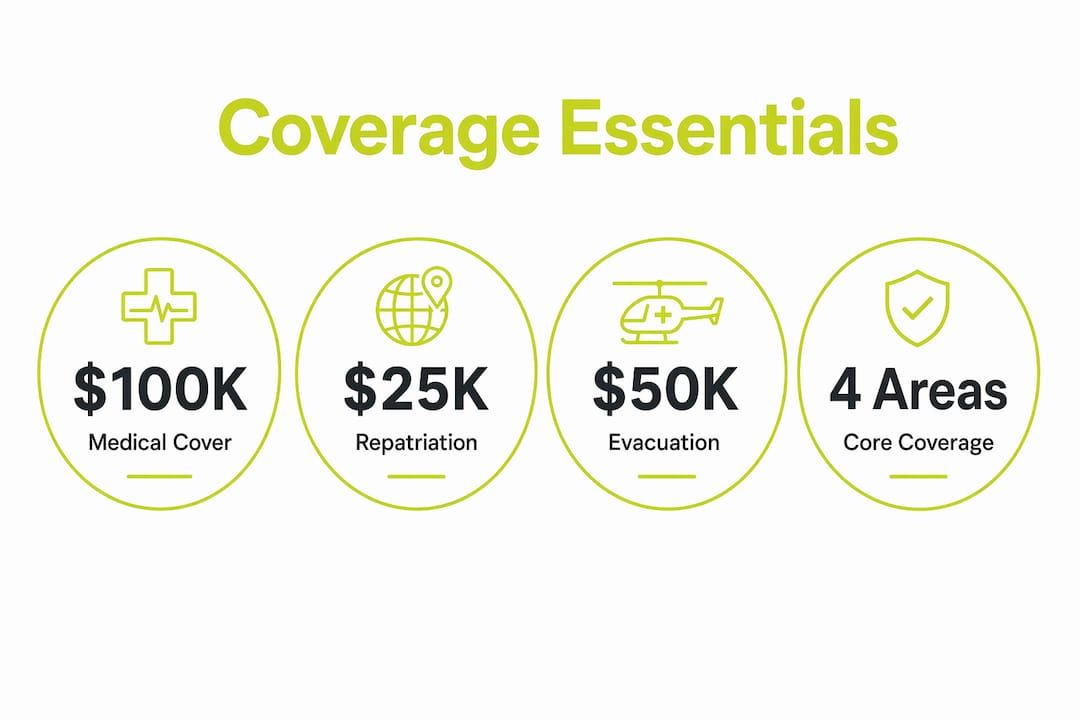
- J-1 visa federal minimums in the US require at least $100,000 medical cover per incident, $25,000 repatriation cover, and $50,000 medical evacuation cover, with a deductible no higher than $500.
- Supplemental top-up plans fill gaps left by public systems in France, the UK, and Spain, covering dental, vision, and co-payments.
Repatriation and medical evacuation coverage are critical components that students frequently overlook when comparing plans. A medical emergency abroad can require transport to a specialist facility or even back to your home country. Without this cover, the costs can be catastrophic.
How much does student health insurance abroad cost?
Costs vary sharply depending on your destination, age, and the type of system in place. The table below gives you a clear starting point for budgeting.

| Country | Insurance type | Approximate annual cost |
|---|---|---|
| Germany (under 30) | Statutory public | ~€1,692 (€141/month) |
| Germany (over 30) | Private | From ~€2,880 (€240+/month) |
| Australia | OSHC | AUD 623–806 |
| United Kingdom | Immigration Health Surcharge | £1,035 |
| United States (J-1) | Private (federal minimum) | Varies by provider |
Age is a significant pricing factor in Germany. Students over 30 lose access to the statutory student rate and must take out private insurance, which typically starts at €240 per month. That is nearly double the standard rate. If you are approaching 30 during your studies, plan your enrolment timeline carefully to avoid crossing into the higher bracket mid-year.
The UK Immigration Health Surcharge of £1,035 per year grants access to NHS services from your visa start date. However, the NHS does not cover everything. Prescriptions and dental treatment carry additional charges, which surprises many students who assume full cover is included.
Pro Tip: Factor insurance costs into your study budget before you apply for a visa. Germany, Australia, and the UK each have fixed or predictable costs, so you can calculate the exact amount in advance. For the US, request quotes from at least three providers to find a plan that meets your university’s specific requirements.
For a detailed comparison of student premiums across countries, including breakdowns by coverage tier, Unparalleledglobalbenefits provides up-to-date guidance for 2026.
What does student travel health insurance typically cover and what gaps should you watch for?
A solid international health insurance plan for students studying abroad covers four core areas: inpatient hospital treatment, outpatient consultations, emergency care, and medical evacuation. Most visa-compliant plans include all four. The gaps appear in the details.
Public healthcare systems in France and the UK do not cover all medical costs. Dental, vision, and specialist co-pays are routinely excluded. Students who rely solely on public cover often face unexpected bills for routine dental work or prescription glasses. This is where top-up insurance earns its value.
Private top-up plans in Europe typically cost €15–30 per month. That is a modest addition to your monthly budget, but it closes the most common gaps in public cover. The result is protection that approaches full private insurance at a fraction of the cost.
Key coverage components to verify before you sign any policy:
- Inpatient and outpatient care: Both must be included. Outpatient visits are far more frequent than hospital stays.
- Emergency treatment: Confirm there is no waiting period for emergency cover from day one of your visa.
- Medical evacuation: Check whether the policy covers transport to a specialist facility or your home country. Policy variation is wide, and some plans only cover local transport.
- Repatriation of remains: Uncomfortable to consider, but required by several visa authorities including Italy.
- Mental health support: Increasingly included in student plans, but not universal. Confirm it explicitly.
- Prescription cover: Especially relevant in the UK, where NHS prescriptions carry a standard charge.
Pro Tip: Always read the exclusions section of a policy before the benefits section. Insurers write exclusions in plain language, and five minutes spent there will tell you more about the real value of a plan than the headline coverage figures.
The health insurance guide for studying abroad from Unparalleledglobalbenefits walks through each coverage component in detail, including what to ask your insurer before purchasing.
How to choose the right international students insurance plan
Choosing the right plan requires more than finding the cheapest option. Visa compliance and university acceptance are non-negotiable. A plan that saves you £50 but gets rejected at the immigration desk costs you far more.
Follow these steps to select a plan that works:
- Confirm your visa requirements first. Check the official immigration authority website for your destination country. Germany, Australia, Spain, and Italy each publish specific insurance requirements. Do not rely on secondhand advice.
- Check your university’s enrolment requirements. Many universities maintain a list of accepted insurers or minimum coverage standards. Contact the international student office directly if the information is not published online.
- Gather documentation early. Universities and immigration authorities require insurer confirmation letters and full policy documents. Request these before your visa appointment, not after.
- Compare coverage, not just price. Use the coverage checklist from the previous section. A plan missing medical evacuation or repatriation may be cheaper but non-compliant.
- Consider your personal health needs. If you manage a chronic condition, verify that your plan covers ongoing treatment. Many standard student plans exclude pre-existing conditions or impose waiting periods.
- Buy before you travel. Cover must typically begin on your visa start date. Purchasing a plan after arrival creates a gap that can invalidate your visa compliance.
- Keep digital and physical copies of all documents. Store your policy number, insurer contact details, and emergency assistance number in your phone and in a secure cloud folder.
The expat insurance for students guide from Unparalleledglobalbenefits covers the most common pitfalls students encounter when selecting plans, including how to handle coverage gaps during university holidays.
Key takeaways
Student health insurance abroad is a legal and practical requirement in most study destinations, and choosing the wrong plan can delay your visa or leave you with significant out-of-pocket costs.
| Point | Details |
|---|---|
| Insurance is mandatory | Germany, Australia, Italy, and the UK all require valid health cover for student visa approval. |
| Travel insurance is not enough | Standard travel policies lack the duration and coverage scope required for student visa compliance. |
| Costs vary by country and age | German students over 30 pay from €240/month; UK students pay £1,035/year via the Immigration Health Surcharge. |
| Top-up plans close coverage gaps | Private top-up plans in Europe cost €15–30/month and cover dental, vision, and co-payments excluded by public systems. |
| Documentation is critical | You need insurer confirmation letters and full policy documents for both visa and university enrolment. |
Why I always tell students to sort insurance before anything else
Students consistently underestimate how much insurance shapes the study abroad experience. I have seen students arrive at visa appointments with travel policies that were rejected on the spot, causing weeks of delays and significant stress. The fix is always the same: buy the right product from the start.
The most overlooked issue is age. If you are 29 and starting a two-year programme in Germany, you will cross into the over-30 bracket during your studies. Your statutory insurance rate will change, and you need to plan for that cost increase. Ignoring it does not make it go away.
My strongest advice is to treat insurance as a pre-application task, not a pre-departure one. The moment you receive a conditional offer from a university, start researching your insurance requirements. Some countries require proof of insurance before they will even process your visa application. Getting ahead of this removes one of the most stressful elements of the whole process.
Top-up plans in Europe are genuinely underused. Students in France and the UK often assume public cover is sufficient, then face a dental bill or a prescription charge they did not expect. A €20-per-month top-up plan eliminates that uncertainty entirely. The cost is negligible relative to the peace of mind it provides.
Finally, never skip the medical evacuation check. It sounds like something you will never need. But if you are studying in a country with limited specialist facilities and you suffer a serious injury, evacuation cover is the difference between receiving appropriate care and not. Read the policy. Confirm the limits. Then buy with confidence.
— Coert
How Unparalleledglobalbenefits supports international students with the right cover
Securing the right insurance before you study abroad should not feel complicated. Unparalleledglobalbenefits specialises in international health insurance for students, expats, and travellers, with plans designed to meet visa requirements across Germany, Australia, the UK, the US, and beyond.
Whether you need a fully compliant student health plan, a supplemental top-up policy, or guidance on what your destination requires, Unparalleledglobalbenefits offers clear, personalised support. The international health insurance guide covers every major plan type in plain language, so you can compare options and choose with confidence. For students travelling with family or planning trips during term breaks, UGB + Ekta can arrange travel insurance for seniors up to 100 years old. Just click here: https://ektatraveling.com/?partner_uid=808 and add the promo code “UGB” to receive an additional 10% discount.
FAQ
Is health insurance mandatory for international students?
Health insurance is mandatory for student visa approval and university enrolment in countries including Germany, Australia, Spain, and Italy. Requirements vary by destination, so always check the official immigration authority for your specific country.
Can I use travel insurance instead of student health insurance?
Travel insurance does not meet student visa requirements in most countries because it lacks sufficient duration and enrolment-level coverage. You need a policy specifically designed for long-term study abroad stays.
How much does international student insurance cost in the UK?
International students in the UK pay the Immigration Health Surcharge of £1,035 per year, which grants access to NHS services. Dental treatment and prescriptions carry additional charges not covered by the surcharge.
What are the US J-1 visa insurance minimums?
J-1 visa holders must carry at least $100,000 in medical cover per incident, $25,000 in repatriation cover, and $50,000 in medical evacuation cover, with a deductible no higher than $500. F-1 students face no federal minimums but must meet their university’s own standards.
What does a top-up insurance plan cover for students in Europe?
Top-up plans cover costs excluded by public systems, including dental care, vision, and specialist co-payments. They typically cost €15–30 per month and provide protection that complements statutory cover in countries like France and the UK.
Planning a trip for yourself, a resident, or visiting family? UGB + Ekta can arrange travel insurance for seniors up to 100 years old. Just click here: https://ektatraveling.com/?partner_uid=808 and add the promo code “UGB” to receive an additional 10% discount.
Watch this short video for more guidance on protecting your health abroad:
https://youtu.be/bjzvma7Sh1g
Recommended
- International student health insurance: 2026 guide – Unparalleled Global Benefits
- Compare student health insurance: your 2026 guide – Unparalleled Global Benefits
- Insurance for International Students: Essential Protection for Studying Abroad
- Complete Guide to International Health Insurance for Students – Unparalleled Global Benefits