

TL;DR:
- Travel insurance protects travelers from unexpected costs during international trips, especially medical emergencies and trip disruptions. Buying coverage promptly after booking ensures access to pre-existing condition waivers and weather-related protections, which can be lost if delayed. Most travelers incorrectly rely on credit cards or domestic plans, leaving themselves vulnerable to high expenses and uncovered risks.
Travel insurance is defined as a financial safeguard that protects you from unexpected costs when illness, injury, cancellation, or disruption strikes during an international trip. If you have ever asked yourself why do I need travel insurance, the answer is straightforward: without it, a single medical emergency abroad can cost tens of thousands of pounds, and you bear that cost alone. Over 21% of flights are delayed in 2026, with 1.47% cancelled outright. Those figures mean disruption is not a remote possibility. It is a routine feature of modern air travel, and the financial consequences fall entirely on uninsured travellers.
What risks does travel insurance cover on international trips?
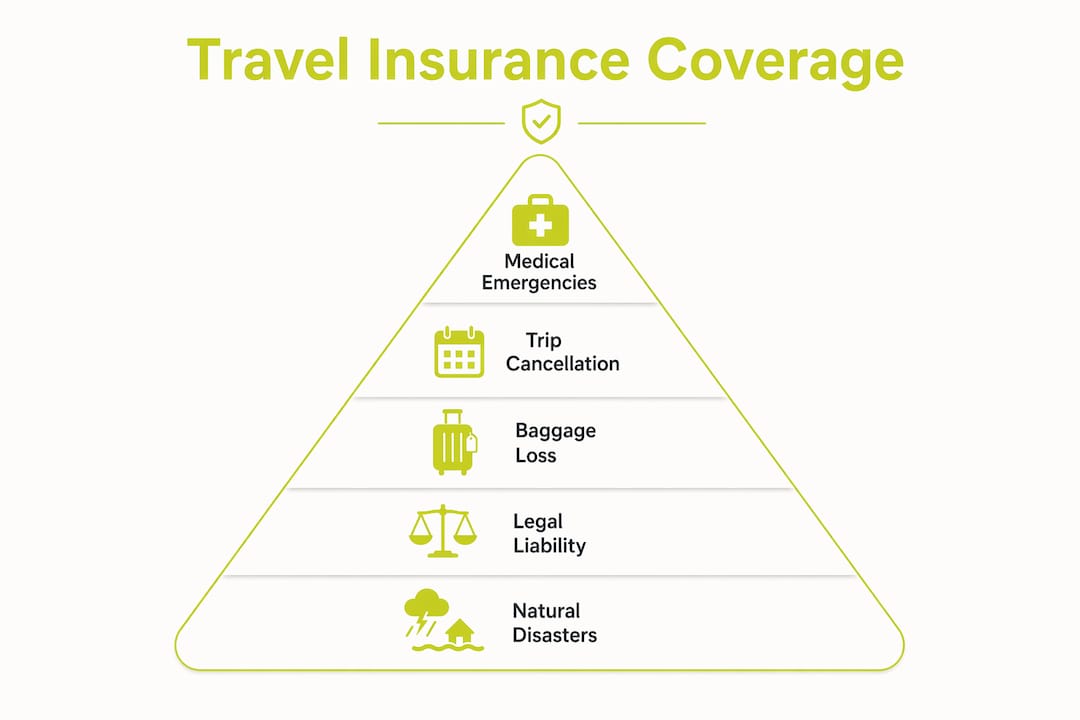
Travel insurance covers five core risk categories, and understanding each one clarifies why the cover matters before you book anything.

Trip cancellation, interruption, and delay protect your prepaid costs when something forces you to cancel or cut a trip short. Covered reasons typically include illness, bereavement, jury duty, and severe weather. Given that 1.47% of flights are cancelled and disruption affects more than one in five passengers, this cover pays for itself quickly on a trip with non-refundable hotel bookings or business-class flights.
Medical emergencies and evacuation overseas are the most financially dangerous risk. Domestic health plans often provide no coverage abroad and will not pay hospital bills upfront. Emergency medical evacuation alone, such as an air ambulance from a remote destination back to the UK, can run into six figures. Travel insurance with evacuation coverage settles those bills directly with the provider, so you are not left negotiating with a foreign hospital in a crisis.
Baggage loss, damage, or theft reimburses you for lost or stolen luggage and personal belongings. Airlines are liable only up to fixed limits under international conventions, which rarely cover the full replacement value of electronics, clothing, and travel documents.
Legal liability and natural disaster interruption round out comprehensive policies. If you accidentally injure someone or damage property abroad, liability cover pays legal costs. Natural disaster clauses reimburse you when a hurricane, earthquake, or volcanic eruption forces evacuation or closure of your destination.
| Coverage type | What it pays for |
|---|---|
| Trip cancellation | Non-refundable flights, hotels, and tour costs |
| Medical emergency | Hospital treatment, surgery, and specialist fees abroad |
| Emergency evacuation | Air ambulance and repatriation to the UK |
| Baggage and belongings | Lost, stolen, or damaged luggage and personal items |
| Natural disaster interruption | Costs from forced evacuation or destination closure |
Pro Tip: Read the policy exclusions before you buy, not after a claim is rejected. Pre-existing conditions, adventure sports, and alcohol-related incidents are the three most common exclusion categories.
Who should consider purchasing travel insurance and when?
Travel insurance is strongly recommended for any trip more than 100 miles from home or any trip with significant non-refundable costs such as flights, hotels, or guided tours. That threshold covers virtually every international trip. The question is not really whether you need it. The question is which type of cover fits your specific situation.
Timing matters as much as the policy itself. Buying insurance immediately after paying your trip deposit unlocks pre-existing condition waivers and other time-sensitive upgrades that disappear after 10–21 days. Waiting until the week before departure means you travel without those protections, even if you pay the same premium.
Weather timing is equally critical. Policies exclude claims related to named storms if you buy cover after the storm has been identified and named. If a hurricane is already forming in the Atlantic and you have not yet purchased insurance, that specific storm is no longer a covered risk.
Here are the key scenarios where travel insurance is most necessary:
- Trips with large non-refundable bookings. If cancelling would cost you more than the premium, the maths strongly favour buying cover.
- International travel to destinations with high medical costs. The United States, Switzerland, and Australia are among the most expensive countries for emergency hospital treatment.
- Travellers with pre-existing health conditions. Buying early secures a waiver that covers flare-ups of existing conditions during the trip.
- Adventure or activity-based holidays. Skiing, diving, and trekking often require specialist add-ons not included in standard policies.
- Trips during hurricane or monsoon season. Purchasing before a named weather event is the only way to retain weather-related cancellation cover.
Pro Tip: If you travel internationally more than twice a year, an annual multi-trip policy typically costs less than two single-trip policies and covers every trip automatically.
Common misconceptions about travel insurance and what to avoid
The most expensive misconception in travel is that existing cover is sufficient. Credit cards and domestic insurance rarely cover emergency medical evacuation or pay hospitals directly abroad. Relying on a credit card travel benefit for a medical emergency in Southeast Asia or Latin America is a serious financial risk.
These are the most common pitfalls travellers encounter:
- Assuming a credit card covers everything. Most card travel benefits cap medical cover at low limits and exclude evacuation entirely. Check the actual policy document, not the marketing summary.
- Relying on domestic health insurance abroad. Standard domestic health plans do not cover international medical emergencies. Even where partial cover exists, the insurer will not pay the foreign hospital upfront, leaving you to fund treatment out of pocket and claim back later.
- Buying the cheapest add-on at checkout. Add-on insurance sold at booking is usually less comprehensive than a standalone policy and frequently excludes emergency evacuation and trip interruption benefits.
- Purchasing cover too late. A policy bought after a named storm forms, or after you have already fallen ill, will not cover those specific events. Timing is a contractual matter, not a technicality.
- Ignoring the medical evacuation limit. Some budget policies cap evacuation at £25,000. An air ambulance from a remote location can cost three to four times that amount. Always check the evacuation sub-limit specifically.
Understanding the difference between travel and health insurance is the first step to avoiding these gaps. They are not interchangeable products.
How to select the right travel insurance plan for your needs
Choosing the right policy starts with three variables: the total cost of your trip, your destination’s healthcare costs, and your personal health profile. A traveller with a pre-existing heart condition heading to the United States needs a fundamentally different policy from a healthy 28-year-old taking a week in Portugal.
- Compare standalone policies against add-ons. Standalone plans from specialist providers consistently offer broader cover, higher limits, and clearer exclusions than add-ons sold at the point of booking.
- Assess the medical and evacuation limits first. These are the figures that matter most in a genuine emergency. Everything else is secondary.
- Consider a Cancel for Any Reason upgrade. CFAR policies cost more and reimburse only a portion of trip expenses, but they provide flexibility that standard cancellation cover does not. They must be purchased shortly after booking.
- Match cover to your primary risks. Expert Lee Huffman advises focusing coverage on primary risks such as medical emergencies or trip disruptions rather than insuring every possible scenario. Over-insuring wastes money; under-insuring creates gaps.
- Check activity exclusions. If your trip includes skiing, scuba diving, or mountain trekking, confirm those activities are explicitly covered. Many standard policies exclude them by default.
For travellers with specific health concerns, tailored cover for health conditions is available and worth the additional cost. A specialist policy that covers your condition is far less expensive than an uncovered hospital admission abroad.
You can also watch this short overview to understand how travel insurance works in practice:
Key takeaways
Travel insurance is the single most cost-effective way to protect your financial investment and physical safety on any international trip, and buying it early unlocks protections that are unavailable closer to departure.
| Point | Details |
|---|---|
| Buy immediately after deposit | Early purchase unlocks pre-existing condition waivers available only within 10–21 days of booking. |
| Domestic health cover is insufficient | Standard UK health plans do not cover medical emergencies abroad or pay foreign hospitals upfront. |
| Evacuation cover is non-negotiable | Air ambulance costs can exceed £100,000; always check the evacuation sub-limit before buying. |
| Timing affects weather cover | Policies exclude named storms if purchased after the storm has been identified. |
| Match cover to your actual risks | Focus your policy on medical and cancellation cover rather than insuring every minor scenario. |
Why I think most travellers get this completely wrong
Most people treat travel insurance as a box to tick, something to buy quickly and forget. That is the wrong way to think about it. Insurance is risk management, and the risk you are managing on an international trip is not losing your suitcase. It is a medical emergency in a country where a single night in intensive care costs more than your entire holiday budget.
I have spoken with travellers who assumed their private health insurance covered them abroad, only to discover mid-claim that their policy stopped at the UK border. I have also seen people buy the cheapest add-on at checkout and then find out it excluded the one thing they actually needed. Both situations are avoidable, and both come down to not reading the policy before you need it.
The other mistake I see constantly is waiting too long to buy. People book a trip in january, plan to sort the insurance in march, and then a named storm forms in february. That storm is now excluded. The window for pre-existing condition waivers has also closed. Two significant protections gone, for the sake of a few weeks’ delay.
My honest advice: buy your policy the same day you pay your deposit. Spend 20 minutes comparing standalone plans rather than accepting the add-on at checkout. Check the medical and evacuation limits specifically. Everything else is detail. Those three steps alone will put you in a far stronger position than the majority of international travellers.
— Coert
Travel insurance options from Unparalleledglobalbenefits
Unparalleledglobalbenefits specialises in international insurance solutions for travellers, expats, families, and visitors. Whether you need cover for a single trip, a long-term stay abroad, or a specialist plan for a pre-existing condition, the team can match you with a policy that fits your actual risk profile, not just your budget.
You can review how travel insurance protects your trip in detail, or request a personalised quote directly. For a broader view of your international cover options, the international health insurance guide covers everything from medical cover to evacuation and repatriation.
Planning a trip for yourself, a resident, or visiting family? UGB + Ekta can arrange travel insurance for seniors up to 100 years old. Just click here: https://ektatraveling.com/?partner_uid=808 and add the promo code “UGB” to receive an additional 10% discount.
FAQ
Why do I need travel insurance if I have private health insurance?
Private and domestic health plans typically stop at the UK border and will not pay foreign hospitals upfront. Travel insurance fills that gap and adds evacuation cover, which private health policies rarely include.
When is the best time to buy travel insurance?
Buy your policy on the same day you pay your trip deposit. Early purchase secures pre-existing condition waivers and other time-sensitive protections that expire within 10–21 days of booking.
What does travel insurance cover that my credit card does not?
Credit cards rarely cover emergency medical evacuation or pay hospitals directly abroad. A standalone travel insurance policy covers medical treatment, evacuation, trip cancellation, and baggage loss with far higher limits than most card benefits.
Is Cancel for Any Reason cover worth the extra cost?
CFAR cover costs more than standard cancellation cover and reimburses only a portion of your trip expenses. It is worth considering if your plans are uncertain or if you are travelling during a volatile period, but it must be purchased shortly after booking.
Does travel insurance cover pre-existing medical conditions?
Many policies offer a pre-existing condition waiver if you buy cover within 10–21 days of your initial trip deposit. After that window closes, pre-existing conditions are typically excluded. Specialist plans for travellers with health conditions are available for those who need dedicated cover.
Recommended
- Why expats need travel insurance: Essential protection – Unparalleled Global Benefits
- Understanding the Difference Between Travel and Health Insurance 2025
- Why International Health Insurance is Essential for Every Global Traveler
- Why travel insurance is essential for journeys abroad – Unparalleled Global Benefits