

TL;DR:
- Getting visa travel right is crucial, as rules are rapidly evolving with systems like ETIAS and mandatory e-visas introduced in 2026.
- Preparing a consistent application with properly aligned documents, timely submissions, and appropriate travel insurance significantly reduces rejection risks.
A travel visa is an official government authorisation that permits a foreign national to enter, remain in, or transit through a specific country for a defined period and purpose. Getting visa travel right is the single most important step in planning any international trip, and the rules are changing faster than most travellers realise. From the European Union’s ETIAS system launching for 30 countries to the widespread shift from visa-on-arrival to mandatory e-visas, 2026 has brought a new layer of complexity to crossing borders. This guide covers every stage of the process, from understanding visa categories to assembling your documents and avoiding the mistakes that cause rejections.
What are the common types of travel visas and how do they differ?
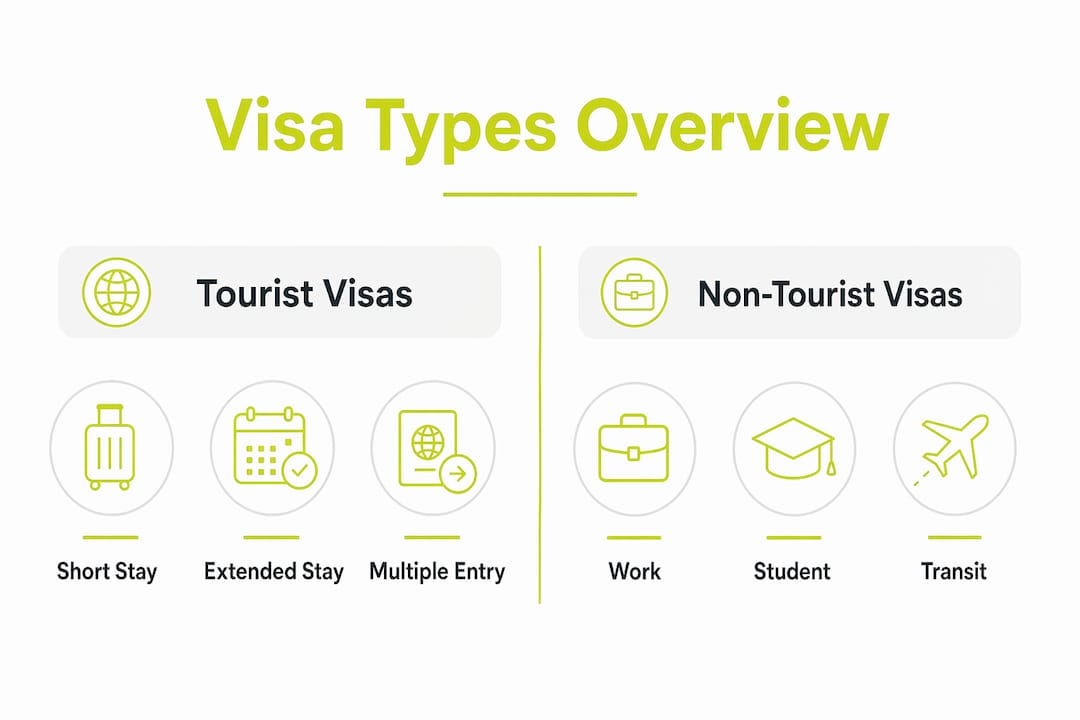
Travel visas fall into several distinct categories, and choosing the wrong one is a surprisingly common error. The four types you will encounter most often are tourist visas, business visas, transit visas, and e-visas. Each carries different conditions around permitted activities, length of stay, and the channel through which you must apply.

A tourist visa covers leisure travel, family visits, and short-term stays. A business visa is required when your trip involves meetings, conferences, or commercial activity, even if no income is earned in the destination country. A transit visa applies when you are passing through a country without formally entering it, though many travellers overlook this requirement entirely. An e-visa is a digitally issued authorisation linked to your passport electronically, replacing the traditional stamp or sticker for an increasing number of destinations.
Beyond these categories, three entry mechanisms are worth distinguishing clearly:
- Visa-free entry means your passport nationality grants automatic access for a set period, typically 30 to 90 days, without any prior application.
- Visa on arrival means you obtain the visa at the port of entry, though many countries now require pre-travel e-visa applications instead, making advance preparation mandatory.
- Consulate application means you must submit documents in person or by post to the relevant embassy before departure, which applies to Schengen visas, US visas, and UK visas among others.
| Visa type | Application channel | Typical processing time | Notes |
|---|---|---|---|
| Tourist visa (Schengen) | Consulate or VFS Global | 15 to 60 calendar days | Apply up to 3 months in advance |
| US tourist visa (B-2) | US Embassy | Several weeks to months | Biometric interview required |
| UK Standard Visitor | UKVI online portal | Approximately 3 weeks | Decision times vary by nationality |
| E-visa (e.g. Turkey, India) | Online government portal | 24 hours to 5 business days | Must be approved before travel |
| Visa on arrival | Port of entry | Immediate | Being phased out in many countries |
The Schengen Area, covering 27 EU member states plus several associated countries, operates under a unified visa system. One Schengen visa grants access to the entire zone, but your entry point must typically be the country where you will spend the most time.
What documents are typically required for a visa application?
The document list for most visa applications follows a consistent baseline, though specific requirements vary by destination and visa category. Getting this right the first time saves weeks of delay and protects your travel dates.
The standard set of documents required across most applications includes:
- Valid passport with at least six months of validity beyond your intended departure date and a minimum of two blank pages for stamps and visas.
- Completed application form, either online or paper-based, signed and dated accurately.
- Biometric photographs meeting the exact size and background specifications of the destination country.
- Proof of financial means, typically three to six months of bank statements showing funds sufficient to cover your stay.
- Travel itinerary, including confirmed or provisional flight bookings and a day-by-day plan of your trip.
- Proof of accommodation, such as hotel reservations, a rental agreement, or a letter of invitation from a host.
- Travel insurance with adequate medical coverage. The Schengen visa, for instance, requires a minimum of €30,000 medical coverage valid for the entire Schengen zone.
The insurance requirement deserves particular attention. Travel insurance is often mandatory for visa approval, not merely advisable. Submitting a policy that does not meet the minimum coverage threshold is one of the most avoidable reasons for rejection.
Pro Tip: Before submitting your application, lay every document side by side and check that all dates are consistent. Your flight dates, hotel bookings, bank statement period, and insurance validity must all align with the travel dates stated on your application form. A single date discrepancy across supporting documents is enough to trigger a rejection.
Proof of ties to your home country, such as an employment letter, property ownership documents, or evidence of family responsibilities, strengthens your application by demonstrating non-immigrant intent. This is particularly relevant for tourist and business visa applications to the US, UK, and Schengen countries.
How to navigate visa application processes and timelines effectively
The visa application process is more procedural than most travellers expect, and timing is where things most often go wrong. The general rule is to begin your application as early as the permitted window allows, which is typically three months before your intended travel date for most consulate-based visas.
The steps that matter most are:
- Book your biometric appointment immediately. Slots at visa application centres such as VFS Global and TLScontact fill quickly, particularly during summer and school holiday periods. Biometric appointments can be booked six to ten weeks in advance during peak seasons, and waiting until your documents are complete risks losing available slots entirely.
- Submit within the correct window. Most consulates will not accept applications more than three months before your travel date, so timing your submission matters as much as the content of your file.
- Track processing times by destination. Schengen visas typically take 15 calendar days but can extend to 30 or even 60 days in complex cases. UK Standard Visitor visas average around three weeks. US visa processing times vary considerably by consulate location and applicant nationality, sometimes running to several months.
- Keep copies of everything. Retain confirmation emails, payment receipts, appointment letters, and submission acknowledgements. These are your evidence trail if anything goes wrong.
- Follow up appropriately. If your application is approaching the stated processing time without a decision, contact the consulate or application centre through official channels. Do not cancel and reapply without guidance, as this can complicate your case.
Pro Tip: Book your biometric appointment the moment the application window opens, even before your full document set is ready. You can finalise and organise your supporting documents while you wait for the appointment date. Losing a slot because you waited for a perfect file is a costly mistake.
Visa rejections most commonly result from inconsistencies between documents rather than a single missing paper. A flight booking that does not match your stated travel dates, or a bank statement that ends before your application date, raises immediate concerns for the reviewing officer. Treat your application as a single coherent file, not a collection of separate documents.
What recent changes affect visa travel in 2026?
2026 has introduced several significant changes to international entry requirements that every traveller needs to know before booking flights.
The most widely discussed is ETIAS, the European Travel Information and Authorisation System. Starting in 2026, travellers from visa-exempt countries, including the United States, United Kingdom, Canada, and Australia, must obtain ETIAS authorisation before entering any of the 30 participating European countries. The fee is €20, and the authorisation is valid for multiple entries over several years. This is not a visa, but it is a mandatory pre-travel step that many travellers are unaware of.
| Change | Countries affected | What you must do |
|---|---|---|
| ETIAS authorisation | 30 European countries | Apply online before travel; €20 fee |
| Mandatory e-visas replacing visa on arrival | Multiple destinations globally | Apply online before departure |
| Increased insurance thresholds | Schengen and others | Provide proof of €30,000+ medical cover |
| Stricter transit visa checks | UK, US, Schengen hubs | Verify transit requirements separately |
The broader shift away from visa on arrival is equally significant. E-visas now replace visa-on-arrival systems for many popular destinations, meaning travellers who previously obtained entry stamps at the airport must now apply online before leaving home. Countries including India, Sri Lanka, and several African nations have moved to fully electronic pre-approval systems.
For multi-destination trips, the complexity increases further. Each country on your itinerary may have different requirements, and transit through a third country adds another layer of rules. Checking transit country policies is as important as checking your destination’s requirements, since airlines and transit authorities may deny boarding if you lack the correct documentation for a layover country.
Official embassy websites and government portals remain the most reliable source for current requirements. Third-party visa checkers are useful for initial research but should never be your final reference point.
What are expert tips and pitfalls to avoid in visa travel?
The most experienced travellers approach a visa application the way a lawyer approaches a case file: every document must support the same consistent story.
Treating visa submission as mere form filling rather than building a coherent, complete file is the most common mistake applicants make. The reviewing officer is assessing whether your stated purpose, financial capacity, travel history, and home ties all point in the same direction. When they do not, rejection follows.
Practical steps that make a measurable difference:
- Align every document to your stated purpose. If you are applying for a tourist visa, your itinerary, accommodation, and financial evidence should all reflect a leisure trip. Business-related bookings in a tourist visa application create inconsistency.
- Check transit and airline requirements separately. Airlines and transit countries often impose stricter boarding rules than the destination country itself. A traveller with a valid destination visa can still be denied boarding at the departure airport due to a missing transit visa.
- Use confirmed bookings where possible. Provisional or flexible bookings are acceptable for some applications, but confirmed reservations carry more weight and reduce the risk of inconsistency.
- Verify insurance coverage specifics. Your policy must cover the exact dates and countries of travel. A policy that expires one day before your return flight or excludes a transit country is grounds for rejection.
Pro Tip: If you are travelling to multiple countries on a single trip, map out every country you will enter or transit through, including airport transit, and check the visa and entry requirements for each one individually. Do not assume that a visa for your final destination covers your transit stops.
For last-minute travel, the options are limited but not impossible. Some countries offer expedited processing for an additional fee, and e-visa systems typically turn around approvals within 24 to 72 hours. However, relying on expedited processing is a risk, and most visa experts recommend building a minimum of three to four weeks of buffer into your planning timeline.
Key takeaways
Successful visa travel depends on early preparation, consistent documentation, and staying current with destination-specific requirements that change regularly.
| Point | Details |
|---|---|
| Start early | Book biometric appointments as soon as the application window opens, up to three months before travel. |
| Align all documents | Every document in your file must reflect the same dates, purpose, and financial position. |
| Check transit requirements | Verify entry rules for every country you pass through, not just your final destination. |
| Insurance is mandatory | Many visas, including Schengen, require proof of at least €30,000 medical coverage. |
| Monitor 2026 changes | ETIAS and mandatory e-visas now affect millions of previously visa-exempt travellers. |
What I have learned from years of watching visa applications go wrong
When I look at the travellers who struggle most with visa applications, the pattern is almost always the same. They treat the process as an administrative formality rather than a verification exercise. They gather documents in isolation, submit them without cross-checking, and then express genuine surprise when a rejection arrives.
The ETIAS change is a perfect example of how quickly the rules shift. Millions of travellers who have visited Europe for decades without any pre-travel authorisation now need to apply and pay a fee before they can board a flight to Paris or Rome. Many will not find out until they are at the check-in desk.
What I find most telling is how rarely travellers check transit requirements. I have seen people with valid destination visas denied boarding because they had a layover in a country that requires its own transit visa for their nationality. Airlines are legally responsible for carrying passengers who are refused entry, so they check carefully. You should too.
My honest recommendation is to treat your visa application as a project with a deadline, not a form to fill in the night before submission. Build your document file early, check every date twice, and use official embassy sources as your primary reference. The travellers who do this rarely have problems. The ones who do not are the ones writing frustrated messages to consulates.
— Coert
How Unparalleledglobalbenefits supports your visa travel preparation
Travel insurance is not just a safety net for your trip. For many visa applications, it is a hard requirement that determines whether your application is approved or rejected.
Unparalleledglobalbenefits specialises in international insurance solutions tailored to the exact coverage thresholds that visa authorities require. Whether you need a Schengen-compliant policy with €30,000 medical cover or broader protection for a multi-country itinerary, the team can match you with the right plan. Explore the international health insurance guide to understand your options, or review the detailed insurance requirements for Schengen visas before you apply.
Planning a trip for yourself, a resident, or visiting family? UGB + Ekta can arrange travel insurance for seniors up to 100 years old. Just click here: https://ektatraveling.com/?partner_uid=808 and add the promo code “UGB” to receive an additional 10% discount.
Watch this short overview for more guidance:
https://youtu.be/bjzvma7Sh1g
FAQ
What is a travel visa and when do I need one?
A travel visa is an official government authorisation that permits entry into a foreign country for a specific purpose and duration. You need one whenever your passport nationality does not grant visa-free access to your destination country.
How long does a visa application take to process?
Processing times vary by destination. Schengen visas typically take 15 calendar days but can extend to 60 days, UK Standard Visitor visas average around three weeks, and US visa processing times vary considerably by consulate and nationality.
What is ETIAS and does it affect my travel plans?
ETIAS is the European Travel Information and Authorisation System, which from 2026 requires travellers from visa-exempt countries to obtain pre-travel authorisation for 30 European countries at a cost of €20. It is not a visa but is mandatory before boarding.
Is travel insurance required for a visa application?
Travel insurance is mandatory for many visa applications, including all Schengen visas, which require a minimum of €30,000 in medical coverage valid across the entire Schengen zone. Submitting a policy that does not meet the threshold is a common cause of rejection.
Why do visa applications get rejected?
Rejections most commonly result from inconsistencies between supporting documents rather than a single missing item. Mismatched dates, unclear financial evidence, or a travel purpose that does not align with the visa category are the leading causes.
Recommended
- Multi-country travel insurance: your 2026 guide – Unparalleled Global Benefits
- Annual Travel Insurance Cover 2025: Guide for Global Travellers
- 7 Top Travel Destinations for 2025 You Must Explore – Unparalleled Global Benefits
- Travel Insurance for Visa: Complete Expert Guide – Unparalleled Global Benefits