

TL;DR:
- Teachers working abroad must select insurance that aligns with their assignment length and healthcare needs. Travel insurance covers short-term emergencies, while international health insurance provides comprehensive, long-term care for extended stays. Disclosing pre-existing conditions early and mapping coverage gaps are crucial for reliable protection during international teaching assignments.
Teachers health travel insurance is the specialist cover that protects educators working or travelling abroad by paying for medical emergencies, trip cancellations, and evacuation costs when something goes wrong far from home. For teachers planning an international assignment, whether a six-week language programme in Spain or a two-year posting in South Korea, the right policy is not optional. It is the difference between a manageable incident and a financially devastating one. Providers such as Teachers Health and Allianz offer plans tailored to educators, but understanding which type of cover suits your specific situation requires more than a quick teachers health travel insurance quote comparison.
What types of teachers health travel insurance are available?
Travel insurance and international health insurance are two distinct products that serve different purposes, and confusing them is one of the most common and costly mistakes educators make before heading abroad.
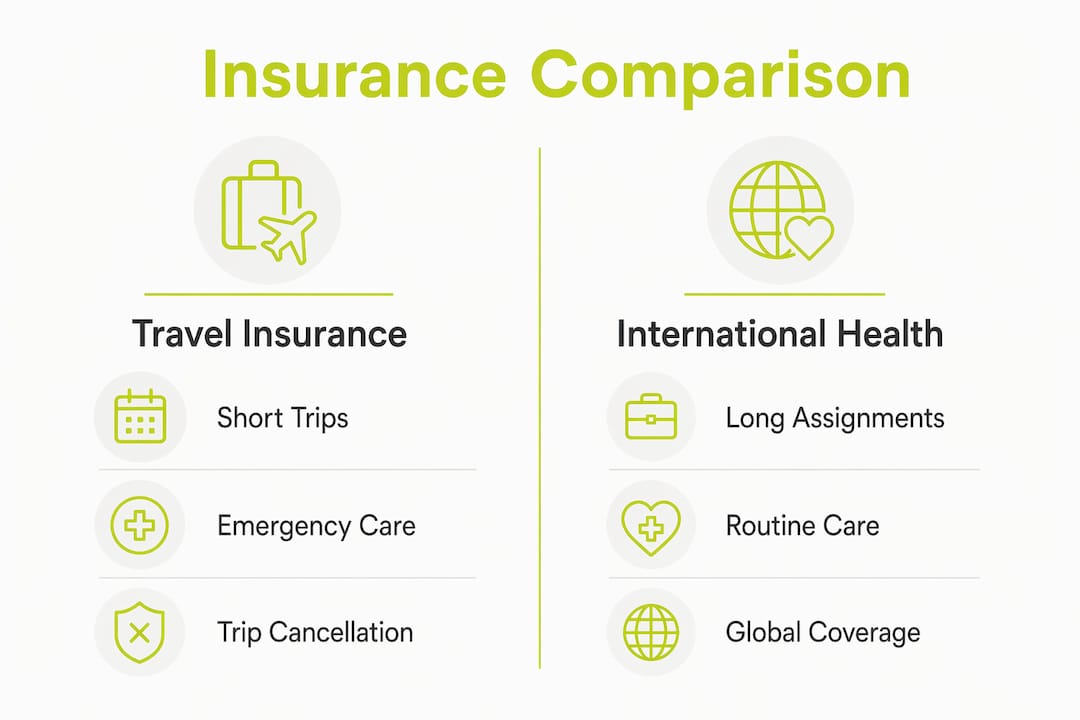
Travel insurance is designed for short-term trips. It covers emergency medical treatment, trip cancellation, lost luggage, and travel delays. It does not cover routine GP visits, specialist consultations, or ongoing prescription costs. If you are travelling for a conference or a short cultural exchange programme lasting a few weeks, travel insurance is the appropriate choice.
International health insurance, by contrast, functions more like a domestic health plan but operates globally. It covers routine care, chronic condition management, specialist referrals, and sometimes maternity care. For a teacher on a year-long assignment in Vietnam or Japan, this is the product that actually matches the healthcare needs you will encounter.
Annual multi-trip versus single-trip policies
Teachers Health offers annual multi-trip policies with trip duration limits of 15, 30, or 45 days per individual trip, alongside sub-limits for cancellation and travel delays. An annual policy suits a teacher who travels frequently for short periods, such as attending international conferences or visiting family during school holidays. A single-trip policy is more cost-effective for one defined assignment with fixed departure and return dates.
| Feature | Travel insurance | International health insurance |
|---|---|---|
| Best for | Short trips, emergencies | Long-term assignments, routine care |
| Routine GP visits | Not covered | Covered |
| Trip cancellation | Covered | Not typically included |
| Chronic condition management | Limited | Covered |
| Typical duration | Days to weeks | Months to years |
| Mental health cover | Sometimes included | Usually included |
Pro Tip: If your teaching assignment runs longer than three months, request a teachers health travel insurance quote for both travel insurance and an international health plan side by side. The premium difference is often smaller than you expect, and the coverage difference is significant.
How does teachers health travel insurance handle pre-existing conditions?
Pre-existing conditions are the area where most claim disputes arise, and where early, honest action makes the greatest difference to your outcome.
Teachers Health requires applicants with pre-existing conditions to complete a medical assessment before cover can be provided for medical and hospital expenses overseas. This assessment must be completed before the policy start date. Failure to disclose a condition, or delaying the assessment until after the policy begins, risks having all related claims denied. This is not a technicality. It is a contractual condition that insurers enforce consistently.
Conditions that are typically excluded or restricted include:
- Undiagnosed medical issues at the time of application
- Conditions related to epidemics or pandemics, including COVID-19, under specific policy sections
- Chronic conditions where no medical assessment has been completed
- Mental health conditions that pre-date the policy, unless specifically assessed and agreed
If you are not eligible for full cover after the medical assessment, a Non-Medical Plan is available as an alternative. This plan excludes cover for the assessed condition but still provides protection for unrelated emergencies, which is far better than travelling with no cover at all. Some educators find this a practical solution when a pre-existing condition is stable and unlikely to cause problems during a short assignment.
Mental health coverage deserves specific attention. Certain plan variants include cover for new-onset mental health conditions that arise during the trip. This is a meaningful benefit for teachers working in high-pressure international environments, where stress and adjustment difficulties are not uncommon.
Pro Tip: Apply for your policy and complete any required medical assessment as early as possible, ideally several weeks before departure. Full disclosure of your medical history is the single most reliable way to protect yourself against a claim denial when you need cover most.
Travel insurance or international health insurance: which do teachers abroad need?
The answer depends almost entirely on the length of your assignment and the healthcare you expect to need. This is a decision worth getting right before you board the plane.
Travel insurance policies exclude ongoing or routine care, making them insufficient for long international teaching assignments. A teacher spending eight months in Thailand who relies solely on travel insurance will find that GP visits, prescription renewals, and specialist referrals are all out of pocket. That exposure adds up quickly in countries where private healthcare costs are high.
For assignments longer than three months, international health insurance is the recommended choice. It provides the continuity of care that a travel policy cannot. You can read more about long-term health insurance needs for professionals working overseas to understand the full scope of what these plans cover.
Understanding programme insurance and coverage gaps
Many teaching programmes, particularly those organised through bodies such as IAG, provide supplementary medical insurance that covers teachers from their departure date until they are enrolled in the host country’s local school insurance scheme. This supplementary cover typically includes repatriation and evacuation benefits.
The critical issue is timing. Programme-provided insurance may only cover medical needs until enrolment in local insurance, which means there is often a gap period at the start or end of an assignment where you are not covered by either the programme policy or your own plan. Teachers who do not map these dates carefully can find themselves uninsured for days or even weeks.
Here is a practical process for identifying and closing coverage gaps:
- Obtain the exact start and end dates of your programme-provided insurance in writing.
- Identify the date on which local school or host-country insurance becomes active.
- Note any gap between the end of programme cover and the start of local cover.
- Purchase a short-term travel policy or extend your international health plan to cover that gap period precisely.
- Confirm that your personal policy does not duplicate cover you already have, to avoid paying for overlapping benefits.
Some visa categories also require proof of specific insurance coverage as a condition of entry. Japan, for example, requires evidence of health insurance for long-stay visa applicants. Checking visa requirements early prevents last-minute scrambles for compliant policies.
Practical steps to choose the right health cover for your assignment
Selecting the right policy is a process, not a single decision. Working through it methodically saves money and prevents gaps in cover.

Start by defining your assignment profile clearly. How long will you be abroad? Will you need routine healthcare, or only emergency cover? Do you have any pre-existing conditions that require disclosure? The answers to these three questions determine whether you need travel insurance, international health insurance, or a combination of both.
Next, read the policy terms carefully, particularly the sections on pre-existing conditions, coverage limits, and exclusions. Many educators focus on the headline premium and overlook sub-limits that cap payouts for specific events. A policy with a generous overall limit but a low sub-limit for emergency dental treatment, for example, could leave you significantly out of pocket after a straightforward procedure.
When you are ready to claim, travel expenses for medical treatment can be reimbursed under Teachers Health policies, provided you have documented proof such as receipts, referral letters, and specialist reports. Keeping organised records from the moment you seek treatment makes the claims process considerably smoother.
Emergency assistance availability is another factor worth checking before you commit to a policy. A 24-hour assistance line staffed by medical professionals is standard in quality plans and is particularly valuable in countries where language barriers make navigating local healthcare difficult.
Pro Tip: When comparing quotes, look beyond the premium. Check the emergency assistance contact number, the claims process timeline, and whether the insurer has a network of approved hospitals in your destination country. A slightly higher premium with direct billing to hospitals is often worth more than a cheaper policy that requires you to pay upfront and claim back.
For TEFL teachers specifically, there are targeted insurance considerations that go beyond standard travel cover, including liability protection and cover for teaching materials.
Key takeaways
Teachers working abroad need insurance that matches both their assignment length and their healthcare profile, not simply the cheapest available policy.
| Point | Details |
|---|---|
| Match cover to assignment length | Travel insurance suits short trips; international health insurance is needed for assignments over three months. |
| Disclose pre-existing conditions early | Complete any required medical assessment before the policy start date to avoid claim denials. |
| Map programme insurance dates | Identify gaps between programme cover and local school insurance, then arrange personal cover for those periods. |
| Check visa insurance requirements | Some countries require proof of specific health cover as a condition of entry; confirm this before applying. |
| Understand what travel insurance excludes | Routine GP visits, prescriptions, and specialist care are not covered by standard travel policies. |
What I have learned about teachers health travel insurance after years in this field
One thing I see repeatedly is teachers assuming their programme-provided insurance is sufficient for the entire assignment. It rarely is. The supplementary cover that teaching organisations provide is designed to bridge a specific window, not to replace a full health plan. When teachers arrive at a clinic in their third month abroad and discover their programme cover ended at enrolment, the surprise is genuine and the costs are real.
The other persistent issue is pre-existing condition disclosure. I understand the temptation to hope a condition will not cause problems and to avoid the paperwork of a medical assessment. But the moment you submit a claim related to an undisclosed condition, the insurer investigates your application history. The claim is denied, and you are left with the bill. Early, honest disclosure is not bureaucratic inconvenience. It is the foundation of a policy that actually works when you need it.
My strongest recommendation is this: treat your insurance selection with the same care you give your visa application. Both are legal requirements for a safe, lawful stay abroad. Neither should be left to the last week before departure.
— Coert
Find the right international health cover for your assignment
Unparalleledglobalbenefits specialises in international insurance solutions for educators, expatriates, and professionals working abroad. Whether you need a short-term travel policy for a summer programme or a full international expat health insurance plan for a multi-year teaching assignment, the team can help you find cover that matches your exact situation. For a thorough overview of your options, the international health insurance guide covers everything from plan types to claims processes in plain language.
Planning a trip for yourself, a resident, or visiting family? UGB + Ekta can arrange travel insurance for seniors up to 100 years old. Just click here: https://ektatraveling.com/?partner_uid=808 and add the promo code “UGB” to receive an additional 10% discount.
For a helpful video overview of international health cover options, watch this:
https://youtu.be/bjzvma7Sh1g
FAQ
What does teachers health travel insurance cover?
Teachers health travel insurance covers emergency medical treatment, hospitalisation, trip cancellation, travel delays, and evacuation costs. Some plan variants also include mental health cover for new-onset conditions and reimbursement of medical travel expenses with documented proof.
Do I need travel insurance or international health insurance for teaching abroad?
For assignments under three months, travel insurance is generally sufficient. For longer assignments, international health insurance is recommended because it covers routine care, specialist visits, and prescription costs that travel policies exclude.
How are pre-existing conditions handled under teachers health travel insurance?
Applicants with pre-existing conditions must complete a medical assessment before the policy start date; early disclosure is required to secure cover. If full cover is not possible, a Non-Medical Plan provides protection for unrelated emergencies.
What is a coverage gap and how do teachers avoid it?
A coverage gap is the period between the end of programme-provided insurance and the start of local school or host-country insurance. Teachers can avoid it by obtaining exact coverage dates from their programme, identifying the gap, and purchasing a short-term policy to cover that specific period.
Can teachers claim travel expenses for medical treatment abroad?
Yes. Under Teachers Health policies, travel expenses for medical treatment are claimable with documented proof, including receipts, referral letters, and specialist reports. Keeping organised records from the point of treatment simplifies the process considerably.
Recommended
- Travel health insurance guide: secure medical cover abroad – Unparalleled Global Benefits
- Teachers health fund travel insurance: top options for educators – Unparalleled Global Benefits
- Best Travel Insurance for Health Conditions Made Easy – Unparalleled Global Benefits
- What does travel health insurance cover: your 2026 guide – Unparalleled Global Benefits