

TL;DR:
- Moving abroad requires understanding how to find trustworthy local healthcare providers to ensure your health needs are met effectively. You should identify your medical needs first, use official directories and your insurance network for reliable results, and verify credentials through official medical boards before registering. Maintaining ongoing communication with your chosen doctor, updating records, and understanding your insurance coverage are essential for managing your health responsibly overseas.
Moving to a new country means rebuilding your life from scratch, and one of the most pressing practical concerns is your health. Knowing how to find local doctors in an unfamiliar healthcare system is not straightforward. Language barriers, unfamiliar registration processes, and uncertainty about which credentials actually matter can leave you feeling exposed. This guide walks you through every practical step: from identifying what kind of doctor you need, to using the right tools for your local doctor search, to verifying qualifications and registering with a practice you can genuinely trust.
Table of Contents
- Key takeaways
- How to find local doctors: know what you need first
- Tools and resources to locate doctors near you
- Evaluating and choosing the right doctor
- Registering with a local doctor: step by step
- Verifying and maintaining your healthcare relationships
- My honest perspective on finding doctors abroad
- Protecting your health abroad with the right insurance
- FAQ
Key takeaways
| Point | Details |
|---|---|
| Identify your needs first | Know whether you need a general practitioner or a specialist before starting your search. |
| Use official directories | National health service websites and insurance provider portals give the most reliable results. |
| Verify credentials formally | Check medical board websites directly rather than relying on third-party listings or word of mouth. |
| Prepare your documents | Having ID, proof of residence, and insurance details ready speeds up registration considerably. |
| Insurance shapes your access | Your international health insurance plan directly affects which doctors and clinics you can use. |
How to find local doctors: know what you need first
Before you open a single search tool, take a moment to think about what kind of doctor actually suits your situation. This step saves you time and prevents you from registering with a specialist when a general practitioner would serve you better, and vice versa.
A general practitioner (GP) or primary care physician is your first port of call for most health concerns. They manage ongoing conditions, provide referrals, administer routine check-ups, and coordinate your overall care. As trusted patient guidance confirms, finding a primary care physician who listens to you and makes you comfortable is central to effective healthcare. If you already have a diagnosed condition requiring a specialist, such as a cardiologist or endocrinologist, you may need to register with a GP first in order to receive that referral, depending on the country’s system.
Consider these factors before beginning your search:
- Your current health status: Are you managing a chronic condition, or do you need general preventive care?
- Language preferences: Can you communicate effectively in the local language, or do you need a doctor who speaks English or your mother tongue?
- Your insurance network: Does your international health insurance restrict you to in-network providers?
- Accessibility needs: Do you require a clinic with wheelchair access, extended hours, or telehealth options?
- Experience with expat patients: Doctors experienced with diverse or international patient groups are often better equipped to handle the practical differences that arise in your situation.
You will also need to gather your documents before contacting any practice. Most clinics abroad will ask for a valid passport or national ID, proof of your current address, and evidence of health insurance cover. Some countries also require a local tax identification number or residence permit before you can register with a public health provider. Having these ready prevents unnecessary delays.
Tools and resources to locate doctors near you
Once you know what you need, the practical task of finding healthcare providers begins. The good news is that reliable resources exist. The challenge is knowing which ones to trust.
Official national health service websites are your most dependable starting point. If you are living in the UK, the NHS has a GP finder tool that lets you search by postcode. France has the Ameli portal for social security registered doctors. Spain operates a regional health system, with each comunidad autónoma maintaining its own directory. Most countries have equivalent official portals, and these listings are regularly updated and legally accountable.
Your international health insurance provider is another high-quality resource. Reputable insurers maintain directories of approved, in-network physicians and clinics. Searching within your plan’s network is not only financially sensible; it also means the provider has already done some basic vetting of the practitioners listed. Understanding your health insurance products thoroughly before you search will clarify which doctors you can see without incurring extra costs.
Here is a summary of the main resource types and their relative reliability:
| Resource type | Reliability | Best use case |
|---|---|---|
| National health service portal | Very high | Finding public sector GPs and specialists |
| Insurance provider directory | High | Locating in-network doctors covered by your plan |
| Embassy or consulate referrals | Moderate to high | English-speaking or expatriate-friendly doctors |
| Expat community forums | Moderate | Personal recommendations, local knowledge |
| General web searches | Variable | Initial discovery only; always verify independently |
Your country’s embassy or consulate often maintains a list of recommended local doctors, particularly those with experience treating foreign nationals. This is an underused resource. Embassies do not formally endorse anyone on these lists, but inclusion suggests the doctor has a track record with the expatriate community.
Expat community groups, whether on Facebook, Reddit, or local forums, can surface names you would not find through official channels. Treat these as leads, not conclusions. A glowing personal recommendation does not replace formal credential verification.
Be cautious with unverified third-party sites that claim to list “top-rated physicians nearby.” Some of these platforms rely on outdated data or accept paid listings, which means placement does not reflect quality. Always cross-reference any name you find against an official source before booking.
Evaluating and choosing the right doctor
Having a shortlist of names is only the halfway point. Choosing wisely requires a bit more work, and that work is worth doing.
Start with licence verification. Official medical board websites provide the most accurate and current information on a doctor’s licensing and disciplinary status. In the United States, for example, the AMA Physician Professional Data covers over 1.4 million verified physicians. For board certification specifically, the ABMS Data Viewer launched in 2025 allows patients to confirm whether a doctor holds active certification from one of 24 recognised specialty boards covering nearly one million physicians. Most countries have equivalent bodies; search for “[country name] medical council licence verification” to find the relevant tool.

When reading a doctor’s licence record, do not stop at the summary label. A status of “on probation” or “restricted” tells you very little on its own. Reading the full disciplinary documents gives you the actual facts, dates, and restrictions that matter.
Before committing to a practice, ask these questions directly. Practical questions to ask include:
- What languages does the doctor or clinic staff speak?
- What are the appointment availability and typical waiting times?
- Does the doctor have experience treating patients with your specific condition or background?
- Is the clinic accessible by public transport, and are there evening or weekend hours?
- Will the doctor coordinate with specialists or share records with healthcare providers in your home country?
Read patient reviews carefully, but critically. Look for patterns rather than outliers. One poor review rarely tells you much. Consistent themes, whether positive or negative, around communication, waiting times, or follow-up care, carry real weight.
Pro Tip: If you are uncertain about a doctor’s suitability, book an initial consultation before committing. Treat it as a two-way conversation. A good doctor will welcome your questions, not dismiss them.
Registering with a local doctor: step by step
Once you have chosen a doctor, the registration process is usually straightforward if you are prepared. Here is what to expect.
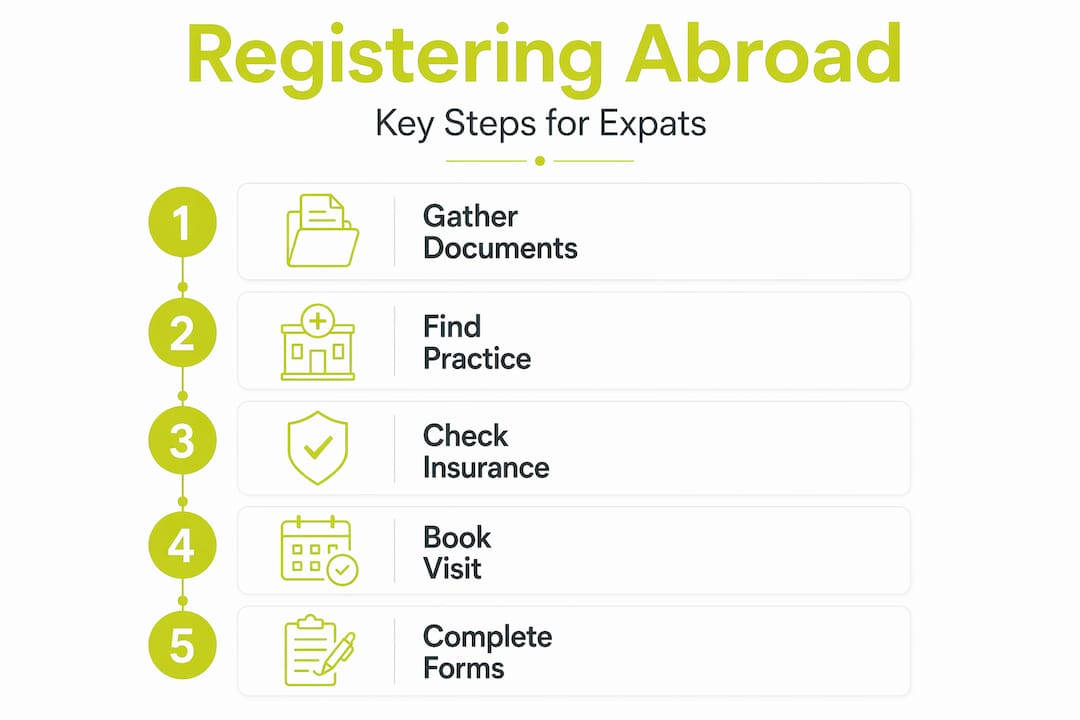
- Contact the clinic directly. Phone, email, or use the practice’s online booking system if available. Ask explicitly whether they are accepting new patients, as many practices in popular expat destinations have waiting lists.
- Confirm your insurance situation. Let the clinic know which insurer covers you and ask whether they work with that provider. This avoids billing surprises later.
- Submit your documentation. Most practices require a completed registration form, a copy of your passport or ID, proof of address, and your insurance details. Some countries also ask for a health declaration form.
- Attend a registration or introductory appointment. Some practices require a brief initial consultation before you can be fully registered. This is normal and gives both parties a chance to assess whether the arrangement works.
- Bring key health records to your first visit. A summary of your medical history, current medications, known allergies, and any recent test results will help your new doctor understand your needs quickly.
- Ask about telehealth options. If in-person visits are difficult due to distance, working hours, or mobility, confirm whether the practice offers video or phone consultations for routine matters.
Registration timelines vary significantly by country. In some places you can be seen within days; in others, particularly in countries with under-resourced public health systems, it can take several weeks. Plan ahead and do not wait until you have an urgent need to begin the process.
Verifying and maintaining your healthcare relationships
Finding a good doctor is not a one-time task. Maintaining that relationship, and staying alert to any changes, is part of managing your health responsibly abroad.
Keep the following practices in place over time:
- Check your doctor’s licence periodically. Medical boards update their records when a practitioner receives a disciplinary action or has their licence altered. You do not need to do this monthly, but an annual check is sensible.
- Update your records with the practice. If you move address, change insurance providers, or return from a period in another country, inform the clinic promptly. Outdated contact details can create real problems if your doctor needs to reach you urgently.
- Know how to raise a concern. If you are unhappy with your care, most countries have a formal complaints process through the national health regulator. Use it rather than simply leaving, as it creates an official record.
- Recognise when it is time to change doctors. If your doctor consistently dismisses your concerns, is difficult to reach, or has received a restriction on their practice, those are legitimate reasons to look for someone new.
- Watch for scams. Medical licence fraud is real. Scams impersonating medical board officials have been documented, targeting both patients and providers. Always verify any communication claiming to involve a doctor’s licence status through the official board website directly.
Pro Tip: Keep a personal health folder, whether physical or digital, with your doctor’s contact details, registration confirmation, insurance card, and a summary of your medical history. If you need care urgently or travel within your host country, this folder saves critical time.
Having international health insurance comparison factors understood before you arrive in a new country is one of the strongest foundations you can lay. Your insurance plan is not just a financial safety net. It actively shapes which doctors you can access and how quickly.
My honest perspective on finding doctors abroad
I have seen hundreds of expats go through this process, and the single most common mistake is waiting too long to start. People assume they will be fine, or that they will deal with it when they need care. Then they develop a health issue and suddenly they are trying to find a doctor, verify credentials, and register all at the same time, whilst feeling unwell and stressed.
The second mistake is trusting informal recommendations over formal verification. I understand the appeal. A colleague at work tells you about a brilliant local doctor, and that feels more trustworthy than a database. But word of mouth does not tell you whether that doctor’s licence is current, whether they have faced disciplinary action, or whether their practice is even still operating. Medical board records are not bureaucratic formalities. They are your most reliable protection.
What I have found actually works is treating the search like a background task you begin the week you arrive. Spend an hour or two using official directories, cross-check one or two names against your country’s medical board, and book an introductory appointment. It rarely takes as long as people fear. The expats who manage their healthcare well abroad are not the ones with the most connections. They are the ones who take a calm, methodical approach and do not skip the verification steps.
— Coert
Protecting your health abroad with the right insurance
Finding the right doctor is far easier when you have solid international health insurance behind you. A good expat plan gives you access to a vetted network of local doctors, covers consultation costs, and provides support when you are unsure where to turn. Unparalleledglobalbenefits specialises in exactly this. Whether you are relocating long-term or spending an extended period abroad, their expat health insurance plans are designed to give you real access to quality local healthcare, not just theoretical coverage. For a full overview of what international cover involves, their complete insurance guide is an excellent place to start. Get in touch with Unparalleledglobalbenefits today and find a plan that works where you live.
Planning a trip for yourself, a resident, or visiting family? UGB + Ekta can arrange travel insurance for seniors up to 100 years old. Just click here: https://ektatraveling.com/?partner_uid=808 and add the promo code “UGB” to receive an additional 10% discount.
Watch this short video for more on staying protected abroad:
https://youtu.be/bjzvma7Sh1g
FAQ
How do I find a local doctor when living abroad?
Start with your country’s official national health service website or your insurance provider’s directory. Cross-reference any doctor you find against the national medical board’s licence verification tool before booking.
What documents do I need to register with a local doctor?
Most practices require a valid passport or ID, proof of your current address, and evidence of health insurance cover. Some countries also ask for a residence permit or local tax identification number.
How do I verify that a local doctor is properly qualified?
Check the official medical board or health council website for your host country. Board certification databases allow patients to confirm active certification directly, and state or national boards hold the most current licence and disciplinary information.
What should I ask a doctor before registering with them?
Ask about languages spoken, appointment availability, experience with expat or international patients, and whether they can coordinate care with specialists. Practical questions about office hours and telehealth options are also worth raising upfront.
Does international health insurance help me find local doctors?
Yes. Most reputable international health insurance providers maintain directories of approved local doctors and clinics. Searching within your plan’s network ensures the doctors listed meet minimum vetting standards and that costs are covered under your policy.
Recommended
- Expat insurance for doctors: your 2026 global guide – Unparalleled Global Benefits
- Healthcare access for expats: Find the best cover abroad – Unparalleled Global Benefits
- How to Get Medical Insurance Abroad: Your Essential Guide for Expats and Travelers
- Compare Health Care Insurance for Expats: Step-by-Step Guide – Unparalleled Global Benefits