

TL;DR:
- Many travelers and expats wrongly assume their existing insurance covers them abroad, which can lead to costly gaps. Overseas insurance operates differently from domestic policies, often requiring understanding of direct billing versus reimbursement processes and careful documentation. Choosing the right combination of state, private, or travel insurance based on destination, stay duration, and health needs is essential for proper protection abroad.
Many expats and travellers assume their existing policies or state entitlements will protect them wherever they go. That assumption can be expensive. A British nurse relocating to Thailand, a student spending a semester in Canada, or a retiree wintering in Spain may each find that healthcare systems vary and that paying out of pocket is a real possibility without the right preparation. This guide walks you through exactly how overseas insurance works, from understanding the different cover frameworks to navigating claims, gathering documents, and choosing the right policy for your situation.
Table of Contents
- Why insurance abroad is different
- How overseas insurance works: direct billing vs reimbursement
- Essential documents and steps for overseas claims
- Comparing insurance options: GHIC/EHIC, private, and travel cover
- The overlooked pitfalls (and opportunities) of overseas insurance
- Support for your overseas insurance journey
- Frequently asked questions
Key Takeaways
| Point | Details |
|---|---|
| Check local insurance rules | Healthcare systems and coverage requirements vary widely in each country abroad. |
| Direct billing vs reimbursement | Know whether you’ll pay upfront or your insurer pays the provider directly when seeking care. |
| Document everything | Always collect detailed bills, receipts, and medical documentation to support any insurance claim. |
| Combine policies if needed | Relying only on state-provided cover like GHIC or EHIC may leave gaps; private insurance often fills these. |
| Plan before emergencies | Verify your network, process, and policy exclusions well before you need overseas care. |
Why insurance abroad is different
When you live or travel in your home country, insurance tends to feel automatic. You know your GP, you understand your entitlements, and your insurer’s network is familiar. Cross a border, and nearly all of that changes. Your domestic health cover may not extend internationally. The local healthcare system may operate on entirely different rules. Providers may refuse treatment without upfront payment, or they may deal only with certain insurers.
This is not a rare edge case. It is the everyday reality for millions of expats and travellers worldwide. Understanding why insurance works differently abroad is the first step towards protecting yourself properly.
Here are the key reasons overseas insurance is distinct from domestic cover:
- Domestic policies have geographic limits. Most standard home-country health insurance policies are designed to cover you within your country of residence. Expatriate status often voids standard cover entirely.
- State healthcare entitlements are conditional. Access to state care in another country depends on bilateral agreements, residency status, and your nationality. There is no universal right to free treatment abroad.
- Private insurance processes are unfamiliar. Even if you hold a private international policy, the claims process, provider network, and documentation requirements differ from country to country.
- Language and bureaucracy add complexity. Submitting a medical claim in a language you do not speak, using a system structured around unfamiliar administrative processes, creates real risk of error.
Knowing that you have insurance is not enough. Knowing how your insurance works in each specific destination is what makes the difference between a resolved incident and an unpaid bill.
For UK residents, the GHIC (Global Health Insurance Card) replaced the EHIC and provides access to state healthcare in EEA countries for medically necessary treatment during temporary visits. However, this is not a substitute for full insurance, particularly for those planning to live abroad long term. For a thorough overview, our guide on insurance for living abroad outlines the fundamental differences between short-stay entitlements and the comprehensive cover expatriates genuinely need.
How overseas insurance works: direct billing vs reimbursement
Once you understand why overseas insurance operates differently, the most pressing practical question becomes: what actually happens when you need care abroad? The answer centres on two mechanisms: direct billing and reimbursement.
Direct billing and reimbursement are the two principal ways that overseas insurance handles payment between you, your provider, and your insurer. Understanding which method your policy uses, and under what circumstances, could save you both significant stress and significant money.
Direct billing means your treatment provider bills your insurer directly. You present your insurance card or policy details, the clinic contacts your insurer, and payment flows without you needing to handle it. This is the most straightforward experience, but it depends entirely on whether your insurer has a recognised network arrangement with the clinic or hospital you are using. In major cities with established international healthcare infrastructure, this is often possible. In rural areas or countries with less-developed private healthcare, it may not be.
Reimbursement means you pay for treatment out of your own funds at the time of care, then submit a claim to your insurer afterwards. The insurer reviews your documentation and, if everything is in order, repays you. This process takes time, sometimes weeks. It also demands careful record-keeping.
| Feature | Direct billing | Reimbursement |
|---|---|---|
| Who pays the clinic? | Insurer pays directly | You pay upfront |
| When do you receive funds? | Not applicable | After claim approval |
| Documentation required? | Usually minimal | Full itemised receipts, reports |
| Availability | In-network clinics only | Almost any provider |
| Risk to you financially | Very low | Moderate to high |
| Processing time | Immediate | Days to weeks |
Pro Tip: Before travelling, contact your insurer and ask specifically whether your destination country or city has direct-billing clinics. Request a list. Save it to your phone. It is a small step that can make an enormous difference in an emergency.
Not all providers operate within insurer networks. In many parts of Asia, Latin America, and parts of Eastern Europe, you may need to pay first and claim later as a matter of routine. For more detail on how this plays out in practice, see our resource on medical insurance overseas or read about the broader framework of international health insurance and how it is structured for people living outside their home country.
Essential documents and steps for overseas claims
Knowing the theory is one thing. Knowing the practical steps to follow after you have received treatment abroad is another. This is where many people fall down. A clear, itemised approach to documentation and submission is your best protection against delayed or denied claims.
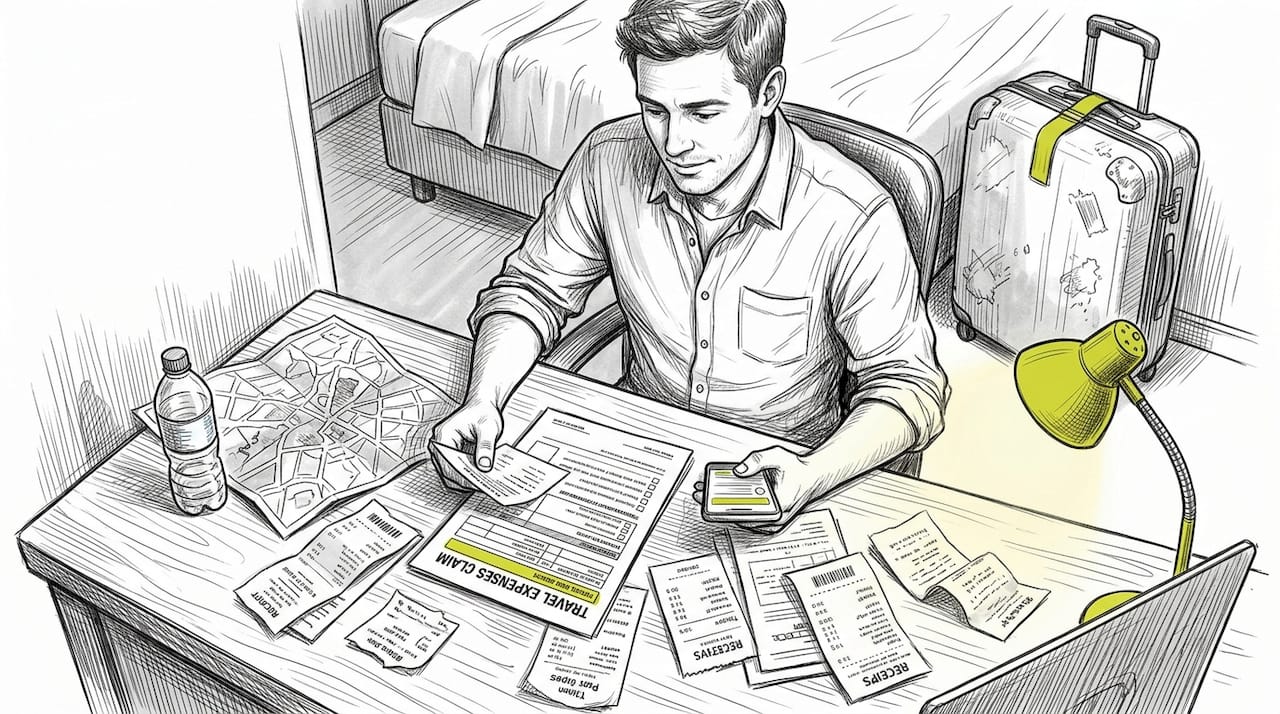
Before you ever need care, confirm your insurer’s network at your destination and understand precisely what documentation you will need to submit a reimbursement claim. Many insurers will only pay out once you have provided itemised bills, receipts, and supporting medical documentation. Missing a single required document can delay your claim by weeks or cause it to be rejected outright.
Here is a practical step-by-step process for navigating a reimbursement claim:
- Seek care first. Your health takes priority. Do not delay necessary treatment because you are worried about documentation.
- Identify yourself as an insured patient. Inform the clinic or hospital that you hold international health insurance. Ask whether they can bill your insurer directly.
- Request itemised documentation. If paying yourself, ask for itemised bills that list each service, procedure, and medication separately. A single lump-sum invoice is often insufficient for insurers.
- Obtain a written medical report. Ask your treating doctor for a summary of your diagnosis, treatment, and any prescribed medication. This medical report is frequently required alongside your financial documentation.
- Keep all receipts. Retain physical and digital copies of every receipt, invoice, and prescription. Photograph them immediately in case they are lost or damaged.
- Contact your insurer promptly. Most insurers have a time limit within which you must report a claim. Check your policy documents for this deadline.
- Submit via the insurer’s preferred channel. Many insurers now offer online claim portals or mobile apps. These speed up processing and allow you to track the status of your claim in real time.
- Follow up proactively. If you have not heard back within the expected timeframe, contact your insurer directly. Keep records of all communication.
Pro Tip: Create a dedicated folder on your phone (or a physical folder if you prefer) for insurance documents before you travel. Include your policy number, insurer’s emergency contact number, a list of in-network providers at your destination, and blank claim forms if your insurer provides them.
Mistakes in paperwork are one of the most common reasons for rejected or delayed claims. These are not always complex errors. Often, it is something as simple as a missing signature, an invoice not itemised correctly, or a claim submitted after the insurer’s deadline. Our guide to compare health care insurance helps you identify which policies have the most straightforward claims processes. You can also explore our overview of out of country health insurance for a detailed look at what varies between policies designed for travellers versus long-term residents.
Comparing insurance options: GHIC/EHIC, private, and travel cover
With a clear understanding of how claims work, the natural next question is: which type of insurance should you hold, and when? There is no single answer, because the right combination depends on your destination, the duration of your stay, and the nature of your activities. Let us examine the three main categories.
GHIC and EHIC are state-issued cards for UK residents that provide access to medically necessary treatment in EEA countries and Switzerland at the same cost as a local resident would pay. This can mean free treatment in countries with universal state healthcare, or a reduced charge in others. What it does not cover is private treatment, repatriation, or costs associated with pre-existing conditions that are not emergencies. It is also limited to temporary visits, not long-term residency.
Private international health insurance is designed to fill the gaps that state entitlements leave. It typically covers a broader range of conditions, provides access to private hospitals, and often includes repatriation cover, which means the cost of flying you home for further treatment if necessary. Policies vary widely, so comparing them carefully matters. For a thorough explanation, see our resource on expat health insurance.
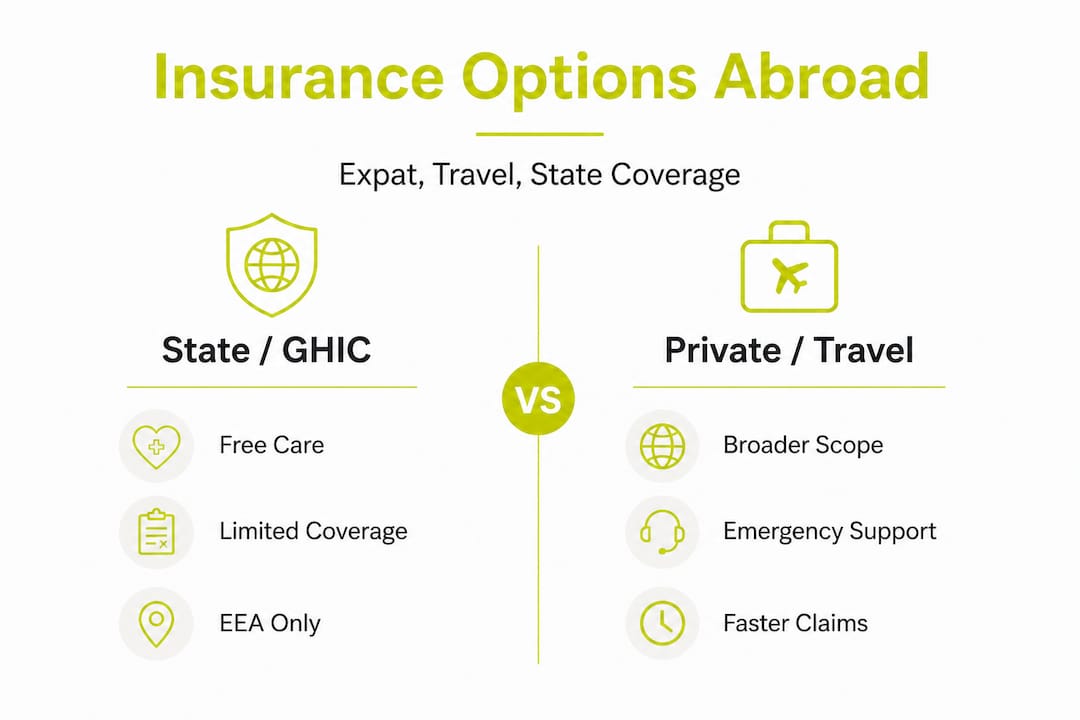
Travel insurance is intended for short stays, generally holidays and business trips. It focuses on emergencies, trip cancellation, and lost baggage. It is not designed for, nor adequate for, expatriate life or longer-term residency. Using travel insurance as a substitute for proper expat cover is one of the most common and costly mistakes people make.
| Cover type | Best for | Duration | Key limitations |
|---|---|---|---|
| GHIC/EHIC | UK residents in EEA/Switzerland | Temporary visits | Emergencies only, no repatriation |
| Travel insurance | Short trips and holidays | Days to weeks | Not for long-term stays or chronic conditions |
| Private expat insurance | Long-term residents and workers | Months to years | Premium cost, requires medical underwriting |
| Combined policies | Frequent travellers with complex needs | Flexible | Requires careful coordination |
Key things to consider when choosing your cover:
- Whether your destination country is in the EEA or has bilateral healthcare agreements with your home country.
- The length of your stay and your residency status.
- Whether you have pre-existing conditions that require ongoing management.
- The quality and cost of private healthcare in your destination country.
- Whether your employer provides any level of group cover that can be supplemented.
For a broader understanding of why private cover matters even for cautious travellers, our article on international health insurance for travellers lays out the practical case in detail.
The overlooked pitfalls (and opportunities) of overseas insurance
Here is something that many guides will not tell you plainly: purchasing insurance does not mean you are protected. What protects you is understanding your policy before you need it, not after something has gone wrong.
We have seen, time and again, that the expats who encounter the most difficulty with overseas insurance claims are not those who failed to buy cover. They are those who assumed coverage without verifying it. They chose a policy based on price alone, did not check provider networks, and discovered on the day of an emergency that their insurer had no arrangement with the nearest private hospital.
Confirming your insurer’s direct-billing network and understanding reimbursement requirements before you need care is not excessive caution; it is basic preparation. It is the difference between an insurance policy that functions as a genuine safety net and one that creates paperwork battles at the worst possible moment.
Policy details matter far more than the headline premium. A policy that costs slightly more but has a robust claims process, a strong provider network in your destination country, and a responsive emergency assistance line is worth considerably more than a cheaper alternative with gaps you will only discover in a crisis.
The good news is that practical tools exist to make this easier. Many insurers now provide mobile claim submission, real-time claim tracking, and digital document storage. Used proactively, these tools transform the claims experience. Review your policy annually, particularly if your circumstances change, because your cover should evolve with your life abroad.
For students specifically, getting this right from the outset matters enormously. Our resource on insurance tips for students covers how to coordinate state and private cover effectively during international study placements.
Support for your overseas insurance journey
Armed with a clear understanding of how overseas insurance works, the next practical step is securing cover that genuinely fits your situation. Whether you are relocating as an expat, studying abroad, or spending extended time overseas, the right policy makes an enormous difference.
At Unparalleled Global Benefits, we specialise in helping expats, families, students, and travellers find tailored international insurance solutions. From reviewing expat health insurance explained to understanding the full range of types of expat insurance available for protecting your health abroad, our platform is designed to make the process clear and straightforward. We would encourage you to explore your options, request a quote, and ensure your cover matches the reality of life overseas, not just the assumption of it.
Frequently asked questions
Do I need separate insurance for each country I visit or live in?
Some international policies cover multiple countries under a single plan, but provider network availability and coverage details may vary by destination, so always verify with your insurer before travel.
Can I use my UK health insurance abroad?
UK residents can access limited state care in EEA countries and Switzerland via the GHIC or EHIC card, but this does not replace comprehensive health insurance, particularly for long-term stays or treatment beyond emergency care.
How do I claim reimbursement for overseas medical costs?
Collect itemised bills, receipts, and a medical report from your treating provider, then submit them to your insurer through their claims portal or by post, as insurers require invoices and proof of payment before processing reimbursements.
What is the difference between travel and expat insurance?
Travel insurance is intended for short trips and covers emergencies and cancellation, while expat insurance provides comprehensive, long-term medical cover for people living outside their home country for extended periods.
What if my insurer does not have a direct-billing clinic network?
You will need to pay the treatment provider yourself and then submit a reimbursement claim with all required documentation, as direct billing depends on a pre-existing arrangement between your insurer and the specific provider.
Recommended
- Understanding Travel Insurance for Expats: A Clear Guide – Unparalleled Global Benefits
- Travel vs expat insurance: choose the right cover abroad – Unparalleled Global Benefits
- Step-by-step guide to expat insurance: secure global cover – Unparalleled Global Benefits
- Complete Guide to Travel Insurance for Expats Abroad – Unparalleled Global Benefits
- How to Choose Family Health Insurance: A Practical UK Guide