

TL;DR:
- Mandatory au pair insurance is legally required and essential for visa approval and safety.
- Cover must include health, accident, and liability insurance, tailored to each country’s rules.
- Using proper, compliant insurance prevents costly issues and ensures a smooth placement.
Many au pairs arrive in their host country believing their travel insurance will handle everything. It often does not. The gap between what you assume is covered and what is legally required can lead to visa refusals, placement cancellations, or enormous out-of-pocket medical bills. Understanding mandatory insurance is not just administrative paperwork; it is the foundation of a safe, legal, and stress-free au pair experience. This guide walks you through exactly what cover you need, how requirements vary by country, and the most common mistakes to avoid before you board that flight.
Table of Contents
- Understanding mandatory insurance for au pairs
- Key types of insurance required for au pairs
- Country-specific insurance rules and visa compliance
- Common pitfalls and how to avoid insurance mistakes
- What most guides miss about mandatory au pair insurance
- Get protected: Solutions for au pairs seeking mandatory insurance
- Frequently asked questions
Key Takeaways
| Point | Details |
|---|---|
| Specific cover required | Au pairs must obtain health, accident, and liability insurance tailored to their destination country and placement. |
| Varying international rules | Each host country may set unique insurance requirements, so confirm what’s needed well before departure. |
| Standard travel insurance not enough | General travel policies rarely satisfy au pair visa rules; seek specialist cover to avoid denied placements. |
| Documentation is critical | Always carry certified proof of your insurance for visa and agency checks. |
Understanding mandatory insurance for au pairs
The term “mandatory insurance” refers to cover that is legally required either by the host country’s visa rules, the placement agency’s standards, or both. It is not optional. It is not something you can arrange after arrival. If you do not have the right policies in place, you risk fines, visa cancellation, or being left without any financial protection during a medical emergency.
So why do countries and agencies take this so seriously? The answer is straightforward. Au pairs occupy a unique legal position. You are neither a tourist nor a fully employed worker in the traditional sense. This creates gaps in the standard social welfare and employment protections that locals enjoy. Without mandatory insurance, you could face a serious accident with no financial safety net whatsoever.
As au pair visa insurance requirements outline, au pairs must have specific types of health and liability cover depending on the destination country’s laws and visa requirements. Agencies affiliated with IAPA insurance standards also enforce minimum cover levels to protect both au pairs and host families.
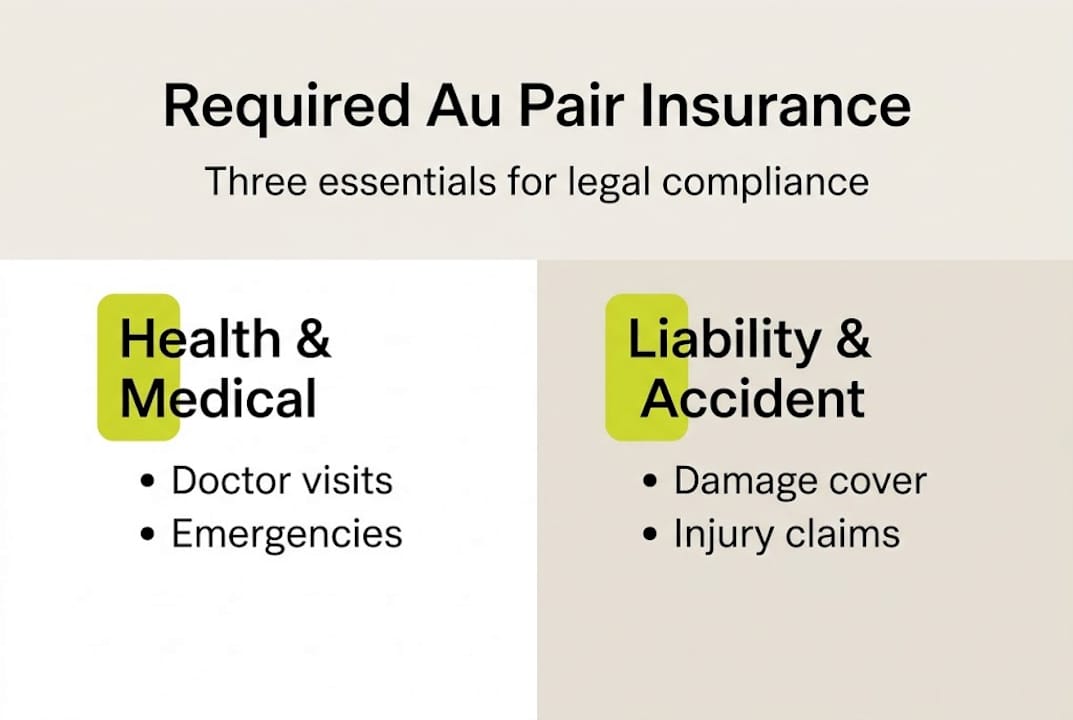
The insurance requirements for au pairs can feel overwhelming at first, but they generally fall into a few clear categories:
- Health and medical insurance: Covers doctor visits, hospital stays, and emergency treatment
- Accident insurance: Pays out if you are injured while working in the host home
- Third-party liability insurance: Covers damage you accidentally cause to property or persons
- Repatriation cover: Funds your return home in the event of a serious medical emergency or death
- Emergency evacuation: Required in some countries for remote or high-risk placements
Failing to carry the correct mandatory insurance is not just a paperwork problem. It can mean being turned away at the border, losing your placement, or facing thousands in uninsured medical costs.
Knowing what each type of cover does is the first step. The next is understanding precisely which ones apply to your situation.
Key types of insurance required for au pairs
Now that we have defined “mandatory,” let us look at what specific insurance cover you will need as an au pair. The three non-negotiable categories in most countries are health insurance, accident insurance, and personal liability cover. As the 7 pasos checklist de seguros para au pairs 2025 confirms, these are typically non-negotiable for au pairs regardless of destination.
Here is a quick comparison to help you understand what each type actually covers:
| Insurance type | What it covers | Typical minimum requirement |
|---|---|---|
| Health and medical | Doctor visits, surgery, hospitalisation, prescriptions | £30,000 to £100,000+ |
| Accident insurance | Injuries sustained while working in the host home | Varies by country |
| Third-party liability | Accidental damage to property or injury to others | £500,000 to £1,000,000 |
| Repatriation cover | Emergency return to home country | Often bundled with health cover |
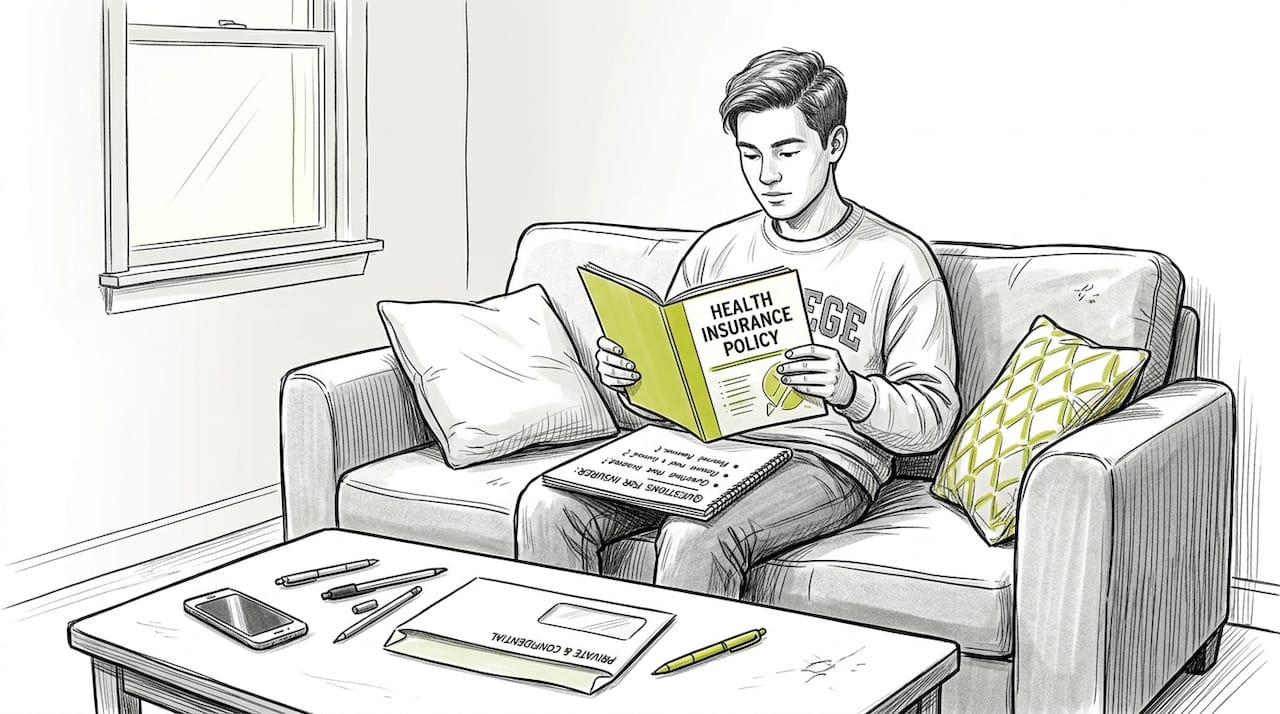
For medical coverage for au pairs, the most important thing to check is whether the policy covers pre-existing conditions and whether there is a waiting period before cover begins. Some cheaper policies exclude both, which could leave you exposed from day one.
Liability insurance is often underestimated. Imagine accidentally breaking an expensive piece of furniture or, more seriously, causing a child in your care to be injured. Without liability cover, you would be personally responsible for all associated costs. That is a risk no au pair should take.
For comprehensive protection for au pairs, look for a policy that bundles all three core types together. Standalone policies can leave gaps between what each one covers.
You should also check insurance after arrival requirements, as some countries allow a short window to arrange cover locally, while others require proof before you even apply for your visa.
Pro Tip: Always ask your agency and host family in writing which specific policies satisfy the visa requirements for your destination. Keep that confirmation alongside your insurance documents.
Country-specific insurance rules and visa compliance
Mandatory insurance is not the same everywhere. Requirements shift based on where you are placed, and assuming your policy works in one country because it worked in another is a common and costly mistake.
Many European countries mandate that au pairs carry both health and liability insurance, while some countries also require repatriation cover. Outside Europe, requirements can be even more specific. Here is a summary of common destinations:
| Country | Health insurance required | Liability required | Repatriation required | Notes |
|---|---|---|---|---|
| Germany | Yes | Yes | Recommended | Minimum €30,000 health cover |
| France | Yes | Yes | Yes | Must be EU-compliant |
| United Kingdom | Yes | Yes | Recommended | NHS access limited for non-EEA au pairs |
| United States | Yes | Varies by agency | Recommended | J-1 visa has specific cover minimums |
| Australia | Yes | Yes | Yes | Must meet visa subclass requirements |
For country insurance rules specific to your destination, always verify directly with the embassy or consulate. Agencies provide guidance, but embassies make the final decision on visa approval.
Here is a step-by-step process for checking your country’s requirements:
- Research the destination country’s visa page for au pair or cultural exchange visa requirements
- Contact your placement agency and ask for a written list of required insurance types and minimum cover amounts
- Verify directly with the embassy that your chosen policy meets their standards
- Obtain your insurance certificate and policy summary before submitting your visa application
- Keep all documents accessible throughout your placement, both digitally and in print
A useful resource for insurance in Europe can clarify whether existing European cards provide any benefit, though in most cases they do not fully replace dedicated au pair cover.
When choosing au pair insurance, prioritise policies that clearly state they meet the host country’s visa requirements. Vague policy wording can cause problems at the visa interview stage.
Common pitfalls and how to avoid insurance mistakes
Even with all this information, many au pairs still slip up, often in ways they do not spot until it is too late. The most frequent mistake is purchasing a standard travel insurance policy and assuming it covers au pair placements. It usually does not.
As dedicated au pair insurance guidance makes clear, not all general travel insurance meets au pair visa requirements; dedicated au pair insurance is often essential. Travel policies are designed for short trips, not long-term cultural exchange placements involving childcare responsibilities.
Here are the most common errors au pairs make, and what each one can cost you:
- Buying a tourist travel policy: Often excludes work-related accidents and liability for childcare activities
- Ignoring liability cover: Leaves you personally liable for property damage or injury in the host home
- Forgetting documentation: Having cover but no proof means visa officers cannot verify compliance
- Not checking cover limits: A policy with a £5,000 medical limit is dangerously low for countries like the United States
- Letting cover lapse mid-placement: A gap of even a few days can void your visa conditions
For a full breakdown of types of au pair insurance and what each one actually protects, it is worth reviewing the differences carefully before purchasing.
If you discover a gap in your cover after arrival, act quickly. Contact your insurer immediately to understand what can be added or amended. Reach out to your agency for guidance on locally compliant options. Do not wait until an incident occurs.
Pro Tip: Always get written confirmation from your insurer that your policy meets the host country’s legal standards. A simple email stating this can save you hours of stress at a visa interview or border crossing.
Understanding the benefits of au pair travel insurance and reviewing Cultural Care insurance guidance can also help you benchmark what a solid policy should include.
What most guides miss about mandatory au pair insurance
Here is something most guides do not say plainly: having insurance on paper and having insurance that actually works when you need it are two very different things. Many au pairs buy a policy, tick the compliance box, and then discover at claims time that their cover has exclusions that make it nearly useless.
Generic travel insurance often fails on tricky claims, particularly those involving work-related injuries or liability during childcare. The insurer argues the activity falls outside the policy scope. You are left with the bill.
Proper compliance is not just about satisfying paperwork. It gives you genuine security. Knowing your medical realities for au pairs are covered by a policy built for your exact situation changes how you approach your placement. You focus on the experience, not the risk.
Host families also respond differently to au pairs who can prove full cover upfront. It signals professionalism and responsibility. The peace of mind is mutual, and it builds trust before you even walk through the front door.
Get protected: Solutions for au pairs seeking mandatory insurance
Ready to make the process easy and stay compliant from day one? At Unparalleled Global Benefits, we understand that sorting through insurance requirements feels like navigating a maze. That is exactly why we have built resources to help you find mandatory cover that matches your host country and agency requirements precisely.

Whether you are heading to Europe, the United States, or Australia, our expat insurance guides walk you through what each destination demands. You can also explore types of health cover to compare plans tailored specifically for au pairs. Start your placement with confidence, knowing your cover is compliant, complete, and ready to protect you.
Frequently asked questions
Is basic travel insurance enough for au pairs?
No, most au pair programmes require specialised health and liability insurance that standard travel policies do not cover. Dedicated au pair insurance covers requirements that most travel insurance does not.
Who is responsible for paying for mandatory au pair insurance?
Responsibility varies: sometimes the family pays, sometimes the au pair, or a combination. Cost-sharing of insurance varies, so always confirm payment terms with your family or agency before accepting a placement.
What happens if my insurance does not meet the country requirements?
You may have your visa application denied or your placement cancelled if your insurance does not fulfil local legal standards. Visa offices check for proof of correct cover, and lack of compliant insurance can halt your placement entirely.
Does mandatory au pair insurance cover dental or eye care?
Typically, core cover focuses on emergencies and liability; dental and vision benefits may be optional extras. Standard au pair insurance centres on medical emergencies, not routine dental or vision care.
How do I prove I have the right insurance for my visa?
Request an official certificate and policy summary in English for your visa interview or agency. Agencies and embassies require proof of insurance in the local language or English to process au pair visas.
Recommended
- Essential insurance for au pair visas: coverage guide – Unparalleled Global Benefits
- Understanding medical coverage for au pairs: complete guide – Unparalleled Global Benefits
- Requisitos de seguro para au pairs: Guía completa 2025 – Unparalleled Global Benefits
- Insurance for Au Pairs Abroad: Comprehensive Protection with AU-PAIR24