

TL;DR:
- Most expats lose their domestic insurance coverage upon moving abroad. Medical emergencies can cost over $100,000, creating significant financial risks. Expats need three core insurances health, travel, and liability, ideally with international, portable plans to cover their unique lifestyle.
Many expats assume their domestic insurance travels with them. It almost never does. Whether you’ve relocated for work, family, or lifestyle, the moment you set up residence in another country, most home policies stop applying. The gap this creates is not a minor administrative inconvenience. 68% of international professionals have insufficient medical protection, with average uncovered expenses of $26,800 per claim. That figure should give anyone pause. This guide explains the real risks, the types of cover you actually need, and how to choose the right plan before you find yourself facing a bill you cannot pay.
Table of Contents
- The hidden risks expats face without insurance
- Health, travel and liability: The three pillars of expat protection
- Local vs international insurance: Which is right for you?
- Common coverage gaps: Pre-existing conditions, exclusions and the digital nomad challenge
- Why most expats underestimate insurance and how you can avoid their mistakes
- Get the right cover for your life abroad
- Frequently asked questions
Key Takeaways
| Point | Details |
|---|---|
| Most expats are underinsured | Standard domestic policies rarely protect you abroad, and hidden gaps can be costly. |
| Proper cover is complex but crucial | Health, travel, and liability insurance are all essential for living securely outside your home country. |
| Compare local and international plans | Assess gaps, exclusions, and portability before you buy so you are protected wherever you go. |
| Digital nomads and families need extra care | Portable, multi-country plans and checking for exclusions protect those with unique expat lifestyles. |
The hidden risks expats face without insurance
Now that you know standard insurance rarely covers expats, let’s examine what lurks beneath the surface for those living without proper cover.
The most immediate risk is financial. Medical emergencies abroad can generate costs that are genuinely life-altering. A single hospitalisation in the United States, for example, can exceed $100,000. Even in countries with relatively affordable healthcare, specialist treatment, surgery, or long-term rehabilitation can quickly reach figures that drain savings or force families into debt. Most people do not realise how exposed they are until something goes wrong.
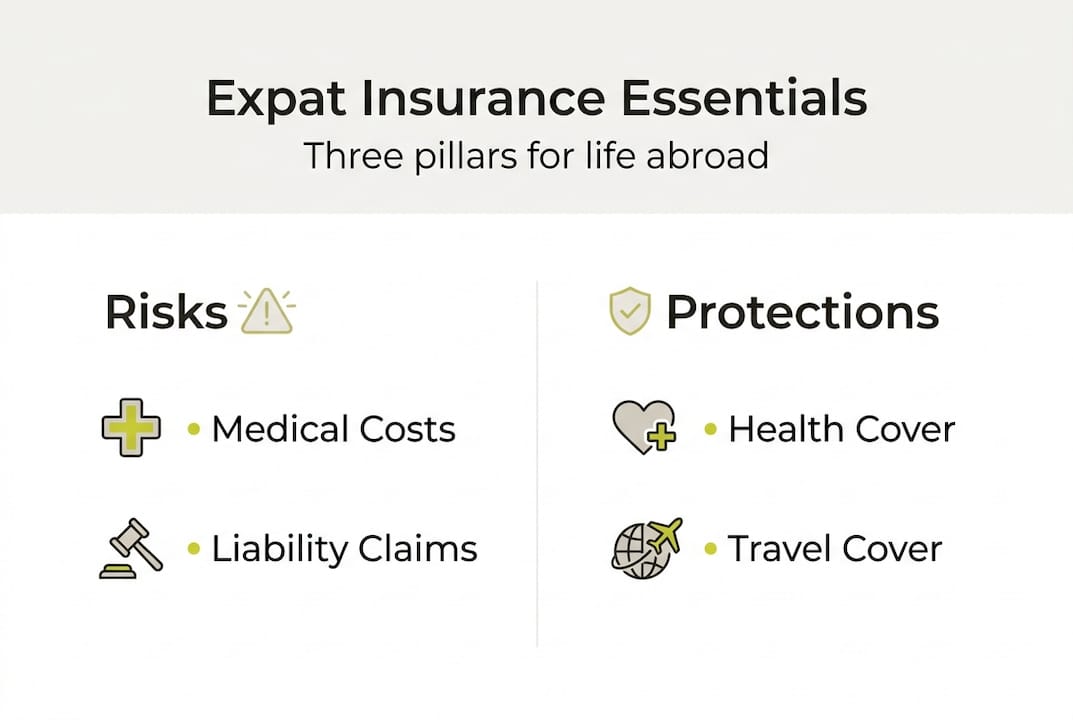
Understanding your insurance needs abroad before you move is the single most effective way to avoid these situations. Yet 41% of expats only discover coverage gaps during emergencies, which is precisely the worst time to find out.
Beyond health, there are several other risks that often go unacknowledged:
- Personal liability claims: If you accidentally injure someone or damage property, you may face legal action. Without liability cover, you pay out of pocket.
- Theft and loss: Laptops, passports, and personal belongings are vulnerable, particularly during travel. Standard home contents insurance rarely extends abroad.
- Residence permit requirements: Several countries, including Germany, France, and many Schengen states, require proof of health insurance before granting a visa or residency permit.
- Family complexity: If you move with children, their healthcare needs, school accidents, and dental emergencies all add layers of exposure.
“The assumption that ‘something will be sorted out’ is the most expensive mistake an expat can make. By the time you need cover, it is already too late to buy it.”
The practical reality is that living abroad without proper insurance is not just risky, it is often illegal. And for families, the stakes are even higher because one uncovered incident can affect everyone.
Health, travel and liability: The three pillars of expat protection
With a sense of how risky being uninsured can be, let’s break down the core types of insurance you actually require abroad.
Thinking about expat insurance as a single product is a common mistake. In reality, full protection comes from three distinct types of cover, each addressing a different category of risk. Understanding what each one does helps you avoid paying for overlap while also ensuring you have no blind spots.
Here is a quick comparison of the three pillars:
| Type of cover | What it protects | Key benefit |
|---|---|---|
| Health / medical | Hospitalisation, surgery, ongoing care | Covers the highest-cost emergencies |
| Travel insurance | Trip cancellation, lost baggage, delays | Protects against journey disruptions |
| Liability insurance | Third-party injury, property damage, legal fees | Shields against lawsuits and claims |
These three types work together. A health plan covers your body. Travel insurance covers your journey. Liability cover protects your finances if you are held responsible for harm to others.
The types of expat insurance available today are more flexible than many people realise, with options for individuals, families, and corporate assignees.
Here is how to think about each one in order of priority:
- Medical / health insurance: This is non-negotiable. It covers GP visits, specialist referrals, emergency treatment, and in many plans, mental health support and maternity care.
- Travel insurance: Essential if you travel frequently between countries, even for short trips. Look for plans that cover medical evacuation and repatriation.
- Liability insurance: Often excluded from health plans, yet crucial for covering injury, property damage, or legal fees if someone makes a claim against you.
Pro Tip: Liability cover is frequently overlooked by expats who rent homes, own pets, or drive cars abroad. If a visitor injures themselves in your rented flat or your dog bites a neighbour, you may be personally liable for costs that run into thousands.
Local vs international insurance: Which is right for you?
Now that you know what to insure, let’s compare local country solutions against international policies for expats.
This is one of the most practical decisions you will make as an expat. Local insurance plans are those offered by providers in your host country. International plans are designed specifically for people living outside their home country, often covering multiple regions or the entire world.
Local plans can work well in certain contexts. If you are living in a country with a strong public healthcare system, such as Germany or the Netherlands, a local statutory plan may provide solid basic cover at a reasonable cost. Local plans are often cheaper and may be legally required for residents.
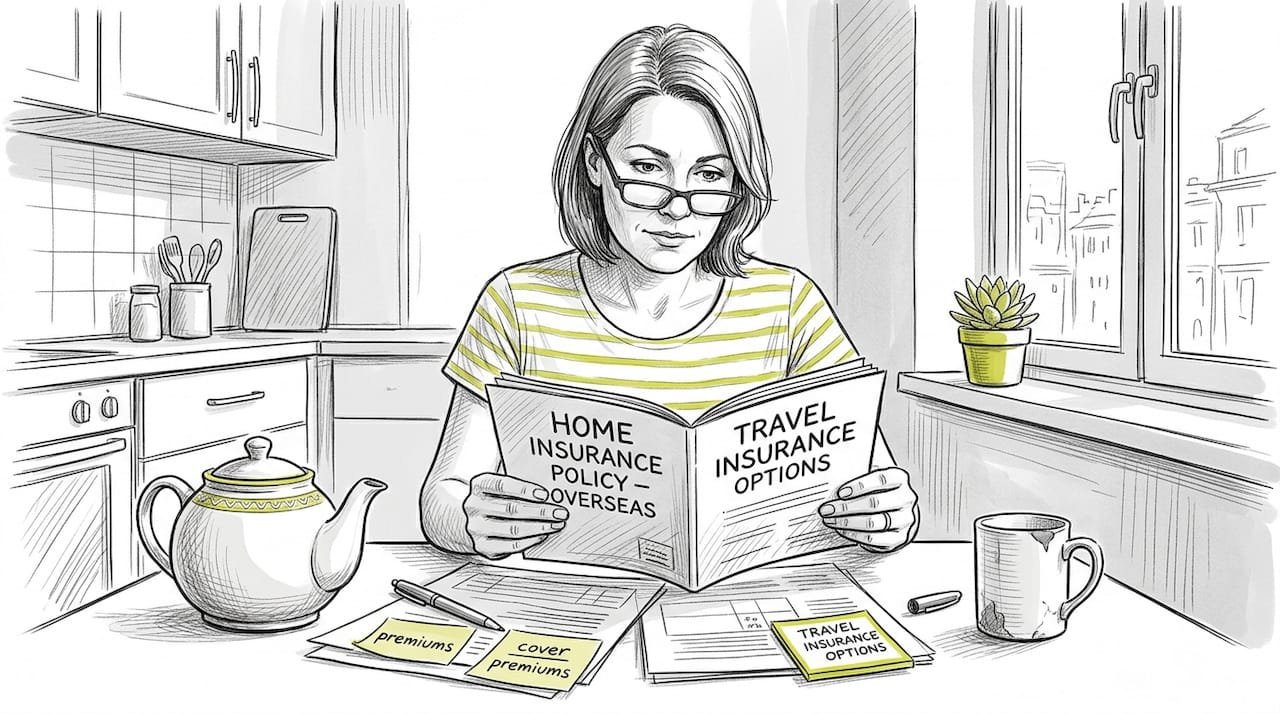
However, there are real limitations. 39% of expats expect international health cover, but only 32% actually receive it. Local plans can leave significant gaps, particularly around specialist care, evacuation, and cover when you travel outside the host country.
Here is how the two options compare:
| Feature | Local insurance | International insurance |
|---|---|---|
| Portability | Limited to host country | Valid across multiple countries |
| Coverage limits | Often lower | Generally higher |
| Language support | Local language only | Multilingual support common |
| Network access | Local hospitals | Global hospital networks |
| Cost | Usually lower | Higher, but more flexible |
Key scenarios where international cover is the stronger choice:
- Families relocating together, where children’s needs and maternity cover are priorities
- Frequent travellers or posted assignees who move between countries regularly
- Digital nomads who may not qualify for local plans due to residency requirements
When you compare working abroad insurance options side by side, the value of portability becomes clear. You can also explore international plans for expats that are designed to fill the gaps that local policies leave behind. If you are still weighing up your insurance abroad options, a side-by-side review is always worth the time.
Common coverage gaps: Pre-existing conditions, exclusions and the digital nomad challenge
We’ve looked at local versus international options, but what are the practical pitfalls and blind spots you’ll want to check before buying cover?
Even a well-structured insurance plan can leave you exposed if you do not read the exclusions carefully. The most common gaps tend to cluster around a few specific areas, and knowing them in advance puts you in a much stronger position.
Pre-existing conditions are the most frequent source of dispute. Most insurers will either exclude them entirely or impose a waiting period before they are covered. If you have a chronic condition such as diabetes, asthma, or a heart condition, you need to declare it and confirm in writing how it is handled under your policy.
Digital nomads face a particularly complex challenge. Standard expat plans often assume a fixed country of residence, which does not reflect the reality of someone moving between countries every few months. Pre-existing conditions are often excluded, digital nomads may need multi-country cover, and US Medicare is not valid abroad, leaving many without any safety net.
Other common gaps include:
- US Medicare and similar national schemes: These do not apply once you live abroad full-time, regardless of how long you have contributed.
- Mental health and dental cover: Frequently excluded from basic plans or capped at very low limits.
- Adventure sports and activities: If you ski, dive, or cycle competitively, standard plans may not cover related injuries.
- Children born abroad: Some plans require a separate application for newborns rather than automatic inclusion.
Pro Tip: Always ask your insurer to explain their moratorium underwriting process in plain language before you sign. This refers to how they handle pre-existing conditions, and the answer will directly affect your actual level of protection.
If you are a location-independent worker, read our guide to insurance for digital nomads and the broader digital nomad cover guide to find plans that match your lifestyle.
Why most expats underestimate insurance and how you can avoid their mistakes
Having laid out the minefield of potential gaps and how to spot them, what are the biggest mindset mistakes to avoid as an expat?
In our experience, the most damaging belief is not ignorance, it is overconfidence. Many expats who have lived abroad for a year or two without incident begin to feel that serious risks simply do not apply to them. This is a natural psychological response, but it is also statistically unreliable. Risk does not reduce with time. It accumulates.
The second mistake is treating insurance as a one-time decision. Your cover needs to be reviewed every time your circumstances change, when you move countries, change jobs, add a family member, or take on new activities. A plan that was right two years ago may have significant gaps today.
The third mistake is buying on price alone. Cheap plans exist for a reason. They typically carry higher excesses, tighter exclusions, and lower limits. The real cost of a cheap plan only becomes visible when you need to make a claim.
We also see expats underestimate the legal dimension. Liability exposure in particular is growing as remote work increases. If you work from a rented flat, host clients, or operate any kind of business activity from your home abroad, your personal liability exposure is real and often uninsured.
The most practical step you can take is to do a structured expats insurance comparison with a broker who specialises in international cover. Ask them to walk through your exclusions line by line. That conversation is worth more than any generic plan summary.
Get the right cover for your life abroad
Understanding the risks is only half the work. The other half is taking action before you need it.
At Unparalleled Global Benefits, we work with expats, families, digital nomads, and international professionals to find cover that actually fits their lives. Whether you are preparing for your first move or reviewing a policy that has not been updated in years, we can help. Start by reading our guide to secure expat care, or use the 2026 expat insurance guide to understand your full range of options. Ready to see what is available for your situation? Compare expat insurance plans and find the right level of protection today.
Frequently asked questions
Is health insurance compulsory for expats?
In many countries, health insurance is a legal requirement for visa and residency applications. Even where it is not legally required, proof of insurance is strongly recommended to protect against the high cost of medical care abroad.
Does travel insurance cover health emergencies for expats?
Travel insurance may provide limited emergency medical cover, but it is not a substitute for full health insurance. Many travel policies carry significant exclusions for ongoing or pre-existing conditions, making them unsuitable for long-stay expats.
Will my local insurance cover me abroad?
Most domestic insurance policies cease to apply once you live or work full-time in another country. With 68% of international professionals already underinsured, relying on a home policy is a risk not worth taking.
What insurance should digital nomads prioritise?
Digital nomads should prioritise international, portable medical and liability cover that remains valid across all countries they visit. Multi-country portable plans are specifically designed for this lifestyle and offer the flexibility that standard expat plans do not.
Recommended
- Insurance for Living Abroad – Ensuring Global Security – Unparalleled Global Benefits
- International Expat Health Insurance: Protecting Your Wellness Abroad – Unparalleled Global Benefits
- Types of expatriate insurance: smart cover choices abroad – Unparalleled Global Benefits
- Essential expat medical insurance basics for living abroad – Unparalleled Global Benefits
- Waarom verzekeren tegen risico’s essentieel is voor jou