
Finding travel insurance for extended international trips becomes challenging after 70, especially when you need coverage spanning months rather than weeks. Most standard policies either exclude seniors entirely or impose restrictive terms that fail to address the realities of long stays abroad. This guide walks you through securing comprehensive long stay travel insurance that covers pre-existing conditions, protects you during extended journeys, and helps you avoid the costly mistakes that lead to claim denials.
Table of Contents
- Introduction To Long Stay Travel Insurance For Over 70s
- Prerequisites: What You Need Before Starting Your Insurance Search
- Step-By-Step Application Process For Long Stay Travel Insurance
- Handling Pre-Existing Medical Conditions In Your Policy
- Choosing The Right Policy: Comparison And Selection Tips
- Common Mistakes And How To Avoid Them
- Expected Outcomes And How To Measure Success
- Summary And Next Steps
- Find The Best Long Stay Travel Insurance For Over 70s Today
- Frequently Asked Questions
Key Takeaways
| Point | Details |
|---|---|
| Specialized coverage essential | Long stay policies cover 3 to 12+ months with options for pre-existing conditions if properly declared. |
| Disclosure prevents denials | Accurate medical disclosure avoids up to 40% of claim denials among senior travelers. |
| Compare thoroughly | Evaluate multiple policies focusing on coverage limits, emergency evacuation services, and total cost. |
| Timing matters | Apply at least 2 weeks before departure to secure better approval chances and full coverage validity. |
| Avoid common errors | Underestimating trip length and failing to understand renewal terms create dangerous coverage gaps. |
Introduction to Long Stay Travel Insurance for Over 70s
Long stay travel insurance typically covers trips ranging from 3 to 12 months or longer, designed specifically for extended international travel. Seniors face unique health and emergency risks that require specialized policy terms unavailable in standard short term plans. Approximately 85% of reputable policies now cover stable pre-existing conditions when declared, making thorough disclosure critical.
These policies include vital protections beyond basic medical coverage:
- Emergency medical treatment and hospitalization abroad
- Medical evacuation to appropriate facilities or home country
- Trip interruption coverage for unexpected returns
- Repatriation of remains if the worst occurs
- 24/7 emergency assistance hotlines
Understanding these specifics helps you find coverage for seniors up to 85 that fits your extended international travel plans. The right policy addresses both your health situation and trip duration, ensuring you travel with confidence rather than worry.
Prerequisites: What You Need Before Starting Your Insurance Search
Successful applications start with thorough preparation. Gather your complete medical history, including recent doctors’ reports, current medications, and any health assessments from the past 12 months. Insurers need detailed information to assess risk accurately and price your policy fairly.
Prepare your travel itinerary with exact dates and destinations. Vague plans create problems during underwriting. Knowing your health status before applying improves accuracy and acceptance rates. Purchasing travel insurance at least 2 weeks before departure significantly increases chances of approval and coverage.
Essential documents include:
- Complete medication list with dosages
- Recent medical examination results
- Specialist reports for ongoing conditions
- Travel dates and destination details
- Emergency contact information
Understanding insurer requirements and policy exclusions before applying prevents wasted time on unsuitable policies. Research medical condition insurance for elderly travelers to identify providers experienced with senior coverage.
Pro Tip: Create a medical summary document listing all conditions, treatments, and medications with dates. This speeds up applications and ensures consistency across multiple insurer quotes.
Step-by-Step Application Process for Long Stay Travel Insurance
The application process requires attention to detail and honesty. Follow these steps to maximize your approval chances:
- Gather and verify all medical documents and health details before starting any application.
- Complete detailed medical questionnaires honestly, focusing particularly on pre-existing conditions and their stability.
- Submit trip details including exact length and planned destinations with your application.
- Wait for processing, which typically takes up to 2 weeks before policy issuance.
- Review your policy carefully for coverage limits, exclusions, and renewal clauses before accepting and paying.
Accurate disclosure of medical history in applications dramatically decreases claim denial risk. Insurers cross reference claims against application information, so inconsistencies trigger automatic denials.

Applying well in advance provides time to address questions, gather additional documentation, or explore alternative insurers if needed. Rush applications often contain errors or omissions that haunt you during claims. Understanding how to extend travel insurance before your trip starts prevents coverage gaps if plans change.
Pro Tip: Save copies of all application forms and supporting documents. You’ll need these if filing claims or extending coverage mid trip.
Handling Pre-Existing Medical Conditions in Your Policy
Pre-existing conditions represent the biggest challenge for senior travelers seeking insurance. Stable conditions are those without recent symptoms, treatment changes, or hospitalizations, typically defined as 3 to 6 months of stability. Unstable conditions often face exclusions or coverage limitations.
Full and honest disclosure of all conditions remains absolutely required. Pre-existing condition non-disclosure causes about 40% of senior traveler claims denials. Insurers investigate claims thoroughly and check medical records against applications.
Common exclusions include:
- Conditions with recent hospitalizations
- Progressive illnesses showing recent worsening
- Treatments still being adjusted
- Awaiting test results or specialist consultations
Policies vary widely on coverage limits and exclusions related to pre-existing conditions. Some insurers specialize in senior travel health insurance for seniors with complex health histories.
| Condition Type | Typical Coverage | Common Exclusions |
|---|---|---|
| Controlled hypertension | Usually covered | Recent changes in medication |
| Stable diabetes | Covered with declaration | Recent complications or hospitalizations |
| Heart conditions | Limited or excluded | Any symptoms in past 6 months |
| Cancer history | Case by case review | Active treatment or monitoring |
Choosing the Right Policy: Comparison and Selection Tips
Evaluating insurance options requires focusing on key criteria beyond price alone. Look for policies offering coverage durations that match or exceed your planned trip length with clear extension options. Emergency evacuation and repatriation services should be standard inclusions, not expensive add-ons.
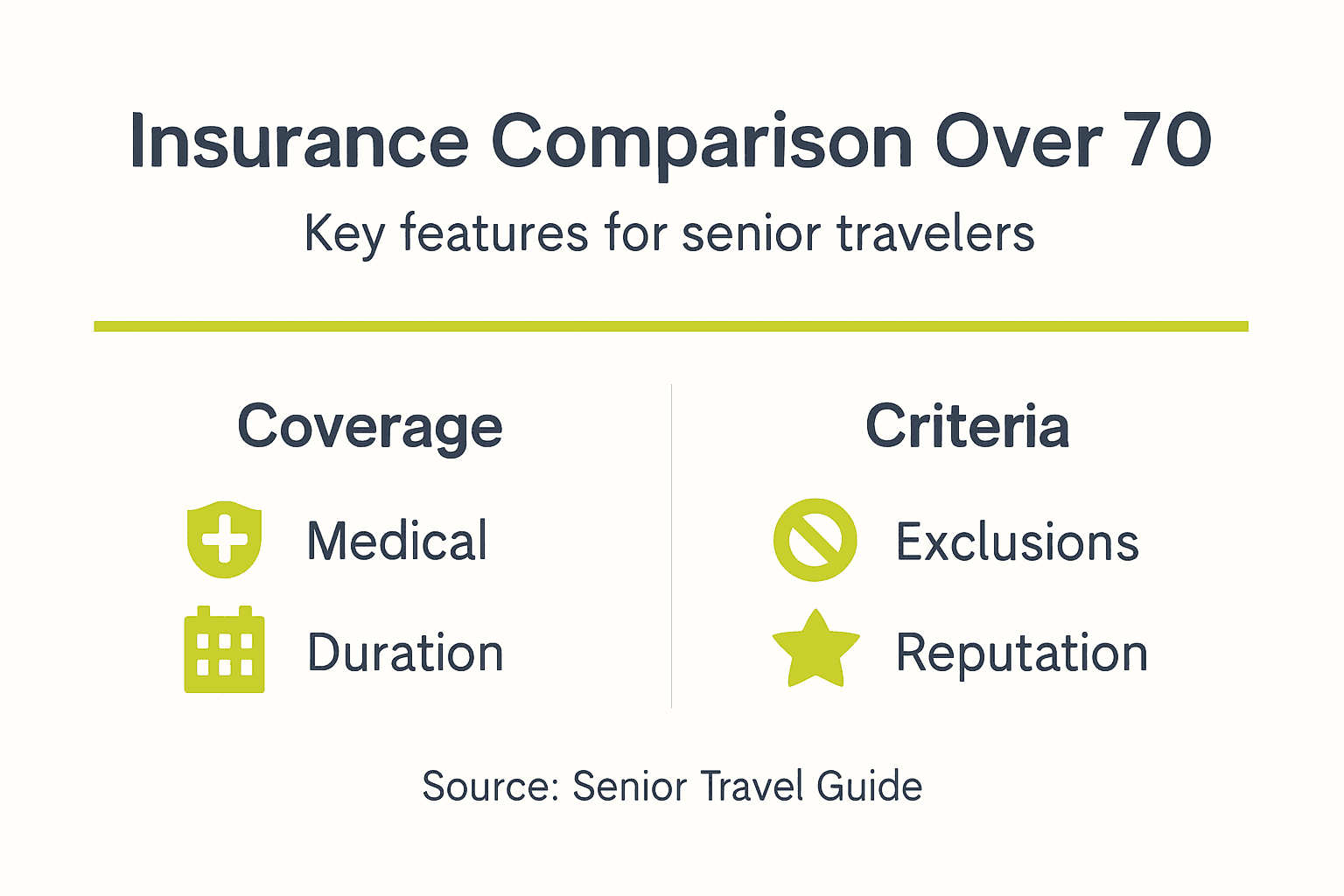
Transparent policy terms about exclusions and renewal requirements prevent nasty surprises. Some insurers market competitive initial rates but impose steep renewal increases or restrictive conditions. Balance cost versus coverage comprehensiveness to optimize value rather than simply buying the cheapest option.
Comparing multiple policy quotes improves chances of finding comprehensive coverage at competitive prices. Request quotes from at least three insurers specializing in senior travel coverage.
| Feature | Budget Policy | Standard Policy | Premium Policy |
|---|---|---|---|
| Trip duration | Up to 6 months | Up to 12 months | 12+ months |
| Medical coverage | $100,000 | $250,000 | $500,000+ |
| Pre-existing conditions | Limited | Stable conditions covered | Comprehensive coverage |
| Evacuation | Basic | Full evacuation | Unlimited evacuation |
| Monthly cost | $200-$300 | $400-$600 | $600-$800 |
Focus on insurers with strong reputations for paying claims promptly. Check reviews from other senior travelers about their claims experiences. The best annual travel insurance plans for seniors balance comprehensive coverage with reasonable premiums.
Common Mistakes and How to Avoid Them
Seniors frequently make preventable errors when purchasing long stay travel insurance. Learning from others’ mistakes saves money and prevents coverage gaps that leave you vulnerable abroad.
Always declare all pre-existing medical conditions, even minor ones you consider irrelevant. Insurers decide what matters, not you. Accurately estimate trip length and add buffer time rather than buying coverage for less than your actual stay. 40% of claims are denied due to non-disclosure of pre-existing conditions, and 25% suffer lapses from underestimated trip durations.
Understand policy renewal and extension terms before purchasing. Some policies allow easy extensions while traveling, others require returning home. Purchase insurance at least two weeks before departure to ensure full validity and avoid last minute rejections.
Critical mistakes to avoid:
- Assuming coverage automatically includes all conditions
- Buying policies from non-specialized insurers
- Ignoring policy exclusions and fine print
- Failing to keep documentation organized
- Not researching common pitfalls causing claim rejections
Keep copies of all policy documents and communications for claims support. Digital and physical copies ensure access regardless of circumstances. Review best travel insurance tips for seniors abroad before finalizing purchases.
Expected Outcomes and How to Measure Success
Realistic expectations about costs and coverage help you budget appropriately and avoid disappointment. Typical long stay travel insurance costs for seniors range from $200 to $800 per month, depending on age, health, destination, and coverage limits.
Comprehensive policies cover your full trip duration including extensions when properly arranged. Claims are typically approved when all pre-existing conditions were declared and policy terms followed during the trip. Emergency evacuation coverage represents a key success measure, as this service alone can cost $50,000 or more without insurance.
Success indicators include:
- Policy issued without exclusions for your main health concerns
- Coverage limits adequate for destination healthcare costs
- Clear understanding of claims procedures
- 24/7 emergency assistance contact information
- Confirmation of coverage for your specific destinations
Verify all coverage details before departing and keep communication records for claims. Having insurance that actually pays claims when needed defines success, not just holding a policy certificate. Research top insurers for seniors with proven track records.
Summary and Next Steps
Securing appropriate long stay travel insurance for seniors over 70 requires thorough preparation, honest disclosure, and careful policy comparison. Success depends on gathering complete medical information, confirming your itinerary, declaring conditions fully, and comparing multiple policies before purchasing.
Your action checklist:
- Compile all medical records and current health information
- Finalize travel dates and destinations
- Apply at least 2 weeks before departure
- Review policy exclusions and renewal terms carefully
- Keep documentation organized and accessible
Applying early provides time to address questions and explore alternatives if needed. Monitor policy validity throughout your trip and understand extension procedures before departing. Use reliable insurers with strong reputations and transparent terms to protect yourself during extended international travel.
Find the Best Long Stay Travel Insurance for Over 70s Today
You’ve learned how to navigate the complex world of long stay travel insurance for seniors. Now it’s time to put that knowledge into action.

Explore tailored long stay travel insurance plans designed specifically for travelers over 70 at Unparalleled Global Benefits. Compare top insurers for seniors offering comprehensive coverage including pre-existing conditions and extended trip durations. Get expert guidance through best travel insurance for health conditions to select policies that fit your health needs and travel itinerary. Start your application early with trusted providers featured in our seniors travel medical insurance guide to secure peace of mind throughout your journey.
Frequently Asked Questions
What is long stay travel insurance for over 70s?
Long stay travel insurance is coverage designed specifically for travelers over 70 going on extended trips, typically from 3 to 12+ months. It includes medical emergencies, evacuation, trip interruptions, and coverage for stable pre-existing conditions when properly declared.
How do pre-existing conditions affect my travel coverage?
Pre-existing conditions must be declared when applying. Stable conditions are usually covered, while unstable conditions may face exclusions. Non-disclosure causes up to 40% of senior traveler claim denials, so complete honesty during application is essential.
When should I apply to get approved in time?
Apply at least 2 weeks before departure to improve approval chances and ensure coverage starts on time. This allows processing time and opportunity to address questions. Last minute purchases often risk denial or restricted coverage that leaves you vulnerable.
What are common mistakes to avoid when buying insurance?
Failing to declare pre-existing conditions, underestimating trip duration, and ignoring renewal terms are major errors. Also avoid buying from non-specialized insurers and rushing applications without reading exclusions. Being thorough and proactive protects your coverage and claim success.
Recommended
- Travel Insurance for Seniors: Coverage Up to 85 Years of Age
- Travel Medical Insurance for Seniors Over 70 – Ensuring Global Health Security – Unparalleled Global Benefits
- 7 Key Factors for the Best Long Stay Travel Insurance – Unparalleled Global Benefits
- 7 Simple Ways to Find Cheap Travel Insurance for Seniors Over 80 – Unparalleled Global Benefits