

Navigating healthcare systems abroad can feel overwhelming, especially when you’re unsure if your coverage will protect you when it matters most. Many expatriates discover too late that their home country insurance doesn’t extend overseas, leaving them vulnerable to unexpected medical bills that can derail their international plans. This comprehensive guide walks you through everything you need to know about securing robust health insurance as an expat, from understanding coverage types to applying successfully and avoiding common pitfalls that catch even experienced travellers off guard.
Table of Contents
- Key takeaways
- Understanding expat health insurance coverage options
- Preparing to choose your expat health insurance plan
- How to apply and maintain your expat health insurance
- Common challenges and how to avoid mistakes with expat health insurance
- Get the right expat health insurance with Unparalleled Global Benefits
- Frequently asked questions
Key Takeaways
| Point | Details |
|---|---|
| Expat coverage options | International expat health insurance typically covers inpatient and outpatient care, emergency medical evacuation and maternity benefits, with scope varying by provider and plan. |
| Plan categories | There are three main categories: comprehensive, basic and travel health, offering different levels of protection and cost. |
| In network importance | Before finalising any plan, check whether your preferred local providers are in network to avoid 40 to 60 per cent more for out of network care. |
| Policy exclusions | Most policies exclude pre existing conditions unless a higher premium is paid or an exclusion period applies and cosmetic procedures, experimental treatments and non emergency care abroad are commonly excluded. |
Understanding expat health insurance coverage options
Choosing the right health insurance starts with understanding what’s actually available to you as an expatriate. International expat health insurance typically covers inpatient care, outpatient services, emergency medical evacuation, and maternity benefits, though the scope varies significantly between providers and plan tiers. Unlike domestic policies, these plans are designed specifically for people living outside their home country, often providing coverage across multiple nations.
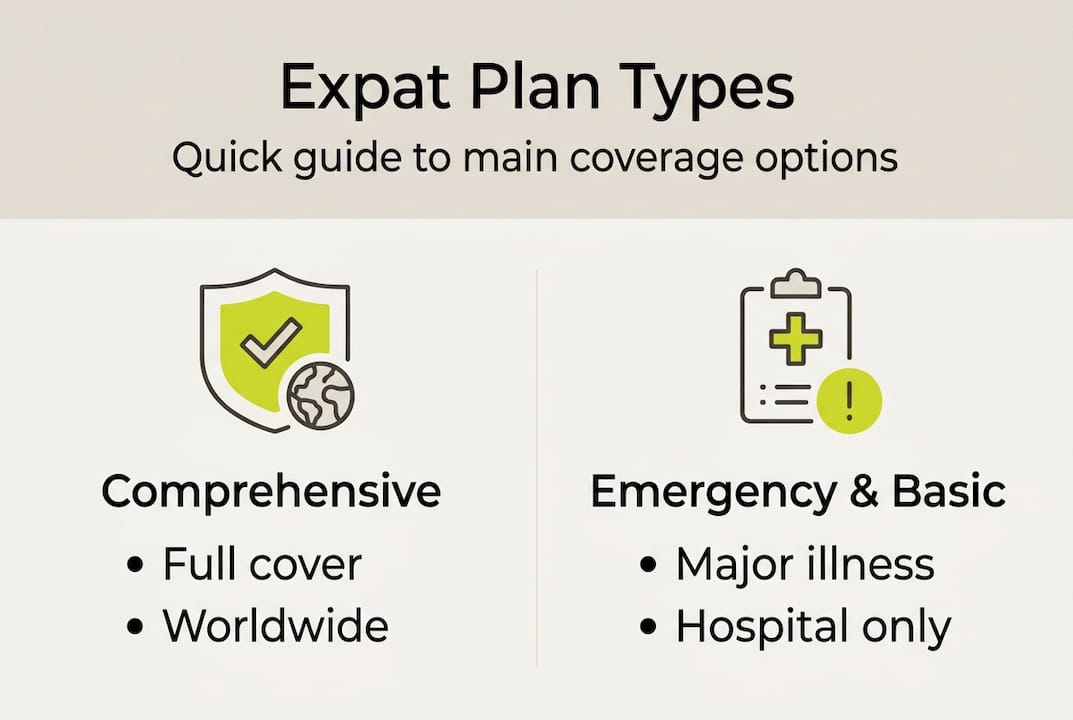
You’ll encounter three main plan categories when researching options. Comprehensive plans offer the widest protection, covering everything from routine GP visits to major surgeries, preventive care, and sometimes dental or optical services. Basic plans focus primarily on emergency and inpatient care, keeping premiums lower but requiring you to pay out of pocket for routine medical needs. Travel health insurance sits somewhere between, designed for shorter assignments or frequent travellers who need flexibility rather than permanent coverage.
Every policy comes with exclusions you must understand before purchasing. Most insurers won’t cover pre-existing conditions unless you pay a substantial premium increase or wait through an exclusion period. High-risk activities like extreme sports, mountaineering, or professional athletics typically require additional riders. Cosmetic procedures, experimental treatments, and non-emergency care in your home country are commonly excluded across all plan types.
Key insurance terms you need to know:
- Premium: The amount you pay monthly or annually to maintain coverage
- Deductible: What you must pay before insurance begins covering costs
- Copay: Your fixed payment per medical visit or prescription
- Lifetime limit: Maximum amount the insurer will pay over the policy’s duration
- Network: Healthcare providers with negotiated rates through your insurer
- Coinsurance: The percentage of costs you share with the insurer after meeting your deductible
| Plan type | Typical coverage | Best for | Average annual cost |
|---|---|---|---|
| Comprehensive | Inpatient, outpatient, evacuation, maternity, preventive | Long-term expats, families | £3,000-£8,000 |
| Basic | Emergency, inpatient only | Young, healthy individuals on budget | £800-£2,500 |
| Travel health | Emergency, limited outpatient | Short assignments, frequent travellers | £500-£1,800 |
Pro Tip: Before finalising any plan, verify whether your preferred local healthcare providers are in-network. Out-of-network care can cost you 40-60% more, even with insurance coverage.
Preparing to choose your expat health insurance plan
Rushing into a policy decision without proper preparation often leads to coverage gaps that become apparent only when you need care most. Your choice should reflect several interconnected factors: how long you’ll be abroad, which countries you’ll reside in, your current health status, your family’s needs, and what your budget realistically allows. Some countries require proof of specific coverage levels for visa approval, making this research non-negotiable rather than optional.
Evaluating your personal health needs:
- Review your medical history for the past five years, noting any ongoing conditions or medications
- Consider your age and lifestyle factors that might increase health risks
- Assess whether you plan to have children abroad, requiring maternity coverage
- Determine if you need mental health services, physiotherapy, or specialist care
- Factor in any planned procedures or treatments you’ll need during your time overseas
- Research common health risks in your destination country, from tropical diseases to air quality issues
Comparing health care insurance for expats helps ensure you’re getting genuine value rather than paying for coverage you’ll never use or, worse, discovering gaps when you need protection most. Different insurers have vastly different approaches to underwriting, claims processing, and customer service quality. Some excel at supporting expats in Asia but have limited networks in Europe, whilst others specialise in comprehensive family coverage but offer poor value for single professionals.
Documents and information to gather before contacting insurers:
- Valid passport and visa documentation
- Proof of current address abroad or intended residence
- Complete medical records, including vaccination history
- List of current medications and dosages
- Previous insurance policy details and claims history
- Employment contract or proof of income if required
- Family members’ medical information if seeking group coverage
When selecting the right expat insurance provider, reputation matters as much as price. Research how quickly insurers process claims, whether they offer direct billing to hospitals, and what their customer service response times look like. Online reviews from other expats in your destination country provide invaluable insights into real-world experiences that marketing materials won’t reveal.

Pro Tip: Always verify in writing how your chosen policy handles pre-existing conditions and emergency situations. Verbal assurances from sales representatives aren’t legally binding, and policy documents contain the actual terms that determine whether your claims get paid.
How to apply and maintain your expat health insurance
Once you’ve identified the right plan, the application process follows a relatively standard pattern across most insurers, though requirements vary by provider and destination country. Applying for expat insurance typically involves submitting a medical questionnaire and documents for verification, with approval times ranging from 48 hours to two weeks depending on your health history complexity.
Step-by-step application process:
- Request detailed quotes from at least three providers, ensuring you’re comparing equivalent coverage levels
- Complete the medical questionnaire honestly and thoroughly, as omissions can void your policy later
- Gather and submit required documentation, including passport copies, proof of residence, and medical records
- Review the policy terms carefully before signing, paying special attention to exclusions and waiting periods
- Choose your payment method and frequency, with annual payments often offering 5-10% discounts
- Receive your policy documents and membership cards, storing digital copies in multiple secure locations
- Register on the insurer’s online portal to access claims submission and policy management tools
Most insurers require proof of identity, residency status, and health history. You’ll need your passport, a recent utility bill or rental agreement, and medical records covering the past three to five years. If you have pre-existing conditions, expect additional scrutiny and potentially a medical examination before approval. Some insurers request GP letters confirming your current health status or specialist reports for chronic conditions.
Tips to speed approval and avoid common errors:
- Submit all documents in the requested format, typically PDF files under specific size limits
- Ensure medical questionnaires are complete, with no blank fields that could delay processing
- Provide translated versions of documents not in English, certified by official translators
- Double-check that signatures and dates are current and match across all forms
- Respond promptly to any insurer requests for clarification or additional information
- Keep copies of everything you submit for your own records
Understanding policy renewal prevents nasty surprises when your coverage period ends. Most international policies auto-renew annually, with premium adjustments based on your age, claims history, and overall risk pool performance. You’ll typically receive renewal notices 30-60 days before your policy expires, giving you time to shop around if rates increase significantly. Making claims requires understanding your insurer’s specific process, whether they offer direct billing to healthcare providers or require you to pay upfront and seek reimbursement later.
Keep your policy documents, membership cards, and emergency contact numbers accessible both digitally and in physical form. Store copies in your phone, email them to yourself, and keep printed versions in your wallet and home. When travelling between countries, verify your coverage extends to your destinations and understand any geographical limitations that might apply.
Common challenges and how to avoid mistakes with expat health insurance
Even experienced expatriates make costly errors when selecting and managing their health insurance, often discovering problems only when filing claims or facing medical emergencies. Understanding these pitfalls helps you avoid financial stress and coverage gaps that could compromise your health security abroad.
Frequent mistakes expats make with health insurance:
- Choosing the cheapest plan without reviewing what’s actually covered, leading to surprise gaps
- Ignoring policy exclusions, particularly around pre-existing conditions and high-risk activities
- Failing to disclose complete medical history, which can void coverage when claims are filed
- Not understanding geographical limitations that might exclude certain countries or regions
- Overlooking renewal terms and automatic premium increases that strain budgets
- Assuming home country coverage extends abroad without verification
- Neglecting to update the insurer when changing addresses or circumstances
Many expats encounter coverage gaps or misunderstand policy details, leading to unexpected costs that could have been prevented with careful review. The difference between a policy that truly protects you and one that leaves you vulnerable often lies in the fine print around exclusions, waiting periods, and claim procedures.
| Mistake | Potential consequence | How to avoid it |
|---|---|---|
| Not reading exclusions | Denied claims for conditions you thought were covered | Spend 30 minutes reviewing the full policy document before purchasing |
| Choosing inadequate coverage limits | Out-of-pocket costs exceeding £50,000 for major incidents | Select plans with at least £1 million lifetime limits for comprehensive protection |
| Ignoring network restrictions | Paying 40-60% more for out-of-network care | Verify your preferred hospitals and doctors participate in the plan network |
| Missing renewal deadlines | Coverage lapses, requiring reapplication and new waiting periods | Set calendar reminders 60 days before renewal dates |
| Failing to update address | Policy cancellation for non-delivery of important notices | Notify your insurer within 30 days of any address changes |
“The biggest mistake I see expats make is treating health insurance as a one-time decision rather than an ongoing relationship that requires regular review and adjustment as their circumstances evolve.”
Pro Tip: Schedule an annual insurance review each year, ideally three months before your renewal date. Reassess your health needs, compare current market options, and verify your coverage still matches your lifestyle and location requirements.
If your claims get denied or services go unpaid, don’t simply accept the decision without investigation. Request a detailed explanation in writing, review your policy terms to verify the denial is legitimate, and escalate through the insurer’s appeals process if you believe the rejection was incorrect. Many denials result from administrative errors or misunderstandings that can be resolved with proper documentation and persistence.
Get the right expat health insurance with Unparalleled Global Benefits
Navigating the complex world of expat health insurance doesn’t have to be overwhelming when you have expert guidance and comprehensive resources at your fingertips. Unparalleled Global Benefits specialises in helping expatriates find international expat health insurance plans that match your unique circumstances, whether you’re a solo professional, a growing family, or somewhere in between.
Our detailed international insurance plans for expats comparison tools simplify the decision-making process, presenting side-by-side evaluations of coverage options, costs, and provider reputations. We understand that every expat’s situation is different, which is why our resources focus on helping you identify the specific features that matter most for your health security abroad. When you’re ready to make an informed choice, our guidance on selecting the right expat insurance provider ensures you partner with insurers known for reliability, fair claims processing, and genuine support when you need it most.
Frequently asked questions
What is expat health insurance and why is it important?
Expat health insurance provides medical coverage specifically designed for people living outside their home country, protecting you from costly healthcare expenses that domestic policies typically won’t cover abroad. It’s essential because international medical care can be extraordinarily expensive without insurance, and many countries require proof of adequate coverage for visa approval. Beyond financial protection, quality expat insurance ensures you can access proper medical care when needed, including emergency evacuation if local facilities can’t provide necessary treatment.
How do I choose the best health insurance plan as an expatriate?
Start by honestly assessing your health status, destination country risks, and realistic budget constraints before reviewing specific plans. Compare health care insurance expats guide options by examining coverage breadth, exclusions, network providers, and claim processes rather than focusing solely on premium costs. The best plan balances comprehensive protection for your specific needs with sustainable long-term affordability.
Can I keep my expat health insurance if I change countries?
Many international plans offer global coverage that remains valid when you relocate between countries, though specific terms vary significantly between insurers and policy types. Review your policy documents to confirm geographical coverage and any restrictions that might apply to your new destination. Always notify your provider promptly when changing countries to update your address and verify continued coverage, as some plans have regional limitations or require premium adjustments based on your new location’s healthcare costs.
What happens if I need emergency medical treatment abroad?
Most comprehensive expat insurance policies include emergency medical coverage and evacuation services, with 24/7 helplines you can contact for immediate assistance. Contact your insurer as soon as possible after receiving emergency care, as many offer direct billing to hospitals or can authorise treatment before you pay. Keep all medical records, receipts, and documentation to support any claims you need to file for reimbursement if you had to pay upfront during the emergency.
How much does expat health insurance typically cost?
Premiums vary widely based on your age, health status, coverage level, and destination, with comprehensive plans averaging £3,000-£8,000 annually whilst basic emergency coverage might cost £800-£2,500 per year. Factors that increase costs include pre-existing condition coverage, maternity benefits, lower deductibles, and broader geographical coverage including expensive healthcare markets like the United States. Getting personalised quotes from multiple providers gives you accurate pricing for your specific situation rather than relying on general estimates.
Recommended
- Cheap Expat Health Insurance: Complete Resource Guide – Unparalleled Global Benefits
- International Expat Health Insurance: Protecting Your Wellness Abroad – Unparalleled Global Benefits
- Compare Health Care Insurance for Expats: Step-by-Step Guide – Unparalleled Global Benefits
- Canadian expat travel insurance: secure health abroad 2026 – Unparalleled Global Benefits