

Many travellers believe standard travel insurance automatically covers medical needs abroad, but this assumption can prove costly when pre-existing conditions are involved. Medical tourists planning procedures overseas face unique challenges, as traditional policies often exclude coverage for chronic illnesses, ongoing treatments, or conditions diagnosed within specific look-back periods. Understanding the nuances of pre medical travel insurance becomes essential for anyone seeking healthcare beyond their home country. This guide explores the mechanics, costs, and strategies for securing comprehensive coverage that protects your health and finances during international medical journeys in 2026.
Table of Contents
- Understanding Pre Medical Travel Insurance And Its Core Mechanics
- Navigating Exclusions, Premium Impacts, And High-Risk Condition Nuances
- Choosing The Right Pre Medical Travel Insurance For Your Needs
- Practical Steps To Secure And Maximise Your Pre Medical Travel Insurance Coverage
- Explore Tailored International Health Insurance Solutions
- Frequently Asked Questions
Key takeaways
| Point | Details |
|---|---|
| Pre-existing conditions need specific provisions | Standard travel insurance excludes chronic conditions unless waivers or acute onset benefits are secured |
| Waivers differ from acute onset coverage | Waivers provide full coverage when purchased early, whilst acute onset benefits cover only emergency flare-ups |
| Early disclosure affects premiums and validity | Declaring conditions upfront influences costs but protects policy validity and claim approval |
| Purchase timing matters for waivers | Buying within 10-21 days of first trip deposit qualifies you for pre-existing condition waivers |
| Specialist providers enhance reliability | Choosing insurers experienced in medical travel ensures better coverage limits and evacuation protection |
Understanding pre medical travel insurance and its core mechanics
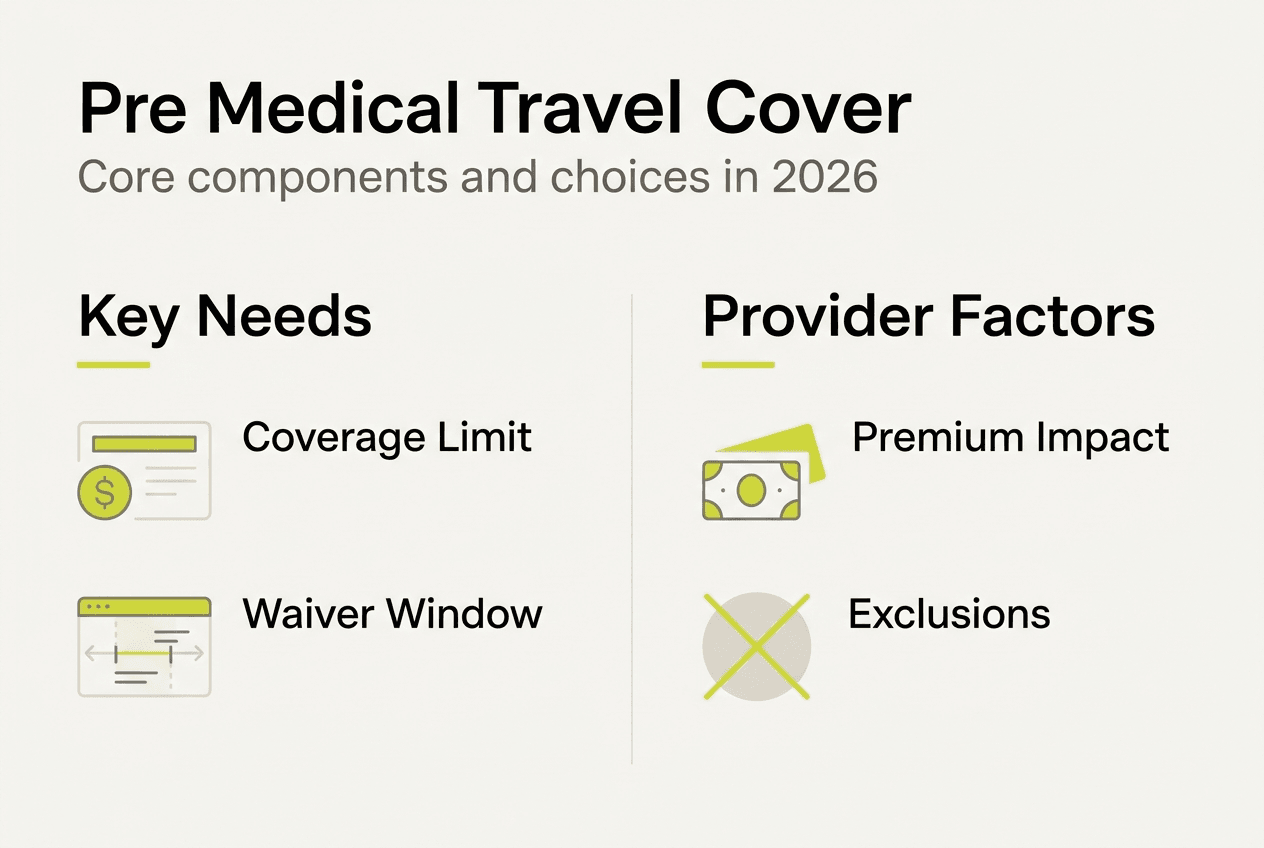
Pre medical travel insurance addresses a critical gap left by standard policies. Travel insurance coverage for pre-existing conditions provides protection for travellers with chronic illnesses through waivers or acute onset benefits, allowing medical tourists to access care abroad without risking financial devastation. These specialised policies recognise that many individuals travel specifically for medical procedures or require ongoing treatment whilst overseas.
The look-back period forms the foundation of how insurers assess your medical history. This window, typically spanning 60 to 180 days before your policy purchase date, determines which conditions qualify as pre-existing. Insurers examine medical consultations, diagnoses, prescription changes, and treatments during this timeframe. Any condition that showed symptoms or required medical attention within the look-back period gets classified as pre-existing, triggering special coverage requirements.
Two distinct coverage mechanisms exist for pre-existing conditions. Waivers treat your chronic condition as if it were new, providing full trip coverage identical to what healthy travellers receive. Core mechanics involve a look-back period of 60-180 days and a purchase window of 10-21 days to secure waivers. Acute onset benefits, conversely, cover only unexpected flare-ups of stable conditions, offering limited emergency protection with lower benefit caps and age restrictions.
Medical stability requirements determine waiver eligibility. Your condition must remain stable during the look-back period, meaning no new treatments, medication changes, hospitalisations, or symptom worsening. This stability clause protects insurers from covering deteriorating conditions whilst giving travellers with well-managed chronic illnesses access to comprehensive protection.
Securing pre medical coverage requires strategic planning:
- Purchase insurance within the specified waiver window after making your first trip deposit
- Ensure your condition has remained stable throughout the entire look-back period
- Complete full medical disclosure during the application screening process
- Obtain documentation from your doctor confirming stability and treatment plans
- Review policy exclusions specific to your condition before finalising purchase
- Maintain communication with your insurer if your health status changes before departure
Pro Tip: Always review the exact look-back period and waiver purchase window for each provider, as these vary significantly. Securing a letter from your doctor detailing your condition’s stability strengthens your application and expedites underwriting.
Understanding these mechanics helps you navigate travel insurance medical conditions requirements effectively. The difference between waivers and acute onset benefits directly impacts both your coverage scope and out-of-pocket costs during medical emergencies abroad.
Navigating exclusions, premium impacts, and high-risk condition nuances
Even with pre-existing condition coverage, certain exclusions persist across most policies. Pregnancy complications beyond specific gestational weeks typically fall outside waiver protection, even when pregnancy itself isn’t considered pre-existing. Mental health conditions face frequent limitations, with many insurers capping psychiatric care or excluding coverage entirely. Degenerative diseases like Parkinson’s or multiple sclerosis often require specialised underwriting, with some providers declining coverage altogether.
Declaring pre-existing conditions usually doubles premiums, whilst severe cases face increases exceeding 1,000%. The premium impact varies dramatically based on condition type, severity, and stability. Cardiovascular conditions command higher rates than well-controlled diabetes, whilst cancer survivors face premium calculations based on time since treatment completion.

| Condition Type | Average Premium Increase | Coverage Availability | Common Exclusions |
|---|---|---|---|
| Controlled diabetes | 100-150% | Widely available | Complications from non-compliance |
| Cardiovascular disease | 200-400% | Selective underwriting | Unstable angina, recent procedures |
| Cancer (remission) | 300-600% | Limited providers | Recurrence, metastasis |
| Respiratory conditions | 150-250% | Moderate availability | Exacerbations requiring steroids |
| Autoimmune disorders | 200-500% | Specialist insurers | Flare-ups, immunosuppressant complications |
Denial rates for claims involving undisclosed conditions reach concerning levels. Certain conditions like pregnancy, mental health, and degenerative diseases face exclusions or higher costs, whilst non-disclosure risks policy invalidation. Insurers routinely investigate claims by requesting medical records, and discrepancies between your application and actual medical history trigger automatic denials.
The risks of non-disclosure extend beyond claim rejection:
- Complete policy voidance, leaving you personally liable for all medical expenses incurred abroad
- Potential fraud allegations if insurers determine intentional misrepresentation occurred
- Inability to secure future coverage from other providers once denial appears on insurance databases
- Financial responsibility for emergency evacuation costs, which can exceed £500,000
- Legal complications in foreign jurisdictions when hospitals pursue payment for unpaid bills
Complex medical profiles require nuanced approaches. Multiple conditions compound premium calculations, with insurers assessing cumulative risk rather than treating each condition independently. Rare diseases often necessitate bespoke underwriting, where standard screening tools cannot accurately assess risk profiles.
Pro Tip: If you have complex or multiple conditions, consult with specialist brokers who access non-standard markets before accepting high premiums from mainstream providers. These experts often secure better rates through insurers specialising in high-risk medical profiles, and their services typically cost nothing as they earn commissions from insurers.
Understanding travel insurance medical conditions exclusions prevents unpleasant surprises when filing claims. The financial stakes for medical tourists justify thorough disclosure and careful policy selection, even when premiums seem prohibitive initially.
Choosing the right pre medical travel insurance for your needs
Selecting appropriate coverage requires comparing providers based on specific criteria relevant to medical tourists. Top providers for pre-existing condition coverage include Travel Insured International, Tin Leg Gold, IMG iTravelInsured Choice, Allianz, and GeoBlue, each offering distinct advantages for different medical profiles and travel scenarios.
| Provider | Waiver Window | Medical Coverage Limit | Evacuation Coverage | Pre-existing Condition Approach | Best For |
|---|---|---|---|---|---|
| Travel Insured International | 21 days | Up to £500,000 | £1,000,000 | Comprehensive waivers | Multiple conditions |
| Tin Leg Gold | 14 days | £250,000 | £500,000 | Flexible underwriting | Moderate risk profiles |
| IMG iTravelInsured Choice | 20 days | £1,000,000 | £1,000,000 | Acute onset plus waivers | High medical limits needed |
| Allianz | 14 days | £100,000 | £500,000 | Standard waivers | Budget-conscious travellers |
| GeoBlue | 30 days | Unlimited | £500,000 | Medical-focused coverage | Long-term medical travel |
Coverage priorities for medical tourists differ substantially from leisure travellers. Primary medical coverage should reach at least £250,000, though £500,000 or higher proves prudent for destinations with expensive healthcare systems like the United States or Switzerland. Emergency evacuation coverage deserves equal attention, with £500,000 representing the minimum acceptable threshold, as air ambulance costs and medical escorts quickly exhaust lower limits.
Pre-existing condition waivers versus acute onset benefits present a cost-benefit decision. Waivers cost more upfront but provide comprehensive protection if your condition requires treatment during your trip. Acute onset coverage costs less but only activates for sudden, unexpected flare-ups of previously stable conditions, leaving planned treatments and gradual deteriorations uncovered. Medical tourists should prioritise waivers, as the nature of their travel involves anticipated medical care.
Practical tips for medical tourists selecting coverage:
- Purchase insurance within 24 hours of making your first trip deposit to maximise waiver eligibility
- Obtain a detailed letter from your treating physician outlining your condition, stability, and treatment plan
- Verify evacuation policies cover transport to your home country, not just the nearest adequate facility
- Confirm the policy covers complications arising from your planned medical procedure abroad
- Check whether the insurer requires pre-approval for planned treatments versus emergency care only
- Review provider networks at your destination to understand direct billing arrangements
Geographic considerations influence provider selection. Some insurers excel in specific regions, maintaining robust provider networks and claims processing infrastructure. GeoBlue, for instance, specialises in international coverage with strong networks across Europe and Asia, whilst IMG offers superior coverage for travellers to developing nations where evacuation logistics prove more complex.
Pro Tip: Consult with specialist brokers or underwriting firms when your medical profile involves multiple conditions or rare diseases. These professionals access non-standard markets and can often negotiate coverage terms that standard online applications automatically decline, potentially saving thousands in premiums whilst securing better protection.
Comparing travel insurance for medical procedures abroad alongside best travel insurance for health conditions reveals important distinctions. Medical procedure coverage requires explicit policy language confirming complications from planned treatments receive coverage, whilst general health condition policies may exclude elective procedures entirely.
Practical steps to secure and maximise your pre medical travel insurance coverage
Implementing a systematic approach ensures you obtain valid, comprehensive coverage for your medical travel. Buying early within waiver windows and fully disclosing conditions are key to valid coverage and avoiding policy invalidation. These steps form your roadmap to protected international medical travel.
Follow this sequence to secure optimal coverage:
- Assess your health stability by reviewing the past 180 days for any treatment changes, new symptoms, or medical consultations
- Understand the look-back period requirements for your target insurers, noting variations between providers
- Disclose fully during medical screening, including all diagnoses, medications, and treatments regardless of perceived relevance
- Purchase within the waiver window immediately after making your first trip deposit or booking flights
- Obtain medical certification from your doctor confirming stability and fitness for travel
- Keep your insurer updated if your condition changes between purchase and departure, as policy terms may require notification
Medical letters serve multiple purposes beyond application support. Detailed documentation from your treating physician should outline your diagnosis, current treatment regimen, medication list with dosages, recent test results confirming stability, and explicit clearance for international travel. This letter becomes invaluable if you need emergency care abroad, helping foreign medical providers understand your baseline health status quickly.
Comparing quotes requires understanding how screening processes influence premiums. Some insurers use automated screening tools that apply rigid criteria, whilst others employ medical underwriters who assess individual circumstances. Spending time on thorough screening often yields more accurate quotes than rushing through abbreviated questionnaires, as detailed information allows underwriters to recognise well-managed conditions that automated systems might flag as high risk.
Avoid these common mistakes that jeopardise coverage:
- Late purchases beyond waiver windows, forcing you into acute onset coverage with limited benefits
- Non-disclosure of conditions you consider minor or unrelated to travel, which insurers may view differently
- Failing to inform insurers of condition changes between purchase and departure dates
- Skipping evacuation coverage to save money, leaving you exposed to six-figure costs if serious complications arise
- Assuming your domestic health insurance extends abroad, when most policies provide minimal or no international coverage
Supplementing travel insurance with medical-only plans makes sense for extended stays or high-risk procedures. These specialised policies offer higher medical limits, longer coverage periods, and more robust provider networks than standard travel insurance. Medical tourists spending months abroad for treatment and recovery benefit from this dual-coverage approach, using travel insurance for trip-related issues and medical-only plans for healthcare needs.
Maintaining communication with your insurer during your trip provides additional peace of mind. Most providers offer 24-hour assistance lines staffed by multilingual representatives who coordinate care, arrange direct billing with hospitals, and facilitate emergency evacuations. Saving these contact numbers in multiple locations and sharing them with travel companions ensures access during medical emergencies when you might be incapacitated.
Understanding travel insurance medical conditions requirements throughout the entire insurance lifecycle, from application through claims, maximises your protection. The investment in comprehensive coverage pales compared to potential medical costs abroad, making thorough preparation financially prudent.
Explore tailored international health insurance solutions
Securing appropriate coverage for medical travel with pre-existing conditions requires expertise and access to specialist markets. Whilst travel insurance provides essential trip protection, longer-term medical travellers benefit from exploring dedicated international health insurance designed specifically for expatriates and extended stays abroad. These plans offer higher medical limits, broader provider networks, and more flexible terms than standard travel policies.
Reviewing international expat health insurance options reveals coverage approaches better suited to complex medical profiles and extended international stays. Plans focusing on pre-existing condition coverage and evacuation protection ensure comprehensive security throughout your medical journey. Comparing offerings from best travel insurance for health conditions providers alongside evaluating top insurers helps identify the optimal solution for your specific circumstances.
Pro Tip: Consulting with insurance experts at Unparalleled Global Benefits provides access to specialist knowledge about which plans best suit your medical profile and travel plans. These professionals navigate complex underwriting requirements and often secure coverage that standard applications might decline, ensuring you travel with confidence and comprehensive protection.
Frequently asked questions
What does pre medical travel insurance cover?
Pre medical travel insurance covers medical emergencies, treatments related to pre-existing conditions through waivers or acute onset benefits, emergency evacuation, and medical repatriation to your home country. Coverage limits vary significantly by plan and provider, ranging from £100,000 to unlimited medical expenses. Policies also typically include trip cancellation protection, baggage loss, and 24-hour assistance services.
How do waivers and acute onset benefits differ?
Waivers treat pre-existing conditions as if they were new illnesses, providing full trip coverage identical to healthy travellers when purchased within specified timeframes after your first trip deposit. Acute onset benefits cover only unexpected, sudden flare-ups of previously stable conditions, offering limited benefits with lower caps and age restrictions. Waivers cost more but provide comprehensive protection, whilst acute onset coverage serves as a budget alternative with significant limitations.
What happens if I don’t disclose a pre-existing condition?
Non-disclosure can void your entire policy, leaving you personally liable for all medical costs incurred abroad, including emergency treatments and evacuation expenses. Insurers routinely investigate claims by requesting complete medical records, and discrepancies between your application and actual medical history trigger automatic denials. Full disclosure protects your coverage validity and ensures compliance with insurer requirements, preventing financial catastrophe during medical emergencies overseas.
When should I buy pre medical travel insurance to get the best coverage?
Purchase insurance within 10 to 21 days after making your first trip deposit, depending on the provider’s specific waiver window requirements, to qualify for pre-existing condition waivers. Earlier purchases improve your chances of securing comprehensive coverage at lower costs, as some insurers offer additional benefits for very early purchases. Waiting beyond the waiver window forces you into acute onset coverage with substantially reduced benefits and higher exclusions.
Recommended
- Travel Insurance with Medical Conditions – Securing Global Cover – Unparalleled Global Benefits
- Travel Insurance for Medical Procedures Abroad Explained – Unparalleled Global Benefits
- What does travel health insurance cover: your 2026 guide – Unparalleled Global Benefits
- Travel Insurance for Elderly with Medical Conditions: Secure Coverage – Unparalleled Global Benefits