

Booking a cruise holiday from Australia to the Mediterranean or exploring Caribbean waters sounds thrilling until unexpected problems arise at sea. For expats and global travellers, ordinary travel policies often fall short once you leave port. Comprehensive cruise travel insurance responds directly to the unique risks of cruising such as medical emergencies onboard, port changes, and evacuations at sea. Discover how the right cover goes beyond standard options to keep your journey protected at every step.
Table of Contents
- Defining Comprehensive Cruise Travel Insurance
- Coverage Types Beyond Standard Policies
- How Cruise Travel Insurance Functions
- Comparing Policies And Typical Exclusions
- Common Mistakes And Cost Implications
Key Takeaways
| Point | Details |
|---|---|
| Comprehensive Protection | Comprehensive cruise travel insurance offers tailored coverage for the unique risks of cruising, unlike standard travel insurance. |
| Medical and Evacuation Coverage | It includes medical treatment onboard, urgent sea evacuation, and protection against port-based variations. |
| Pre-Existing Conditions | Policies can cover pre-existing medical conditions if declared upfront, which is critical for travellers with health issues. |
| Understanding Exclusions | Common exclusions often catch travellers off guard; it’s essential to read the fine print before purchasing a policy. |
Defining Comprehensive Cruise Travel Insurance
Comprehensive cruise travel insurance goes far beyond basic medical coverage. It’s a complete protection plan designed specifically for the unique risks you face when travelling by ship—whether you’re sailing the Mediterranean, Caribbean, or beyond.
At its core, comprehensive cruise travel insurance combines multiple layers of protection into one policy. Rather than piecing together separate coverages, you get a unified solution that addresses the specific challenges of cruise holidays.
What Makes It Different From Standard Travel Insurance
Standard travel insurance covers flights and hotels, but cruises present distinct challenges. Ships operate in international waters, medical facilities vary by location, and unexpected situations develop differently at sea.
Cruise-specific policies address these differences head-on:
Here’s a quick reference to major differences between standard travel insurance and comprehensive cruise policies:
| Aspect | Standard Travel Insurance | Comprehensive Cruise Insurance |
|---|---|---|
| Medical facilities | Local clinics/hospitals covered | Shipboard and port-based care covered |
| Itinerary changes | Limited support for missed connections | Protection for missed ports and cruise legs |
| Evacuation | Land evacuation only | Includes urgent sea evacuations |
| Activity coverage | Often excludes excursions | Covers many onboard activities and excursions |
| Port variations | Some geographical restrictions | Coverage tailored for all cruise ports |
- Medical emergencies at sea: Coverage for treatment onboard plus evacuation if needed
- Port-to-port variations: Protection regardless of which countries your itinerary includes
- Cancellation with flexibility: Understanding cruise-specific booking patterns and refund structures
- Travel delays: Coverage when you miss your ship departure or cruise connection
- Onboard incidents: Accidents, illness, or injuries occurring during the voyage itself
Comprehensive cruise insurance recognises that ships operate under different rules than land-based travel, with unique medical, logistical, and financial considerations.
Core Components You Should Know
When you’re evaluating comprehensive cruise travel insurance, you’ll encounter several fundamental elements:
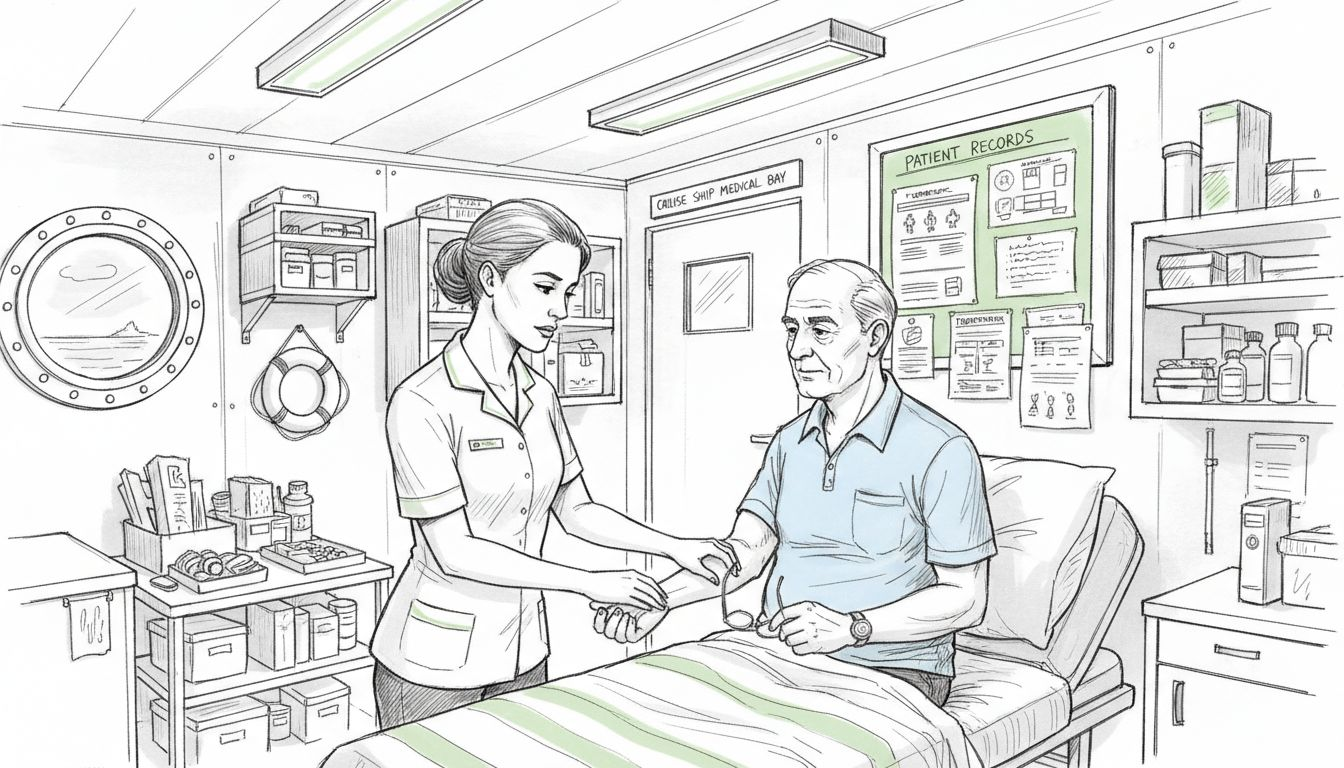
Medical coverage protects you if you become ill or injured during your cruise. This includes treatment onboard, evacuation to the nearest suitable medical facility, and follow-up care once you reach land.
Trip cancellation and interruption reimburses your costs if you need to cancel before departure or abandon the cruise partway through. This matters significantly when you’ve prepaid thousands of pounds.
Baggage and personal belongings coverage compensates you for lost, stolen, or damaged luggage throughout your journey.
Travel delay protection kicks in if you miss your embarkation port due to flight delays or other circumstances beyond your control.
Emergency evacuation and repatriation ensures you can reach proper medical care or return home if serious situations develop while at sea.
Expats and international travellers face additional considerations. You might be travelling from a country different from your citizenship, facing complex residency rules, or managing coverage across multiple jurisdictions.
The best comprehensive policies address your specific nationality and residence status, not just generic international traveller scenarios.
When comparing options, look for policies that clearly outline what happens in various scenarios—port-specific medical networks, evacuation procedures, claims timelines, and customer support availability during the trip itself.
Pro tip: Verify that your comprehensive cruise policy covers your specific itinerary’s ports and nationalities involved, rather than assuming blanket coverage across all destinations.
Coverage Types Beyond Standard Policies
Standard travel insurance handles the basics, but cruise travel demands more specialised protection. Extended coverage options exist specifically because ships present scenarios that conventional policies simply don’t address.
When you’re cruising, you’re operating in a completely different environment than land-based travel. Your medical emergencies happen at sea, your cancellations involve complex shipping schedules, and your risks include unique onboard situations.
Specialised Cruise Coverage Areas
Beyond the standard medical and cancellation basics, several coverage types matter specifically for cruise travellers:
Pre-existing medical conditions coverage ensures that chronic illnesses or previous health issues won’t disqualify you. Many standard policies exclude these, but comprehensive cruise insurance can cover them if you declare upfront.
Adventure activities and sports protection is crucial if your itinerary includes excursions. Shore activities like hiking, snorkelling, or zip-lining often fall outside basic coverage.
Cruise-specific cancellation scenarios address situations unique to ships. You’re covered if you need to cancel due to mechanical issues with the vessel, crew strikes, or even if the cruise line itself cancels your departure.
Understanding different types of travel insurance cover helps you recognise what gaps exist in standard policies versus what comprehensive cruise protection fills.
Coverage Extensions Worth Considering
Expats and international travellers often need protections that go beyond what most travellers expect:
- Multi-trip annual policies: Cover you for all cruises within a 12-month period, saving money if you travel frequently
- Nationality and residency protection: Account for your specific situation when standard policies assume you’re a standard resident
- Extended repatriation: Covers transport to your home country, not just the nearest medical facility
- Baggage delay: Compensates you if luggage arrives late, crucial when you embark almost immediately
- Cabin confinement: Pays daily benefits if you’re quarantined or confined to your cabin due to illness
Cruise-specific add-ons address the reality that you cannot simply leave the ship and head home if things go wrong—you’re committed to the itinerary unless evacuated.
Some policies offer optional upgrades for minimal additional cost. Financial protection enhancements, higher medical limits, and coverage for remote itineraries often cost far less than you’d expect.
When comparing options, check whether the policy covers your embarkation port country, all ports of call, and your return destination equally. Some policies restrict coverage based on geography.
Pro tip: Select a policy that covers both your departure and return countries explicitly, rather than assuming “international” coverage works everywhere on your cruise itinerary.
How Cruise Travel Insurance Functions
Cruise travel insurance works by creating a financial safety net around your prepaid trip. When covered events occur, the policy reimburses your expenses or pays for emergency services directly, protecting you from significant losses.
The system operates on a simple principle: you pay a premium upfront, and the insurer covers specified risks during your cruise. This means you’re protected before you even board the ship.
The Claims Process
Understanding how financial protection against trip disruptions works helps you navigate claims successfully. Here’s what happens when you need to file a claim:
- Report the incident promptly to your insurer, providing details about what occurred
- Gather documentation such as medical reports, cancellation notices, or receipts
- Submit your claim with all supporting evidence within the timeframe specified in your policy
- Wait for assessment whilst the insurer reviews your claim against policy terms
- Receive reimbursement once approved, either directly or through your cruise line
Timing matters significantly. Most policies require you to notify the insurer within a specific window, often 30 days from the incident. Delays can jeopardise your claim.
How Protection Actually Works
Your policy provides several distinct types of protection working together:
Medical coverage pays for treatment if you become ill or injured during the cruise. The insurer either pays your medical bills directly or reimburses you after treatment.
Trip cancellation reimburses your full or partial cruise costs if you cancel before departure for covered reasons like serious illness, bereavement, or airline disruptions preventing you reaching your embarkation port.
Emergency evacuation covers the substantial costs of helicopter rescue or medical transport if the ship cannot provide adequate care and you need transport to a proper medical facility.
Baggage protection compensates you for lost, stolen, or damaged luggage and personal items throughout your journey.
Cruise insurance functions most effectively when you understand what your specific policy covers, what documentation you’ll need, and how quickly you must act after an incident.
Expats and international travellers should note that some policies require you to purchase coverage within a certain timeframe of your initial cruise booking, often 14 to 21 days. Missing this deadline can exclude you entirely.
Different insurers handle claims differently. Some process everything digitally, whilst others require posted documents. Check your policy’s claims procedures before you need them.
Pro tip: Store your policy documents, claim contact details, and emergency numbers digitally and in printed form before your cruise departure.
Comparing Policies and Typical Exclusions
Not all cruise travel insurance policies are created equal. Comparing options reveals significant differences in coverage limits, exclusions, and actual protection you’ll receive when things go wrong.
The gap between policies isn’t always obvious from the premium price. Two policies costing similar amounts may offer vastly different protection levels depending on what they exclude.
Key Differences Between Policies
When evaluating cruise insurance, focus on these core areas where policies diverge most significantly:
Coverage limits vary dramatically. One policy might reimburse up to £5,000 for trip cancellation whilst another covers £15,000. Medical evacuation limits range from £100,000 to £500,000 or more.
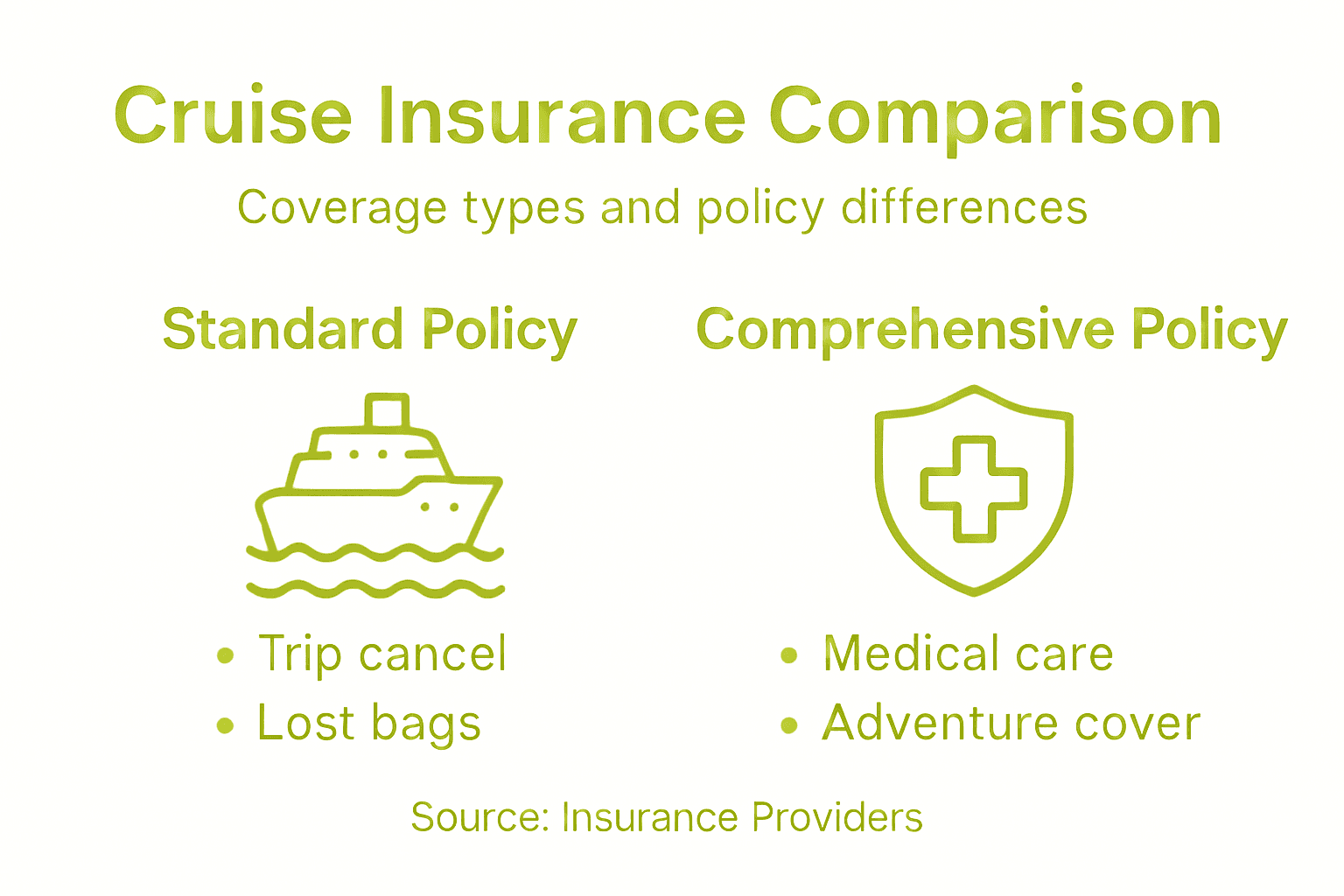
Pre-existing medical conditions handling differs across providers. Some policies automatically exclude these unless you purchase within 14 days of your initial booking. Others waive exclusions entirely if you declare upfront.
Adventure activities receive different treatment. Basic policies exclude hiking, snorkelling, and water sports excursions. Premium policies include these or allow you to add activity coverage for a small fee.
Understanding how to compare insurance plans helps you identify which differences matter for your specific situation.
Common Exclusions That Catch People Out
These exclusions appear frequently in cruise travel insurance and often surprise claimants:
- Cruise line insolvency: Not covered unless explicitly stated, yet cruise operators do occasionally fail
- Failure to declare health conditions: If you don’t mention a relevant medical issue, claims related to it will be rejected
- Cancellations from non-covered reasons: Job loss, change of mind, or minor illness won’t trigger reimbursement
- High-risk activities without declared coverage: Skydiving, mountaineering, or extreme sports require separate declarations
- Missed ports due to your own delays: Arriving late to embarkation is your responsibility, not the insurer’s
- Costs for unused excursions: Shore activities you book independently usually aren’t covered
Exclusions exist in every policy; the question is whether you understand them before you need to claim, not after something goes wrong.
Expats and international travellers face an additional consideration: some policies exclude coverage if you’re not currently residing in your country of citizenship. Others restrict coverage based on how long you’ve been abroad.
The following table summarises common cruise insurance exclusions and their real impact:
| Exclusion | Potential Consequence | Example Scenario |
|---|---|---|
| Cruise line insolvency | Loss of all prepaid costs | Operator folds just before departure |
| Undeclared medical condition | Claim refused for condition-related issues | Heart problem not mentioned upfront |
| Uninsured excursions | No reimbursement for cancellations | Independently booked shore tour cancelled |
| Missed deadline for policy | Loss of time-sensitive waivers | Bought policy 30 days after booking |
The best approach involves reading the exclusions section carefully before purchasing, not after. Ask yourself honestly whether your situation might trigger any listed exclusions.
Reading the Fine Print Effectively
Policy documents are lengthy and technical, but several sections demand your attention. Focus on definitions, exclusions, and claims procedures rather than attempting to read every word.
Pro tip: Create a comparison spreadsheet listing each policy’s key features, coverage limits, exclusions, and premium cost side by side—this visual format reveals differences far more clearly than reading individual documents.
Common Mistakes and Cost Implications
Many travellers purchase cruise insurance only to discover later that their policy doesn’t cover what they assumed it would. These mistakes often cost thousands of pounds in unexpected expenses.
The difference between choosing wisely and choosing poorly can mean the difference between a recovered loss and a devastating financial hit.
The Most Costly Mistakes
Several common errors appear repeatedly amongst cruise travellers, each with serious financial consequences:
Purchasing insurance too late is perhaps the most damaging mistake. Common cruise insurance mistakes include waiting until after booking to buy coverage, which excludes you from pre-existing condition waivers and other time-sensitive protections.
Relying on your regular health insurance creates dangerous gaps. Your standard health plan doesn’t cover medical emergencies at sea, evacuation costs, or trip cancellation. Assuming it does can leave you facing £50,000 plus bills from helicopter rescue alone.
Underinsuring the trip cost means you won’t recover your full investment if cancellation occurs. If your cruise costs £8,000 but your policy covers only £5,000, you lose £3,000 regardless of the reason for cancellation.
Ignoring pre-existing condition clauses leads to rejected claims. You must declare existing health conditions upfront or your claims related to them will be denied.
Not reading what’s actually excluded leaves you vulnerable to coverage gaps. Many travellers assume standard coverage includes things that are explicitly excluded.
Here’s what these mistakes cost in real situations:
- Missing the 14-day deadline for pre-existing condition waivers: £0 recovery versus full coverage if purchased in time
- Medical evacuation without primary coverage: £50,000 to £150,000 out of pocket versus covered by policy
- Trip cancellation with insufficient limits: Losing 30-50% of your cruise cost because coverage maxes out
- Denied evacuation claims due to undeclared conditions: Complete loss of emergency treatment costs
The financial difference between purchasing insurance correctly and making common mistakes often exceeds the insurance premium itself by tenfold or more.
Expats face additional pitfalls. Some policies exclude you if you’ve been outside your home country for longer than 12 months, yet this restriction isn’t always clearly stated until you file a claim.
The timing pressure is real but manageable. Most policies require purchase within 14 to 21 days of your initial cruise booking to waive pre-existing conditions. Mark this deadline in your calendar immediately after booking.
Pro tip: Purchase cruise insurance immediately after booking your cruise, before anything changes with your health or employment status, to secure the broadest possible coverage without limitations.
Secure Your Journey with Tailored Comprehensive Cruise Travel Insurance
Navigating the complexities of cruise travel insurance can be overwhelming, especially with unique challenges such as medical emergencies at sea, itinerary changes, and specialised coverage needs for expatriates and international travellers. Protect yourself against unexpected losses with a personalised policy designed to cover everything from pre-existing medical conditions to emergency evacuations and trip cancellations. Don’t leave your peace of mind to chance when your cruise adventure depends on comprehensive protection.

Explore our extensive range of international insurance solutions at Unparalleled Global Benefits and discover tailored plans that match your lifestyle and travel itinerary. Visit our Uncategorised Archives to learn more about coverage options and read testimonials from travellers like you. Act now to secure your comprehensive cruise travel insurance and ensure support and security from embarkation to your return.
Start your protection journey today by choosing the right insurance plan that fits your unique cruise travel needs at https://unparalleledglobalbenefits.com/top-insurers.
Frequently Asked Questions
What is comprehensive cruise travel insurance?
Comprehensive cruise travel insurance is a robust protection plan designed specifically for the unique risks that arise when travelling by ship. It combines multiple layers of coverage, including medical emergencies, trip cancellations, and lost belongings, tailored to the challenges of cruise holidays.
How does comprehensive cruise travel insurance differ from standard travel insurance?
Comprehensive cruise insurance addresses specific needs of cruise travellers, such as medical care on board and in port, coverage for missed cruise connections, and urgent sea evacuations. Standard travel insurance typically covers flights and hotels without catering to the unique circumstances of sea travel.
What key components should I look for in a comprehensive cruise travel insurance policy?
Look for essential components such as medical coverage, trip cancellation and interruption, baggage protection, travel delay coverage, and emergency evacuation. These elements will ensure you are adequately protected throughout your cruise.
Are there common exclusions in cruise travel insurance policies?
Yes, common exclusions often include cruise line insolvency, undeclared pre-existing medical conditions, and cancellations for non-covered reasons. It’s crucial to thoroughly read the policy details to understand what is excluded before purchasing.
Recommended
- How to Buy Cruise Travel Insurance for Complete Protection – Unparalleled Global Benefits
- Annual Travel Insurance Including Cruise Cover: Complete Guide – Unparalleled Global Benefits
- Understanding Insurance for Cruise Holidays Explained – Unparalleled Global Benefits
- Comprehensive Travel Insurance: Protection Abroad Explained – Unparalleled Global Benefits
- Understanding Choosing Travel Insurance: Essential Insights