

Every Canadian student preparing to study abroad faces the same challenge—your provincial health coverage does not follow you once you leave Canada. This gap means any medical emergency in the United States, United Kingdom, or Europe could leave you paying expensive bills out of pocket. Canada’s decentralised, publicly funded health care system only covers care inside Canada, so you need specialised health insurance designed for international education to avoid unnecessary risk and focus fully on your studies.
Table of Contents
- Health Insurance For Canadian Students Abroad
- Essential Types Of Student Medical Coverage
- Application Steps And Legal Requirements
- Common Pitfalls And Avoidable Risks
Key Takeaways
| Point | Details |
|---|---|
| Provincial Coverage Limitations | Canadian students must secure international health insurance as provincial coverage ceases once they leave Canada, exposing them to high medical costs abroad. |
| Specialised Student Plans | Standard travel insurance is inadequate; students should opt for health insurance specifically designed to meet their unique needs while studying abroad. |
| Critical Coverage Components | Comprehensive student health insurance should cover emergency services, mental health support, and medical evacuation to ensure proper care in emergencies. |
| Proactive Insurance Management | Students should initiate their insurance search at least 8 weeks before departure to ensure adequate coverage and avoid potential issues during their stay. |
Health Insurance for Canadian Students Abroad
Canadian students studying internationally face a unique health coverage challenge. Your provincial health insurance stops providing full coverage the moment you cross the border, leaving you vulnerable to medical expenses abroad. This isn’t just inconvenient—it’s a financial risk that could derail your entire educational experience.
Canada’s decentralized, publicly funded health care system covers hospital and physician services within Canada, but provincial coverage ends internationally. Once abroad, you’ll need dedicated international health insurance to protect yourself from unexpected medical costs.
Why does this matter? A single emergency room visit in the United States can cost thousands of dollars. A medical evacuation flight from Europe could exceed £15,000. Without proper insurance, you’re paying from your own pocket.
Why Canadian Students Need Specialized Coverage
You might assume travel insurance is enough. It isn’t. Study abroad health insurance is specifically designed for students’ unique needs and circumstances.
Specialized student plans typically include:
- 24/7 emergency assistance lines staffed by medical professionals
- Comprehensive coverage for illness and injury whilst studying
- Medical evacuation and repatriation services
- Mental health support and counselling services
- Prescription medication coverage in host countries
- Coverage for routine check-ups and preventative care
- Support for existing health conditions (with proper disclosure)
Complete international health insurance guidance for students can help you understand all available options and find the best fit for your destination country.
Most Canadian students discover too late that their provincial health plan won’t help them abroad. Arrange coverage before departure, not after an emergency forces the issue.
What Comprehensive Student Plans Typically Cover
Think of student health insurance as your safety net whilst living abroad. The best plans provide broader protection than basic travel insurance.
Key coverage areas include:
- Emergency hospital admissions and overnight stays
- Outpatient medical treatment and consultations
- Dental emergencies (not routine cleaning, but severe pain)
- Optical emergencies affecting your vision
- Pre-existing medical conditions (often with waiting periods)
- Pregnancy-related care (subject to plan terms)
- Mental health counselling and psychiatric treatment
- Medical transportation costs
Specialized student health insurance tips emphasise that student plans also include pre-departure orientations. These orientations teach you how to access care in your destination country, what paperwork you’ll need, and how to contact emergency support teams.
Many plans go further, offering 24/7 emergency assistance. This means if something serious happens at 3 AM on a Sunday, you have medical professionals available immediately, not just during business hours.
Key Features to Look For
Not all student health insurance plans are created equal. Your plan should reflect your destination and personal health needs.
Priority features for Canadian students abroad:
- Geographical coverage – Does it cover your specific country or region?
- Emergency evacuation included – Can they fly you home if needed?
- Mental health support – Is counselling available and covered?
- No waiting periods for acute conditions – You shouldn’t wait 30 days for emergency cover
- Annual or semester-long options – Choose what fits your study duration
- Repatriation services – Will they help you return home for ongoing care if needed?
- Pre-existing condition coverage – Important if you have chronic health issues
The cost typically ranges from £300 to £800 annually, depending on your age, destination, and coverage level. This sounds expensive until you compare it to a single emergency room visit in your host country.
Your student health insurance must include both emergency evacuation and repatriation. Without these, a serious illness could leave you stranded medically and financially far from home.
Pro tip: Start your insurance search at least 8 weeks before departure. This gives you time to compare multiple plans, understand coverage details, and resolve any eligibility questions before you’re leaving for the airport.
Planning a trip for yourself, a resident, or visiting family? UGB + Ekta can arrange travel insurance for seniors up to 100 years old. Just click here: https://ektatraveling.com/?partner_uid=808 and add the promo code “UGB” to receive an additional 10% discount.
Watch this video for more insights on student health insurance abroad:
https://youtu.be/bjzvma7Sh1g
Essential Types of Student Medical Coverage
Student health insurance isn’t one-size-fits-all. Different plans offer varying levels of coverage, flexibility, and costs. Understanding these distinctions helps you select the right protection for your specific situation abroad.
When evaluating student medical coverage, you’ll encounter several plan structures, each with unique advantages and limitations. Different plan types offer varying provider access and cost-sharing arrangements that directly affect how much flexibility you have when seeking care internationally.
Choosing the right coverage type can mean the difference between affordable treatment and unexpected bills. The wrong plan might leave you paying out-of-pocket for essential care.

Common Student Insurance Plan Structures
Three primary plan types dominate the student health insurance market. Each serves different needs and preferences.
Health Maintenance Organisations (HMO) require you to select a primary care doctor and obtain referrals for specialists. They’re typically the most affordable but offer the least flexibility. HMOs work best if you’re staying in one location.
Preferred Provider Organisations (PPO) give you more freedom to visit any doctor without referrals. They cost more than HMOs but provide greater flexibility. PPOs suit students who might travel or need specialist care frequently.
Point of Service (POS) plans blend HMO and PPO features. You pick a primary doctor but can see out-of-network providers for higher costs. These work well for students balancing affordability with flexibility.
To help you understand your insurance plan options at a glance, here is a comparison of common student health insurance structures:
| Plan Type | How it Works | Cost Level | Flexibility for Students |
|---|---|---|---|
| HMO | Requires referrals and a set network | Lowest | Least flexible for travel |
| PPO | No referrals, wide provider choice | Higher | Excellent for mobility |
| POS | Blended approach, out-of-network allowed at higher cost | Medium | Good for mixed needs |
HMO plans are cheapest but most restrictive. PPO plans cost more but give you freedom to choose providers. Choose based on your location stability and anticipated healthcare needs.
Coverage Components to Evaluate
Beyond plan type, you’ll need to assess what services are actually covered. Not all student plans include everything you might need abroad.
Critical coverage areas include:
- Emergency care and hospital admissions
- Outpatient doctor visits and consultations
- Prescription medications and pharmacy coverage
- Mental health counselling and psychiatric services
- Dental care (emergency-only in most plans)
- Vision care and eye exams
- Preventative services and routine check-ups
- Medical equipment and mobility aids
When comparing plans, pay special attention to prescription coverage limits. Some international plans restrict which medications they’ll cover, which matters if you take regular medications.
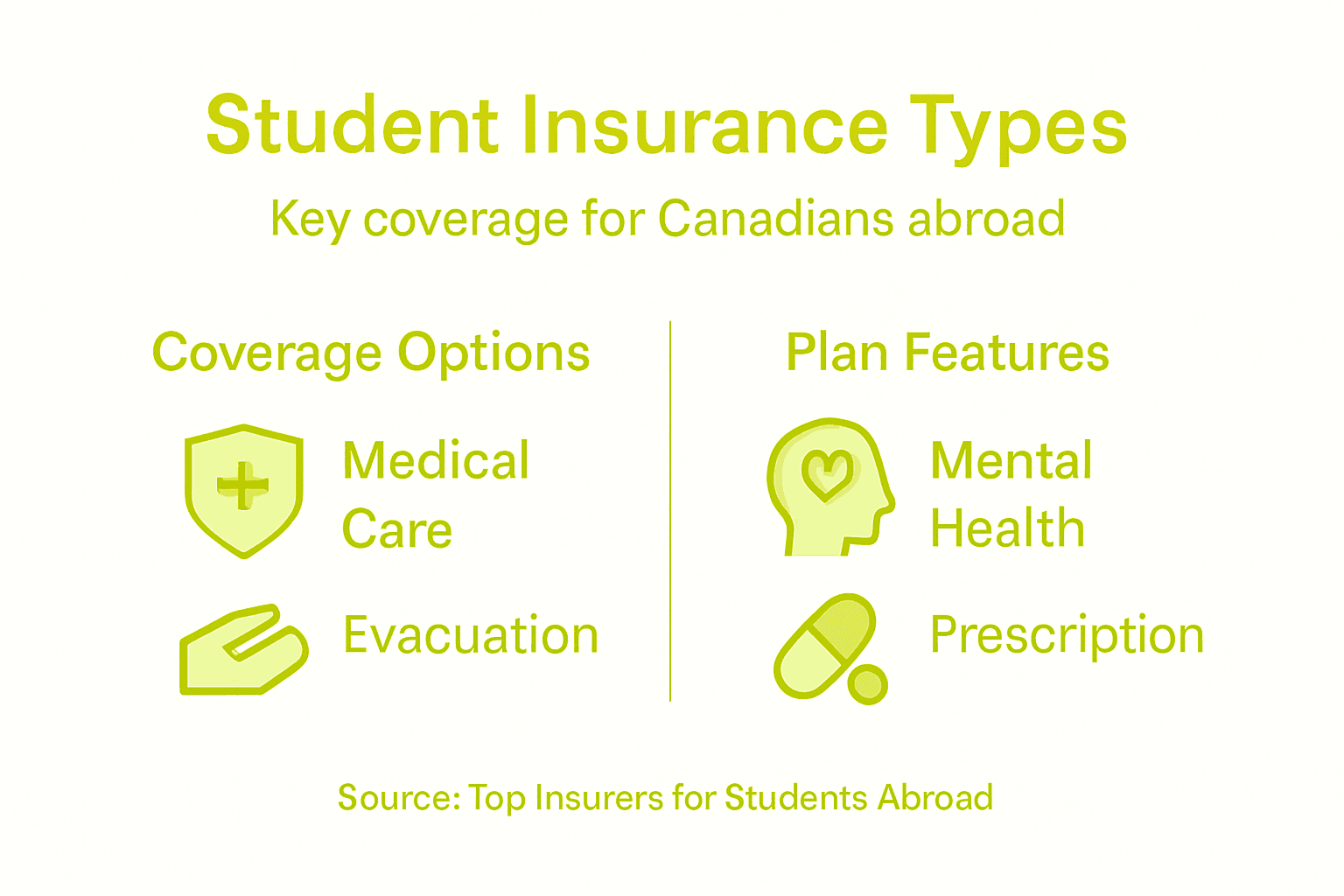
Mental health coverage deserves equal attention. Studying abroad is stressful, and many students experience homesickness, anxiety, or depression. Ensure your plan includes counselling sessions without excessive waiting periods.
Network Restrictions and International Coverage
The biggest challenge for Canadian students is finding a plan that works abroad. A cheap domestic plan becomes useless when you’re in Europe or Asia.
Your plan must cover your specific destination. Some international plans restrict coverage to certain regions or require higher premiums for exotic locations. Before purchasing, confirm:
- Your specific country or region is covered
- Emergency care is available 24/7
- You can access care without returning home first
- Major cities in your destination have partner hospitals
- Coverage applies from the start of your programme
Student medical coverage evaluation should include reviewing network hospitals and clinics in your destination. Contact providers beforehand to confirm they’re legitimately in-network.
Some plans require you to use designated hospitals or clinics. If you go to an out-of-network facility, you’ll pay more or lose coverage entirely. This is critical information before an emergency happens.
Your plan’s international network is more important than its price. A cheap plan covering only your home country is worthless when you need emergency care abroad.
Pro tip: Request a detailed list of in-network providers in your destination city before purchasing. Contact at least two hospitals directly to confirm they accept your insurance before departure.
Planning a trip for yourself, a resident, or visiting family? UGB + Ekta can arrange travel insurance for seniors up to 100 years old. Just click here: https://ektatraveling.com/?partner_uid=808 and add the promo code “UGB” to receive an additional 10% discount.
Watch this video for more insights on student health insurance abroad:
https://youtu.be/7HEMujCnfUg
How Overseas Health Plans Work
Overseas health plans operate differently from domestic insurance. Understanding how they function helps you use them effectively when medical emergencies strike abroad.
When you’re injured or ill abroad, your overseas plan becomes your lifeline. These plans coordinate directly with hospitals and clinics in your destination country, allowing you to access care immediately without waiting to process claims back home.
Overseas health insurance coordination works through networks of partner providers. Your insurer has agreements with hospitals and doctors worldwide, ensuring you’re recognised as a covered patient the moment you present your insurance card.
How Claims Processing Works Whilst Abroad
The mechanics of overseas health plans differ significantly from Canadian domestic coverage. Speed matters when you’re sick or injured thousands of kilometres from home.
Most international student plans operate on one of two systems:
- Direct billing – You present your insurance card at the hospital or clinic, and they bill your insurer directly. You pay nothing upfront.
- Reimbursement – You pay out-of-pocket and submit receipts later for reimbursement from your insurer.
Direct billing is infinitely better. You avoid large upfront payments and paperwork headaches. Always confirm whether your plan uses direct billing before purchasing.
When you visit a covered provider, the facility verifies your coverage through your insurer’s system. This happens within minutes. The provider then treats you as an insured patient, and your insurer pays them directly.
Direct billing saves you from paying thousands upfront. Always choose plans offering direct billing at hospitals in your destination.
Emergency Services and Evacuation Logistics
Emergencies don’t wait for business hours or nice weather. Your overseas plan must respond instantly, any time of day.
Comprehensive student plans include:
- 24/7 emergency hotlines with multilingual staff
- Immediate assistance locating nearby hospitals
- Medical evacuation by air if local treatment is inadequate
- Repatriation flights returning you home for ongoing care
- Coordination with Canadian hospitals for follow-up treatment
When you call the emergency line, trained medical professionals assess your situation. They direct you to the nearest appropriate hospital, often contacting the facility beforehand to alert them you’re coming.
If local hospitals can’t treat you adequately, your insurer arranges medical evacuation. This isn’t routine – it’s genuinely life-saving when you need advanced treatment unavailable locally.
Medical evacuation flights cost £20,000 to £100,000. Without insurance, you’re paying this personally. With coverage, your insurer handles everything.
Pre-existing Conditions and Coverage Activation
Universal health coverage principles ensure overseas plans cover essential services from day one. However, pre-existing conditions require special attention.
Most international student plans exclude pre-existing medical conditions for the first 30 to 90 days. If you have asthma, diabetes, or a previous injury, disclose it when purchasing. Some insurers offer immediate coverage for pre-existing conditions if you declare them upfront.
Coverage activation happens the moment you purchase your policy. There’s no waiting period for acute conditions – if you get appendicitis next week, it’s covered immediately.
Read your policy documents carefully. Some plans require pre-authorisation for certain treatments. Others let you seek care freely and claim later. Understanding these details prevents nasty surprises.
Pre-existing conditions require disclosure at purchase. Non-disclosure can lead to claim denials later. Be completely honest with your insurer.
Pro tip: Call your insurer’s 24/7 helpline within 24 hours of any emergency, even if you’ve already received treatment. They’ll ensure your claim is processed smoothly and coordinate with providers on your behalf.
Planning a trip for yourself, a resident, or visiting family? UGB + Ekta can arrange travel insurance for seniors up to 100 years old. Just click here: https://ektatraveling.com/?partner_uid=808 and add the promo code “UGB” to receive an additional 10% discount.
Watch this video for more insights on student health insurance abroad:
https://youtu.be/L-ca_NHBoLQ
Application Steps and Legal Requirements
Applying for overseas student health insurance involves more than simply purchasing a policy. Your university and host country have specific legal requirements you must satisfy before departure.
Ignoring these requirements can result in denied claims, visa rejections, or mandatory coverage you don’t need. Understanding the process beforehand prevents costly mistakes.
Step 1: Check Your University’s Coverage Requirements
Your Canadian university likely requires proof of health insurance before you depart. Most institutions won’t allow students to study abroad without adequate coverage.
Contact your university’s international office immediately. They’ll explain:
- Minimum coverage amounts required
- Acceptable insurance providers
- Proof deadlines for your specific programme
- Whether you can waive institutional health fees
- Required coverage components (emergency, dental, mental health)
University health insurance coordination ensures you understand institutional requirements before purchasing private coverage. Many universities allow you to waive their health plan fees if you secure equivalent private insurance abroad.
Get these requirements in writing. Screenshot emails from your international office stating exactly what coverage you need. This documentation protects you if disputes arise later.
Your university’s international office sets the baseline requirements. Don’t assume you can skip this step – it’s mandatory for programme participation.
Step 2: Obtain Required Health Screenings and Vaccinations
Both your Canadian institution and your host country may require specific medical documentation. Plan for these appointments months in advance.
Common requirements include:
- Tuberculosis (TB) screening or chest X-ray
- Proof of routine vaccinations (measles, mumps, rubella)
- COVID-19 vaccination certificates
- Meningitis vaccination for certain destinations
- Country-specific vaccines (yellow fever, typhoid, hepatitis)
Schedule appointments with your family doctor or travel medicine clinic at least 12 weeks before departure. Some vaccinations require multiple doses spaced weeks apart.
Keep all vaccination records and test results in both digital and physical formats. Different countries accept different document formats, so having both ensures you’re covered.
Request official certificates from your healthcare provider, not informal notes. Handwritten records often aren’t accepted by immigration authorities.
Step 3: Purchase Insurance and Gather Documentation
Once you understand requirements, purchase your policy. Timing matters – some policies have waiting periods before coverage begins.
After purchasing, collect these documents immediately:
- Original insurance policy documents
- Insurance certificate or proof of coverage
- 24/7 emergency helpline contact details
- In-network hospital lists for your destination
- Claim submission procedures and forms
- Your policy number and customer service contact information
Create a folder containing originals plus digital copies stored in cloud storage. If your physical documents are lost or damaged, you’ll still have access.
Share copies with your emergency contact in Canada. If something happens to you, they’ll have immediate access to insurance information.
Store insurance documents in multiple locations. Digital copies in cloud storage prevent total loss if your laptop is stolen or damaged.
Step 4: Submit Proof to Your University
Your university will specify exactly how to submit proof of coverage. Don’t miss this deadline – it can delay your departure clearance.
Typically you’ll submit:
- Insurance certificate showing coverage dates
- Proof that coverage begins before your programme start date
- Confirmation that coverage includes emergency services
Submit these documents through your university’s official portal or to your international office, as specified. Keep confirmation emails proving submission.
If your university rejects your documentation, contact your insurance provider immediately. They can issue revised certificates meeting your institution’s specific requirements.
Step 5: Attend Pre-departure Orientation
Most universities require attendance at pre-departure orientation sessions. These aren’t optional – they satisfy legal requirements for student health and safety.
Orientations typically cover:
- How to access healthcare in your destination
- Insurance claim procedures
- Emergency contact protocols
- Mental health resources available abroad
- Travel safety information
Attendance is recorded and reported to your university. Missing orientation can affect your ability to depart as scheduled.
Pre-departure orientation isn’t bureaucratic busywork – it teaches you how to survive healthily abroad.
Pro tip: Start the application process at least four months before departure. This provides time for health screenings, vaccination scheduling, insurance purchasing, and document submission without last-minute stress.
Planning a trip for yourself, a resident, or visiting family? UGB + Ekta can arrange travel insurance for seniors up to 100 years old. Just click here: https://ektatraveling.com/?partner_uid=808 and add the promo code “UGB” to receive an additional 10% discount.
Watch this video for more insights on student health insurance abroad:
https://youtu.be/WdEDcuk6QX8
Common Pitfalls and Avoidable Risks
Student health insurance mistakes abroad can cost thousands of pounds and derail your entire academic experience. Learning what goes wrong helps you avoid expensive errors before departure.
Many Canadian students discover their coverage gaps only after medical emergencies. By then, it’s far too late to fix the problem.
Below is a summary of the most common insurance pitfalls and their impact on Canadian students abroad:
| Pitfall | What Goes Wrong | Impact on Students |
|---|---|---|
| Low coverage limits | Major claims exceed policy cap | Large out-of-pocket bills |
| Mental health exclusions | No access to counselling | Unmet psychological needs |
| No evacuation cover | Cannot be airlifted home | Possible health endangerment |
| Network gaps | Care not covered outside main cities | Extra costs and stress |
| Lapsed cover | Loss of protection during travel | Visa issues, financial risk |
Insufficient Coverage Limits
Budget-conscious students often select the cheapest plans available. This typically means accepting dangerously low coverage limits.
International student health insurance pitfalls commonly include insufficient coverage amounts that leave students exposed to catastrophic medical bills. A single surgical emergency can easily exceed £50,000 in countries like Australia or the United States.
When comparing plans, don’t just look at the price. Check:
- Maximum annual coverage (aim for at least £500,000)
- Hospital coverage limits per admission
- Lifetime limits on specific services
- Out-of-pocket maximums you’ll pay before insurance covers 100%
- Coverage for specialist referrals
Cheap plans often cap hospitalisation at £100,000 or less. That sounds like a lot until you need emergency surgery, which alone can cost £30,000 to £80,000 in private hospitals.
Minimum coverage isn’t protection. It’s financial roulette where you’re betting your health against bankruptcy.
Pre-existing Conditions and Mental Health Exclusions
Many student plans quietly exclude pre-existing medical conditions and mental health entirely. You won’t discover this exclusion until you need care.
Before purchasing, confirm:
- Whether pre-existing conditions are covered immediately or after waiting periods
- If mental health counselling is included (not just psychiatric emergencies)
- Coverage limits for therapy sessions monthly
- Whether depression and anxiety are fully covered
- If you need prior approval for mental health services
Student mental health abroad is critical. Homesickness, academic pressure, and culture shock frequently trigger anxiety and depression. Plans excluding mental health leave you paying privately for essential services.
Always disclose existing medical conditions when applying. Non-disclosure creates grounds for claim denial later, even if your condition wasn’t related to your emergency.
Missing Medical Evacuation Coverage
A serious illness in a developing country might require immediate evacuation to better-equipped hospitals. Medical evacuation flights cost £30,000 to £150,000.
Some budget plans exclude medical evacuation entirely. This means if you suffer a stroke in rural Thailand, you’re paying personally for the emergency flight or staying in inadequate local care.
Always confirm:
- Medical evacuation is included without restrictions
- Evacuation covers transport to your home country if needed
- Coverage applies to any location within your policy’s geographic area
- You can access evacuation 24/7, not just during business hours
Network Restriction Surprises
You selected an international plan, but it only covers specific hospitals in your destination city. What happens if you’re injured away from the city centre? You might pay full price or get no coverage.
Before purchasing, request detailed network information:
- Complete list of hospitals covering your entire destination country
- Coverage for rural areas and small towns
- Whether you can access private hospitals or only public facilities
- Emergency coverage rules outside major cities
Many students study in university towns with limited medical facilities. Ensure your plan covers hospitals actually near your campus, not just major cities.
Network gaps leave you paying out-of-pocket in exactly the moment you can least afford it.
Failing to Maintain Year-Round Coverage
Your study programme runs September to May. Many students cancel insurance in June, thinking they don’t need it whilst home in Canada.
Then they book a summer internship abroad. Now they’re uninsured. Or they travel to visit a friend in July and get injured with zero coverage.
Maintain insurance throughout the entire calendar year. Coverage gaps create massive financial exposure.
Also verify visa compliance insurance requirements. Some countries require continuous insurance coverage as a visa condition. Letting coverage lapse could technically violate your visa status.
Claims Processing Nightmares
You need emergency care, but you don’t know how to submit claims or access your in-network providers. Now you’re navigating a foreign healthcare system whilst injured or ill, unable to speak the language, panicking.
Before departure, learn:
- How to contact your insurer’s emergency line (save the number in your phone)
- Exact claims submission procedures
- What documentation you’ll need to collect
- How long claims take to process
- Whether you pay upfront or the hospital bills your insurer directly
Call your insurer’s emergency helpline before you actually need it. Confirm their hours, understand the process, and reduce panic when real emergencies happen.
Pro tip: Create a document containing your insurance policy number, emergency helpline (with country codes), coverage summary, and in-network hospital contacts. Print two copies – keep one in your wallet, one in your accommodation – and email it to yourself and your emergency contact in Canada.
Planning a trip for yourself, a resident, or visiting family? UGB + Ekta can arrange travel insurance for seniors up to 100 years old. Just click here: https://ektatraveling.com/?partner_uid=808 and add the promo code “UGB” to receive an additional 10% discount.
Watch this video for more insights on student health insurance abroad:
https://youtu.be/6ttWg10ZgoY
Secure Your Health with Expert International Insurance Solutions
Navigating health insurance while studying abroad presents critical challenges such as medical evacuation, mental health support, and coverage for pre-existing conditions. As the article highlights, Canadian students face risks from inadequate provincial coverage overseas and the complexity of selecting the right plan structure — including HMOs, PPOs, and POS options — that suit their specific destinations and health needs. To truly protect yourself from overwhelming medical bills and ensure 24/7 assistance in emergencies, personalised international health insurance tailored for students is essential.
Explore comprehensive options designed to keep you safe and financially secure during your studies abroad at Top Insurers. Act now to compare trusted plans that provide direct billing, emergency evacuation, and mental health coverage so you can focus on your education without worry. Visit Unparalleled Global Benefits today and take the confident next step to protect your health internationally.
Frequently Asked Questions
What type of health insurance do Canadian students need when studying abroad?
Canadian students need specialized study abroad health insurance, which is specifically designed to cover emergencies, illnesses, and injuries that may occur while studying internationally. Standard travel insurance may not provide adequate coverage for students.
What are the key features to look for in an international health insurance plan?
Important features to consider include geographical coverage, emergency evacuation, mental health support, no waiting periods for acute conditions, and coverage for pre-existing conditions. These ensure that you have comprehensive protection suitable for your needs while studying abroad.
How does claims processing work for overseas health plans?
Most overseas health plans operate either on a direct billing system—where the medical provider bills the insurer directly, or a reimbursement system—where you pay upfront and submit receipts later. Direct billing is preferred as it alleviates the need for immediate out-of-pocket expenses.
What should I do if I have a pre-existing condition?
It is vital to disclose any pre-existing conditions when purchasing your insurance. Some plans may cover these conditions immediately, while others may impose waiting periods. Ensure you understand how your condition will be treated under your chosen plan.
Recommended
- Complete Guide to International Health Insurance for Students – Unparalleled Global Benefits
- Health Insurance Studying Abroad – Why It Matters – Unparalleled Global Benefits
- 7 Best International Health Insurance Tips for Students Abroad – Unparalleled Global Benefits
- Medical Insurance for Indian Students Abroad – Why It Matters – Unparalleled Global Benefits