

Choosing affordable medical insurance often feels overwhelming when you are an Indian student preparing to study in countries like the United States, United Kingdom, or Canada. With healthcare costs rising rapidly abroad, finding the right plan is more than financial security—it is a legal necessity for visas and university enrollment. This guide makes understanding medical insurance options simple, helping you compare coverage details, avoid costly mistakes, and access healthcare confidently during your international studies.
Table of Contents
- Medical Insurance For Indian Students Explained
- Types Of Medical Insurance For International Study
- Essential Features And Coverage Details
- Legal Requirements And Visa Compliance Abroad
- Costs, Exclusions, And How To Compare Plans
Key Takeaways
| Point | Details |
|---|---|
| Insurance Options | Indian students have three main insurance options: university-sponsored, private, and specialised student coverage. |
| Visa Compliance | Proof of comprehensive health insurance is often a mandatory requirement for student visa approval. |
| Key Coverage Features | Essential coverage should include emergency medical services, mental health support, and hospitalisation. |
| Cost Considerations | Medical insurance costs vary widely; students should compare multiple plans and consider total potential expenses. |
Medical insurance for Indian students explained
Navigating healthcare systems abroad can be complex, particularly for Indian students seeking comprehensive medical coverage. Medical insurance becomes a critical safeguard against potentially astronomical healthcare expenses in countries like the United States, United Kingdom, and Canada.
Indian students typically encounter three primary insurance options when studying internationally:
- University-sponsored insurance programmes
- Private international health insurance plans
- Specialised student medical coverage
The fundamental purpose of medical insurance for Indian students extends beyond financial protection. Health insurance serves as a critical requirement for meeting visa regulations, university enrollment prerequisites, and ensuring comprehensive healthcare access.
When selecting medical insurance, students must carefully evaluate several key factors:
- Coverage scope and limits
- Pre-existing condition clauses
- Geographic validity
- Emergency medical evacuation provisions
- Direct billing capabilities with local healthcare providers
Visa compliance represents another crucial consideration. Many countries mandate proof of comprehensive health insurance as a non-negotiable condition for student visa approval. This means selecting an insurance plan isn’t just about protection—it’s a legal requirement for international education.
International medical insurance transforms potential financial catastrophes into manageable healthcare experiences.
The cost of medical insurance varies significantly depending on destination country, coverage extent, and individual student requirements. Typically, annual premiums range from £300 to £1,500 for comprehensive international student plans.
Pro tip: Compare at least three different insurance providers and carefully read policy fine print to understand exact coverage limitations and exclusions.
Planning ahead and securing appropriate medical insurance can provide Indian students with peace of mind, allowing them to focus on their academic journey without healthcare uncertainties.
Additionally, students should consider supplementary coverage options that might include:
- Mental health support
- Dental care provisions
- Prescription medication coverage
- Telehealth consultation services
By understanding and investing in robust medical insurance, Indian students can protect themselves financially and medically while pursuing educational opportunities abroad.
Pro tip: Contact your prospective university’s international student office for recommended insurance providers and specific regional healthcare guidance.
Types of medical insurance for international study
Indian students pursuing education abroad encounter a diverse landscape of medical insurance options, each designed to address specific healthcare needs and regulatory requirements. International students have several distinct health insurance categories that offer varying levels of protection and comprehensive coverage.
The primary types of medical insurance for international students include:
- University-sponsored insurance programmes
- Private international health insurance plans
- Government-sponsored health coverage
- Specialised travel insurance options
University-sponsored insurance plans represent the most common option for international students. These comprehensive packages typically cover essential healthcare services, including:
- Doctor consultations
- Hospital stays
- Emergency medical treatments
- Prescription medication costs
- Basic preventive healthcare services
Private insurance offers greater flexibility and customisation, allowing students to tailor coverage according to individual healthcare requirements. These plans often provide more extensive protection compared to standard university programmes, with options to include additional services like dental care and mental health support.
Selecting the right medical insurance is not just a financial decision, but a critical component of your international study preparation.
Government-sponsored plans vary significantly between countries, with some offering basic healthcare coverage for international students. However, these plans might have limitations and may not provide comprehensive protection equivalent to private or university-sponsored options.

Travel insurance, while seemingly attractive, generally provides limited medical coverage and is not recommended as a standalone solution for international students. These plans typically focus on emergency medical evacuation and short-term treatment rather than comprehensive healthcare management.
To help clarify medical insurance differences, below is a comparison of major plan types:
| Plan Type | Personalisation | Coverage Extent | Typical Limitations |
|---|---|---|---|
| University-sponsored | Minimal customisation | Covers standard student needs | May lack dental/mental health cover |
| Private international | Highly tailored options | Broad, can add extras | Higher cost, variable exclusions |
| Government-sponsored | Standardised, country-based | Basic, emergency and core care | Often excludes dental/vision, region limits |
| Travel insurance | Temporary, less personalised | Emergency, evacuation, short stays | Not comprehensive for long-term students |
Pro tip: Always compare multiple insurance providers, carefully review policy details, and confirm coverage meets both university and visa requirements.
Indian students should consider additional factors when selecting medical insurance:
- Duration of coverage
- Geographical validity
- Cost-effectiveness
- Ease of claims process
- Network of healthcare providers
Visa compliance remains a critical consideration, as many countries mandate comprehensive health insurance as a prerequisite for student visa approval. This requirement underscores the importance of selecting a robust and recognised medical insurance plan.
Pro tip: Consult your university’s international student office for recommended insurance providers specific to your destination country.
Essential features and coverage details
Navigating the complex landscape of medical insurance requires Indian students to understand the critical essential coverage features that protect their health and financial well-being while studying abroad. Health insurance for international students must comprehensively cover essential medical care, addressing a wide range of potential healthcare scenarios.
Key medical insurance features for international students typically include:
- Doctor consultations and general practitioner visits
- Hospital treatments and inpatient care
- Emergency medical services
- Prescription medication coverage
- Mental health support services
- Preventive healthcare screenings
The scope of medical coverage varies significantly depending on the destination country and specific insurance plan. International students should carefully examine the following critical aspects:
- Geographical coverage limits
- Pre-existing condition provisions
- Duration of insurance validity
- Direct billing capabilities
- Repatriation and emergency evacuation services
Pre-existing conditions represent a particularly complex area of medical insurance for international students. Some insurance plans offer limited or conditional coverage, while others may require additional premiums or impose waiting periods for specific medical conditions.
Comprehensive medical insurance is not a luxury, but a fundamental necessity for international students navigating healthcare systems abroad.
Mental health coverage has emerged as an increasingly important component of student medical insurance. Many comprehensive plans now include:
- Counselling sessions
- Psychological therapy
- Psychiatric consultations
- Emergency mental health interventions
Regional variations significantly impact insurance requirements. International students must have sufficient health insurance covering various medical scenarios, with specific considerations for EU and non-EU students.
Visa compliance remains a crucial factor, with many countries mandating specific insurance coverage as a prerequisite for student visa approval. This requirement underscores the importance of selecting a robust and comprehensive medical insurance plan.
Pro tip: Request a detailed breakdown of coverage from potential insurance providers, paying special attention to exclusions and limitation clauses.
Additional factors Indian students should consider include:
- Language support in medical documentation
- Ease of claims processing
- Network of healthcare providers
- Cost-effectiveness of premiums
- Flexibility in coverage modifications
Pro tip: Consult your university’s international student office to understand specific healthcare requirements and recommended insurance providers for your destination country.
Legal requirements and visa compliance abroad
Negotiating the intricate landscape of international student visa requirements demands meticulous attention to healthcare documentation and insurance compliance. In many study destinations, valid student health insurance is mandatory for visa and university enrollment, with specific legal frameworks governing international students’ healthcare provisions.
Key legal considerations for medical insurance compliance include:
- Minimum coverage thresholds
- Comprehensive medical service requirements
- Emergency treatment provisions
- Mental health support documentation
- Repatriation insurance clauses
Different countries impose distinct legal requirements for international student medical insurance, encompassing various critical aspects:
- Mandatory minimum insurance coverage amounts
- Specific healthcare service inclusions
- Duration of insurance validity
- Institutional verification procedures
- Periodic insurance status reassessment
Visa documentation represents a crucial element in this complex process. Most destination countries require comprehensive proof of medical insurance that meets specific national healthcare standards.
Legal compliance with medical insurance requirements is not optional—it is a fundamental prerequisite for international study.
Indian students must typically demonstrate insurance coverage addressing:
- Emergency medical treatments
- Hospitalisation expenses
- Outpatient consultations
- Prescription medication costs
- Mental health services
- Potential medical repatriation
Major study destinations have specific legal frameworks:
Here is a summary of legal insurance requirements in top study destinations:
| Country | Insurance Requirement | Key Compliance Criteria |
|---|---|---|
| United States | Mandatory health coverage | Minimum cover, emergency care, mental health |
| United Kingdom | NHS or private insurance | Broad coverage, must match NHS system |
| Canada | Provincial plan plus extras | Emergency, medication, supplemental cover |
| Australia | Overseas Student Health Cover (OSHC) | Hospital, outpatient, repatriation included |
| Germany | Public/private student insurance | Hospital, outpatient, region-wide cover |
- United States: Comprehensive health coverage with specific minimum requirements
- United Kingdom: NHS-compatible or private health insurance
- Canada: Provincial health insurance supplemented by additional coverage
- Australia: Mandatory Overseas Student Health Cover (OSHC)
- Germany: Public or private health insurance with specific student provisions
Regulatory compliance extends beyond mere documentation. Students must ensure their insurance meets not just visa requirements, but also university enrollment criteria and national healthcare regulations.
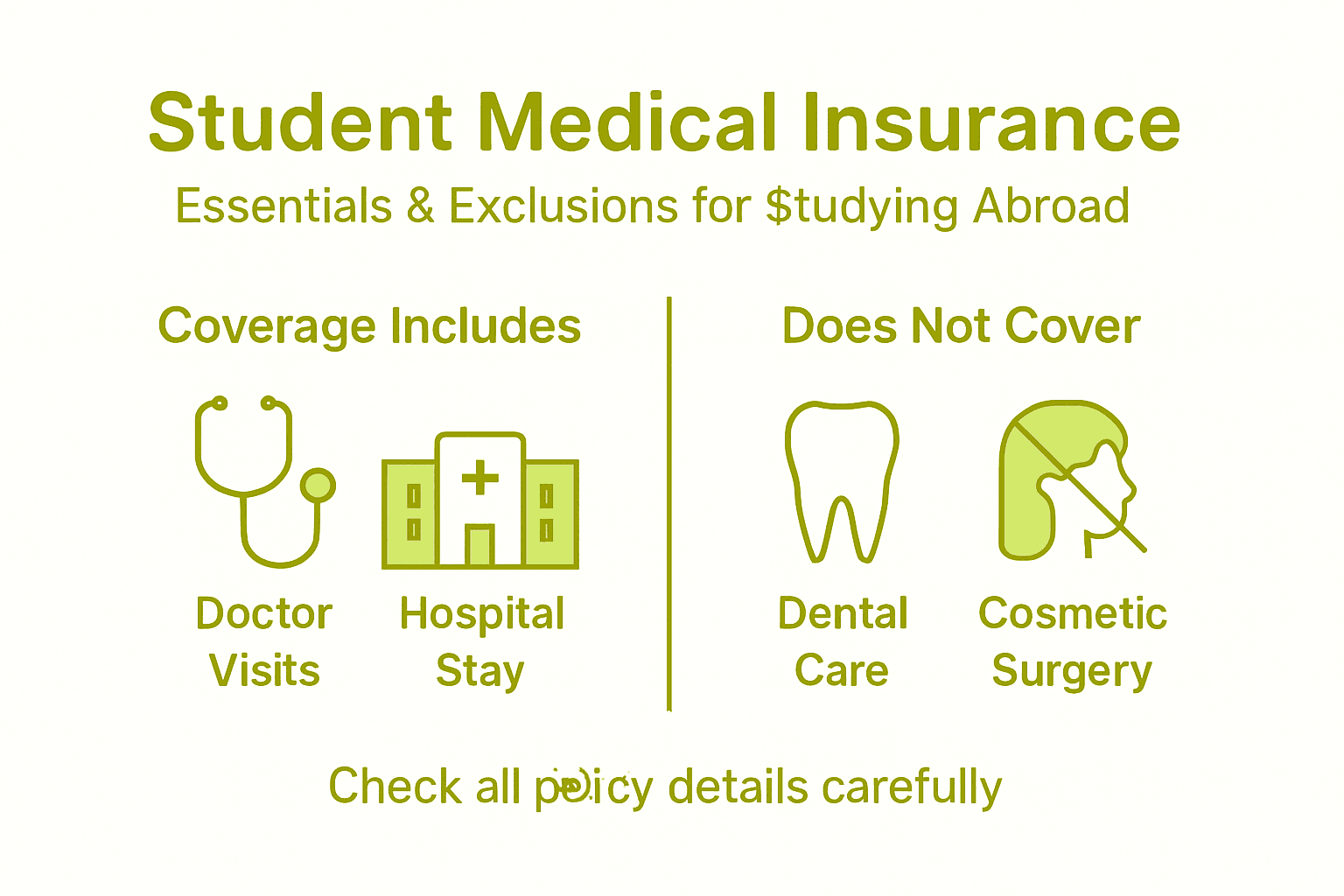
Pro tip: Request an official insurance compliance letter from your insurance provider, specifically detailing visa and university requirements.
Additional documentation students should prepare includes:
- Original insurance certificates
- English-translated insurance documents
- Comprehensive coverage verification letters
- Proof of premium payments
- Emergency contact documentation
Pro tip: Maintain digital and physical copies of all medical insurance documents, ensuring they are easily accessible for visa appointments and university registrations.
Costs, exclusions, and how to compare plans
Navigating the complex world of international student medical insurance requires a strategic approach to understanding pricing structures and comprehensive coverage options. Costs for international student health insurance vary widely, influenced by multiple factors that demand careful consideration.
Key elements affecting medical insurance costs include:
- Geographic location of study
- Comprehensive coverage extent
- Individual health profile
- Duration of insurance period
- Specific policy features
Students must scrutinise various cost components when evaluating insurance plans:
- Monthly/annual premium rates
- Deductible amounts
- Out-of-pocket expense limits
- Co-payment percentages
- Additional administrative fees
Common insurance exclusions typically encompass:
- Pre-existing medical conditions
- Elective surgical procedures
- Experimental treatments
- Dental and vision care
- Certain chronic illness management
Comprehensive medical insurance is an investment in your health and academic journey, not merely an expense.
When comparing international student medical insurance plans, critical evaluation criteria should include:
- Coverage geographical range
- Mental health support provisions
- Emergency medical evacuation services
- Prescription medication coverage
- Direct billing capabilities
- Claim processing efficiency
Cost management strategies for Indian students:
- Request multiple quotes from different providers
- Understand complete policy terms
- Evaluate cost versus comprehensive coverage
- Check university-recommended insurance options
- Consider long-term financial implications
Pro tip: Calculate potential out-of-pocket expenses by comparing total annual costs, not just monthly premiums.
Additional considerations for budget-conscious students:
- Group insurance options
- Student-specific discount programmes
- Flexible payment arrangements
- Comprehensive versus basic coverage trade-offs
- Multi-year insurance discounts
Pro tip: Maintain a spreadsheet comparing different insurance plans, noting specific features, exclusions, and total costs for easy side-by-side evaluation.
Secure Your Health and Future with Tailored Medical Insurance
Indian students travelling abroad face the critical challenge of obtaining medical insurance that meets stringent visa requirements while providing comprehensive healthcare protection. Navigating coverage options, exclusions, and regional legal mandates can be overwhelming. This is where personalized international insurance solutions become essential to avoid unexpected medical expenses and ensure a smooth academic journey.
Our platform at Unparalleled Global Benefits offers customised plans designed specifically to address the unique needs of Indian students. From broad geographical coverage to mental health support and emergency medical evacuation, you can find insurance that truly safeguards your health and complies with legal obligations. Explore a wide range of options tailored to your study destination with expert guidance.

Discover how to protect your international education experience today by visiting our comprehensive offerings at Uncategorised Archives – Unparalleled Global Benefits. Take the first step towards peace of mind and academic success—request a quote or consult with our specialists now at Unparalleled Global Benefits. Your health deserves the best protection while you study abroad.
Frequently Asked Questions
What types of medical insurance are available for Indian students studying abroad?
Indian students can choose from several types of medical insurance, including university-sponsored insurance programmes, private international health insurance plans, government-sponsored health coverage, and specialised travel insurance options.
Why is medical insurance a requirement for Indian students studying internationally?
Medical insurance is often a legal requirement for visa compliance and university enrolment. It ensures that students have access to necessary healthcare while studying abroad and protects against substantial medical expenses.
How do I compare different medical insurance plans for international students?
When comparing medical insurance plans, consider factors such as coverage extent, cost, pre-existing condition clauses, emergency evacuation provisions, and direct billing capabilities with healthcare providers. Understanding these aspects helps you choose the right plan for your needs.
What essential features should I look for in a medical insurance policy?
Key features to look for in a medical insurance policy include coverage for doctor consultations, hospital treatments, emergency medical services, prescription medication, mental health support, and preventive healthcare services. Ensure the plan meets visa and university requirements.
Recommended
- Complete Guide to Student Abroad Insurance – Unparalleled Global Benefits
- Complete Guide to Student Abroad Insurance – Unparalleled Global Benefits
- Health Insurance Studying Abroad – Why It Matters – Unparalleled Global Benefits
- Complete Guide to International Health Insurance for Students – Unparalleled Global Benefits