

Over 60 percent of British expat professionals working in Europe report gaps in local healthcare coverage, putting their health and finances at risk. The reality is that moving abroad as a skilled worker is exciting but often brings uncertainty around medical protection. Discovering the facts about international major medical insurance helps British professionals secure peace of mind, ensuring they are shielded from high costs and unexpected medical challenges while living and working in Europe.
Table of Contents
- Defining International Major Medical Insurance
- Plan Types And Coverage Distinctions
- Key Features Of Comprehensive Medical Policies
- Legal And Regulatory Requirements In Europe
- Costs, Risks, And Avoiding Coverage Gaps
Key Takeaways
| Point | Details |
|---|---|
| Comprehensive Coverage | International major medical insurance offers extensive medical expense coverage across global healthcare systems, crucial for expatriates and international travellers. |
| Plan Variability | Insurance plans are structured into tiers (Bronze, Silver, Gold, Platinum) to cater to varying healthcare needs and budgets. |
| Regulatory Compliance | European insurance regulations mandate transparency and consumer protection, requiring insurers to maintain rigorous financial standards. |
| Risk Management | Professionals should diligently review their policies for coverage gaps and consider supplementary options to avoid unexpected financial burdens during medical emergencies. |
Defining international major medical insurance
International major medical insurance represents a comprehensive healthcare protection strategy designed specifically for individuals living, working, or travelling beyond their home country’s borders. This specialised form of coverage goes far beyond traditional health insurance by providing extensive medical support across global healthcare systems. Understanding international health insurance requires recognising its unique adaptability to diverse medical environments and regulatory landscapes.
At its core, international major medical insurance offers robust protection that covers significant medical expenses, including hospitalisation, surgical procedures, emergency treatments, and often preventative care services. Unlike standard local health plans, these policies are structured to provide seamless coverage across multiple countries, addressing the complex healthcare needs of globally mobile professionals, expatriates, and international travellers. The coverage typically includes benefits such as direct billing with international hospitals, emergency medical evacuation, and access to a worldwide network of healthcare providers.
Key characteristics of international major medical insurance include comprehensive medical expense coverage, flexibility in choosing healthcare providers, and protection against the potentially astronomical costs of medical treatment in foreign healthcare systems. These policies are particularly crucial for professionals working in regions with variable healthcare standards or limited local medical infrastructure. They offer peace of mind by ensuring that individuals can access high-quality medical care without facing financial strain, regardless of their geographical location.
Pro tip: Always review the specific geographical coverage and exclusions in your international medical insurance policy to understand precisely where and under what circumstances you are protected.
Plan types and coverage distinctions
International major medical insurance plans typically stratify coverage across multiple tiers, offering professionals flexible options tailored to their specific global healthcare needs. Global medical insurance plans are traditionally structured into multiple levels such as Bronze, Silver, Gold, and Platinum, each presenting progressively comprehensive benefits and financial protection strategies.
Each insurance tier distinguishes itself through specific coverage parameters, including deductible amounts, lifetime maximums, coinsurance percentages, and benefit limitations. Bronze-level plans generally provide basic emergency coverage and minimal preventative care, while Platinum plans offer extensive benefits including comprehensive medical treatments, routine check-ups, specialist consultations, and robust emergency medical evacuation services. The primary distinctions between these plans revolve around the depth of coverage, out-of-pocket expenses, and the geographical range of medical support.

Understanding the nuanced differences between plan types requires careful examination of specific features. Key differentiators include the extent of inpatient and outpatient treatment coverage, prescription medication benefits, mental health support, dental and optical care provisions, and the flexibility of provider networks. Professionals must evaluate their individual health requirements, anticipated medical needs, and potential geographic mobility when selecting an appropriate international medical insurance plan.
Here is a concise comparison of typical international medical insurance plan tiers and who they best suit:
| Plan Tier | Suitable For | Key Coverage Focus |
|---|---|---|
| Bronze | Short-term expatriates | Basic emergencies, essentials |
| Silver | Frequent travellers | Broader treatment range |
| Gold | Senior professionals | Extensive specialist care |
| Platinum | Executives, families | Maximum benefits, global cover |
Pro tip: Compare multiple insurance plans side-by-side, focusing not just on monthly premiums but on comprehensive coverage details and potential out-of-pocket maximum expenses.
Key features of comprehensive medical policies
Comprehensive international medical policies are meticulously designed to provide robust healthcare protection for globally mobile professionals. Health systems governance plays a critical role in establishing frameworks that ensure equitable, accessible, and high-quality medical coverage across diverse international contexts. These policies go beyond simple transactional healthcare provisions, incorporating sophisticated mechanisms to address the complex medical needs of individuals operating in multiple geographical environments.
The fundamental features of comprehensive medical policies encompass several critical dimensions. Financial stability remains paramount, with risk-based capital requirements ensuring insurers can consistently meet their obligations. Coverage typically includes extensive medical treatments, emergency services, preventative care, specialist consultations, and often integrated support services such as medical evacuation and repatriation. Advanced policies distinguish themselves through transparent claim processes, flexible provider networks, and personalised support systems that adapt to the unique healthcare challenges faced by international professionals.
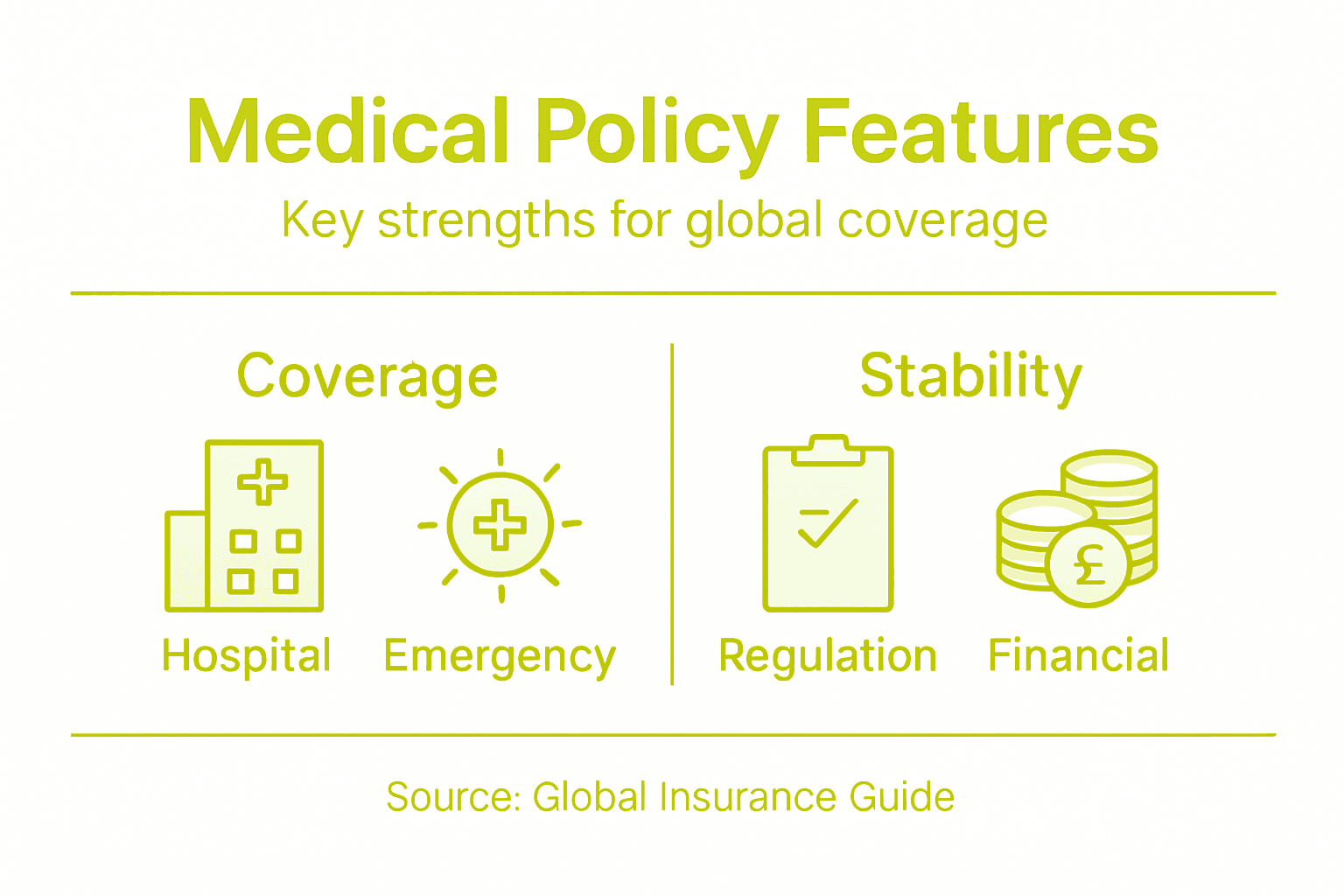
Key strategic elements of these comprehensive policies include patient-centred service design, transparent regulatory oversight, and continuous quality improvement mechanisms. Professionals seeking international medical insurance should carefully evaluate coverage parameters such as geographical scope, treatment limits, out-of-pocket expenses, and the comprehensiveness of included medical services. The most effective policies demonstrate an ability to provide seamless medical support across different healthcare systems, ensuring consistent and high-quality treatment regardless of the individual’s location.
Pro tip: Request detailed documentation outlining the exact geographical coverage and specific medical service inclusions before finalising your international medical insurance policy.
Legal and regulatory requirements in Europe
European insurance regulations constitute a sophisticated framework designed to protect consumers and ensure the stability of international medical insurance markets. European insurance legislation has evolved significantly since the Treaty of Rome, establishing comprehensive guidelines that govern cross-border medical insurance provisions. These regulations prioritise consumer protection, corporate governance, and transparent operational standards across European Union member states.
The cornerstone of European regulatory oversight is the Solvency II framework, which mandates stringent financial requirements for insurance providers. This legislation compels insurers to maintain robust capital reserves, implement sophisticated risk management protocols, and demonstrate consistent financial resilience. Key regulatory principles include mandatory reporting mechanisms, periodic financial assessments, and comprehensive governance structures that ensure insurers can meet their long-term obligations to policyholders across diverse international contexts.
Specific legal requirements for international major medical insurance in Europe encompass multiple dimensions beyond financial stability. Regulations mandate transparent pricing structures, clear policy documentation, equitable claims processing, and non-discriminatory service provisions. Insurers must navigate complex compliance landscapes that include data protection regulations, cross-border service directives, and stringent consumer rights frameworks. Professionals seeking international medical insurance must understand these regulatory nuances to select policies that not only provide comprehensive medical coverage but also adhere to the highest standards of legal and ethical practice.
Pro tip: Always request a detailed compliance statement from your insurance provider, confirming their adherence to current European Union regulatory standards.
Costs, risks, and avoiding coverage gaps
International medical insurance presents complex financial challenges that demand strategic navigation to mitigate potential risks. Global insurance protection gaps represent significant financial vulnerabilities for expatriates and international professionals, with potential treatment costs potentially exceeding substantial monetary thresholds. Understanding these risks requires comprehensive analysis of policy limitations, potential exclusions, and individual healthcare requirements.
Coverage gaps frequently emerge in critical areas such as pre-existing conditions, emergency medical evacuations, mental health treatments, and specialised care services. Expatriates might unexpectedly face financial exposure when discovering their policies do not comprehensively cover specific medical scenarios. Common risk areas include limited geographical coverage, restricted treatment options, high out-of-pocket expenses, and complex claims processes that can create significant financial strain during medical emergencies.
Effective risk mitigation involves multiple strategic approaches. Professionals should meticulously review policy documentation, understand precise exclusions, and consider supplementary coverage options that address potential gaps. Recommended strategies include selecting comprehensive plans with transparent terms, leveraging digital health tools for cost management, adjusting deductibles to balance premium costs, and maintaining detailed medical documentation. Proactive policy comparison, understanding individual health risks, and maintaining flexible coverage that adapts to changing international living circumstances are essential for comprehensive protection.
Below is a summary of common coverage gaps and how to proactively minimise risk:
| Coverage Gap Area | Common Risk | Risk Mitigation Strategy |
|---|---|---|
| Pre-existing conditions | Unexpected claim denial | Obtain written pre-authorisation |
| Emergency evacuation | High unreimbursed costs | Choose global evacuation coverage |
| Mental health treatment | Strict benefit limitations | Select plans with mental health enhancement |
| Provider network limits | Out-of-network expenses | Confirm wide hospital network |
Pro tip: Request a detailed breakdown of policy exclusions and conduct an annual review of your international medical insurance to ensure continued alignment with your evolving healthcare needs.
Secure Your Health with Tailored International Medical Insurance
Navigating the complexities of international major medical insurance can be overwhelming. This article highlights common challenges such as understanding geographical coverage, avoiding costly coverage gaps, and selecting plans that offer comprehensive support for globally mobile professionals. If you want personalised solutions designed to eliminate these risks and provide peace of mind when living, working, or travelling abroad, our platform is here to help.
Explore a wide range of expertly curated insurance plans at Uncategorised Archives – Unparalleled Global Benefits that adapt to your unique needs. Don’t leave your health security to chance—visit https://unparalleledglobalbenefits.com today and discover how our international insurance solutions can protect you everywhere life takes you. Start by requesting a personalised quote and experience dedicated support tailored specifically for expatriates, travellers, and international professionals.
Frequently Asked Questions
What is international major medical insurance?
International major medical insurance is a comprehensive healthcare protection plan designed for individuals living, working, or travelling abroad. It covers significant medical expenses and provides extensive support across global healthcare systems.
What are the key benefits of international major medical insurance?
Key benefits include coverage for hospitalisation, surgical procedures, emergency treatments, preventative care services, direct billing with international hospitals, emergency medical evacuation, and access to a worldwide network of healthcare providers.
How do I choose the right international medical insurance plan?
When selecting an international medical insurance plan, consider factors such as your individual health requirements, expected medical needs, geographical mobility, and the differences in coverage offerings between plan tiers, such as Bronze, Silver, Gold, and Platinum.
What common coverage gaps should I be aware of?
Common coverage gaps may include pre-existing conditions, emergency medical evacuation costs, mental health treatment limitations, and provider network restrictions. It’s essential to review policy documentation carefully and consider supplementary coverage options to address these potential risks.
Recommended
- How to Get Medical Insurance Abroad: Your Essential Guide for Expats and Travelers
- 7 Essential Tips to Compare International Health Insurance – Unparalleled Global Benefits
- International Health Insurance Explained: Complete Guide – Unparalleled Global Benefits
- What is International Health Insurance? Understanding Coverage – Unparalleled Global Benefits