

More than **45 percent of British expatriates in Europe with pre-existing health conditions face difficulties finding reliable travel insurance that truly covers their medical needs. Choosing the right policy is vital for peace of mind, especially when dealing with complex health profiles and strict border requirements. This guide helps British travellers understand how to assess their health needs, compare policies, and secure travel insurance that protects them every step of their journey.
Table of Contents
- Step 1: Assess Your Medical Requirements Thoroughly
- Step 2: Compare Insurers for Tailored Health Cover
- Step 3: Evaluate Policy Terms and Exclusions Carefully
- Step 4: Request Quotes and Check Eligibility
- Step 5: Confirm Your Coverage Meets Border Requirements
Quick Summary
| Key Takeaway | Explanation |
|---|---|
| 1. Assess your medical needs | Document all pre-existing conditions and treatments before applying for travel insurance. |
| 2. Compare insurance providers | Create a comparison chart of insurers, focusing on coverage for pre-existing conditions. |
| 3. Evaluate policy details | Scrutinise policy terms, including exclusions and claim processes, to ensure comprehensive coverage. |
| 4. Request accurate quotes | Provide detailed medical information when requesting quotes for tailored insurance coverage. |
| 5. Confirm border requirements | Check that your chosen policy meets the entry requirements for your travel destinations. |
Step 1: Assess your medical requirements thoroughly
Preparing to secure comprehensive travel insurance begins with a thorough understanding of your personal medical landscape. Your goal is to create a complete picture of your health profile that enables insurers to provide accurate and appropriate coverage.
Start by carefully documenting all pre-existing medical conditions with precision. This means listing every diagnosed physical illness such as heart disease, diabetes, asthma, or ongoing mental health conditions. Gather comprehensive medical records including current treatments, prescription medications, recent hospital visits, and diagnostic test results. Accurate disclosure is critical because incomplete information can lead to claim rejections or policy invalidation.
During your assessment, review not just current health status but potential medical needs during travel. Consider how your specific conditions might interact with travel stress, climate changes, or limited medical access in your destination. Understanding what constitutes a pre-existing condition helps facilitate accurate insurance discussions.
Expert Advice: Photograph or digitally scan all relevant medical documents to have instant access during your insurance application process.
Step 2: Compare insurers for tailored health cover
Navigating the complex world of travel insurance requires a strategic approach to finding coverage that matches your unique medical needs. Your primary objective is to identify insurers who understand and accommodate your specific health requirements with flexibility and comprehensive protection.

Comparing multiple insurance providers becomes critical when seeking tailored health coverage. Each insurer has distinct policies regarding pre-existing conditions, with variations in definition, coverage limits, and exclusion criteria. Begin by creating a detailed comparison spreadsheet that tracks key factors such as medical condition acceptance, premium costs, geographical coverage, emergency medical evacuation terms, and maximum claim limits. Pay close attention to how different insurers define and handle pre-existing conditions, as some may offer more lenient terms than others.
Review each potential policy meticulously, focusing on the fine print related to your specific health profile. Look for insurers who specialise in medical travel insurance and demonstrate a track record of supporting travellers with complex health backgrounds. Consider reaching out directly to insurance representatives to discuss your unique circumstances and clarify any ambiguities in policy language.
Savvy Advice: Create a side-by-side comparison chart of potential insurers, colour-coding policies based on how well they match your specific medical requirements to simplify your decision-making process.
To help you compare insurers effectively, consider this sample table highlighting key comparison factors:
| Comparison Factor | Why It Matters | Example Variation |
|---|---|---|
| Pre-existing Condition Policy | Defines coverage eligibility for your health issues | Full cover vs. limited cover |
| Maximum Claim Limit | Sets financial ceiling for medical claims | £2 million vs. £10 million |
| Geographical Scope | Determines where cover applies | Europe only vs. worldwide |
| Medical Emergency Protocols | Outlines response to urgent medical situations | Direct payment vs. reimbursement |
| Policy Exclusions | Lists scenarios not covered by insurance | Mental health excluded vs. covered |
Step 3: Evaluate policy terms and exclusions carefully
Successfully navigating travel insurance requires a forensic approach to understanding every detail within your potential policy. Your mission is to uncover hidden clauses and potential limitations that could impact your coverage when you need it most.
Carefully scrutinise each policy document, paying particular attention to understanding insurance policy nuances that could affect your medical coverage. Focus on four critical areas: pre-existing condition definitions, specific exclusions related to your medical history, geographical limitations, and emergency medical treatment protocols. Many policies contain complex language designed to limit their financial liability, so read between the lines and ask direct questions about any terminology you do not fully comprehend.
Prepare a comprehensive checklist that breaks down each policy’s specific terms. Note the precise definitions of pre-existing conditions, understand exactly what medical scenarios are covered or rejected, and clarify the process for claiming medical expenses during international travel. Request detailed explanations from insurance representatives about any unclear sections, and do not hesitate to compare multiple policies side by side to identify the most comprehensive protection for your specific health requirements.
Expert Suggestion: Create a colour-coded spreadsheet highlighting potential risks and coverage gaps to help you make a more informed insurance selection.
Step 4: Request quotes and check eligibility
Securing the right travel insurance requires a strategic approach to obtaining accurate quotes that match your unique health profile. Your goal is to navigate the quote process with precision and transparency to ensure comprehensive coverage.
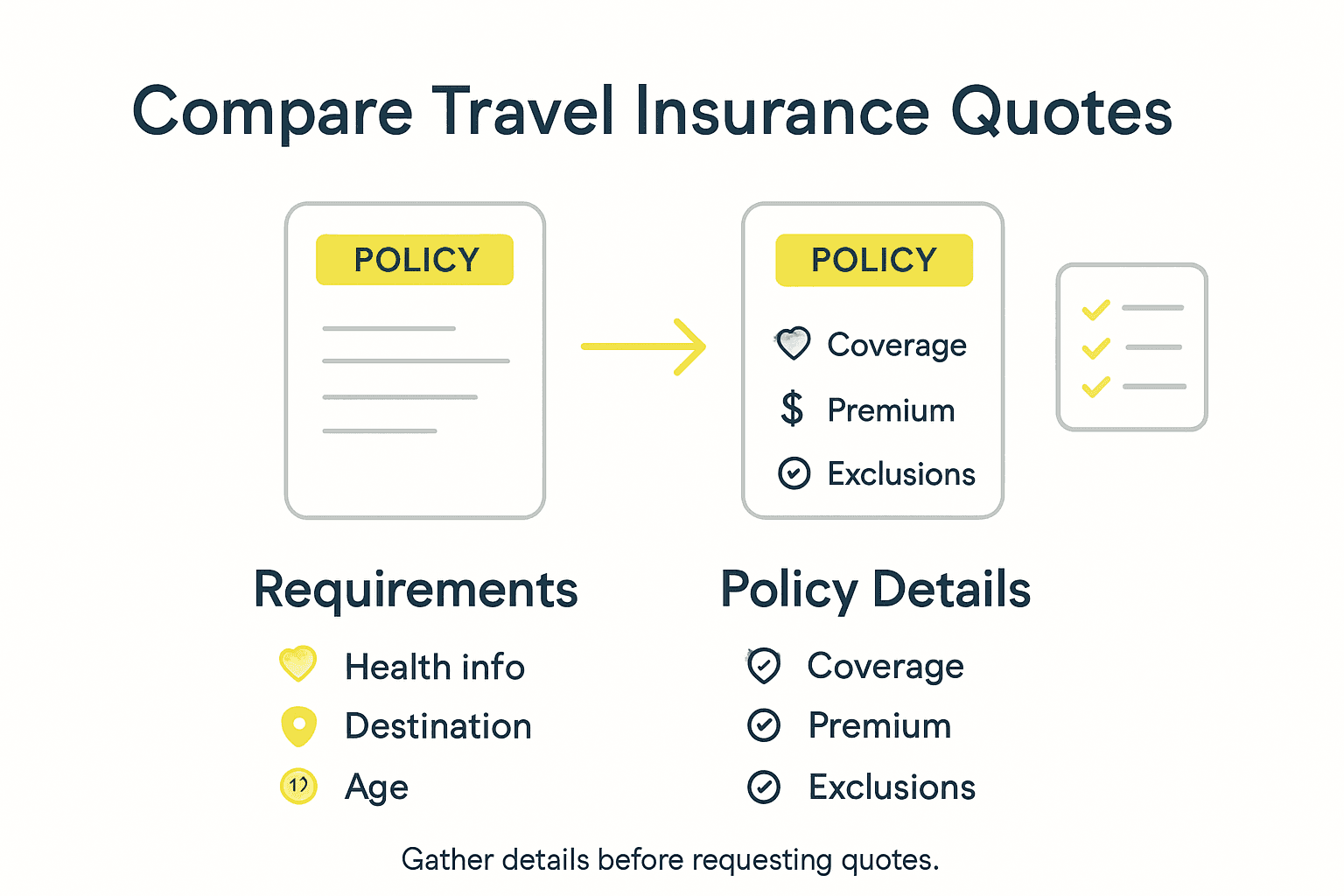
Understanding the intricate eligibility criteria for medical travel insurance policies is crucial for obtaining appropriate cover. Prepare a comprehensive medical dossier that includes detailed information about your pre-existing conditions, current treatments, medication history, and recent medical assessments. Be prepared to answer specific questions about your health status, age, planned travel destinations, and the nature of your medical conditions. Different insurers have varying risk assessment protocols, so approach each quote request with complete honesty and meticulous detail.
When requesting quotes, develop a systematic approach that allows for comprehensive comparison. Contact multiple insurance providers and request detailed written quotes that break down coverage specifics, premium costs, and exclusions. Carefully review the medical screening processes and requirements to avoid potential policy complications. Pay close attention to how each insurer defines pre-existing conditions and their specific approach to medical coverage. Do not hesitate to ask direct questions about any unclear aspects of the policy, and request clarification on how your specific health conditions might impact your coverage and potential claims.
Expert Advice: Compile a standardised medical information summary to streamline the quote request process and ensure consistent information across different insurance providers.
Step 5: Confirm your coverage meets border requirements
Ensuring your travel insurance satisfies international border regulations is a critical step that requires meticulous attention to detail. Your objective is to verify that your selected policy meets the specific entry requirements of your destination countries.
Understanding the diverse health insurance mandates for international travel demands comprehensive research into each destination’s unique requirements. Different countries impose varying regulations regarding medical coverage, including minimum coverage limits, mandatory repatriation provisions, and specific requirements for medical expense protection. Some nations may require additional documentation such as COVID-19 coverage or proof of specific medical evacuation capabilities.
Carefully review your insurance policy documents to confirm they explicitly address border entry requirements. Contact your insurance provider to obtain official documentation confirming your coverage meets international standards. Request a comprehensive certificate of insurance that clearly outlines medical coverage limits, geographical scope, and emergency support services. Consider obtaining a Schengen visa insurance document if travelling to European countries, ensuring your documentation is both comprehensive and recognised by border control authorities.
Practical Advice: Create digital and physical copies of your insurance documents and store them in multiple secure locations to ensure quick access during border crossings.
Understanding border requirements for travel insurance is essential. This table summarises common international insurance entry criteria:
| Requirement Type | Typical Examples | Impact on Travellers |
|---|---|---|
| Minimum Medical Cover | €30,000 for Schengen countries | Essential for visa approval |
| Repatriation Clause | Paid return to home country if necessary | Ensures emergency evacuation cover |
| Specific Documentation | Certificate of insurance, COVID-19 proof | Required at border control |
| Geographical Coverage | Policy must match all planned destinations | Prevents denial of entry |
Simplify Your Search for the Best Travel Insurance for Health Conditions
Navigating the complexities of travel insurance when managing pre-existing medical conditions can feel overwhelming. This article highlights the challenges of understanding policy terms, eligibility criteria, and border requirements. It also points out the critical need for personalised coverage tailored to your unique health profile and travel plans. If you are concerned about securing reliable health insurance that truly fits your medical needs and travel destinations, expert guidance is essential.
Discover how Unparalleled Global Benefits offers bespoke international insurance solutions designed to support travellers like you. Our extensive range includes plans specialised in travel and visitor health insurance with thorough coverage for pre-existing conditions. Benefit from clear policy information, tailored quotes, and dedicated customer service aimed at simplifying your insurance journey and ensuring you meet all border entry requirements confidently. Explore our Uncategorised Archives – Unparalleled Global Benefits for insightful resources and comprehensive product details.
Ready to secure travel insurance that safeguards your health and peace of mind abroad Take the next step today by visiting Unparalleled Global Benefits and request your personalised quote. Act now and travel with confidence knowing your unique medical needs are covered every step of the way.
Frequently Asked Questions
How can I assess my medical requirements for travel insurance?
Start by thoroughly documenting all pre-existing medical conditions and gathering your medical records. Create a complete health profile that includes treatments, medications, and any relevant hospital visits to ensure accurate coverage from insurers.
What should I compare when choosing travel insurance for health conditions?
Focus on the acceptance of pre-existing conditions, premium costs, geographical coverage, and maximum claim limits. Create a comparison spreadsheet to track these factors among multiple insurers to find the best fit for your health needs.
How do I evaluate policy terms and exclusions for travel insurance?
Carefully read through policy documents, focusing on definitions of pre-existing conditions, exclusions related to your medical history, and emergency protocols. Make a checklist of each policy’s specific terms to help identify gaps or limitations.
What information do I need to request quotes for travel insurance?
Prepare a detailed medical dossier that includes your health conditions, treatments, and medication history. When contacting insurers, provide consistent information and request written quotes that outline coverage specifics and exclusions.
How can I confirm that my travel insurance meets border requirements?
Review your policy documents for compliance with the entry regulations of your destination, including minimum medical cover and repatriation clauses. Obtain a certificate of insurance from your provider that clearly outlines your coverage and have both digital and physical copies ready for border control.
What should I include in the medical summary for travel insurance?
Include details about your pre-existing conditions, current treatments, medication history, and any recent medical assessments. This information helps ensure that you receive accurate quotes and appropriate coverage from different insurers.