

Travel documentation might sound like a pile of paperwork most people would rather skip, yet it quietly holds the power to shape your entire international experience. And here’s a shocker. Even a single missing document can result in denied entry, legal trouble, and significant financial loss, impacting thousands of travellers each year. But while most imagine these papers are just about ticking boxes for border control, they are actually a lifeline for both personal safety and global opportunity, with real consequences for those who get it wrong.
Table of Contents
- What Is Travel Documentation?
- Why Travel Documentation Matters For Safe Travel
- How Travel Documentation Facilitates International Movement
- Key Types Of Travel Documentation And Their Purposes
- Real-World Examples Of Travel Documentation Impacts
Quick Summary
| Takeaway | Explanation |
| Proper documentation ensures smooth travel | Complete and accurate documentation prevents entry denial and delays at borders. |
| Travel documents safeguard personal identity | They verify identity, providing legal recognition while travelling internationally. |
| Understanding visas is crucial for compliance | Visas dictate specific entry conditions, helping avoid legal issues during travel. |
| Emergency documents aid in crisis situations | Travel insurance and emergency contacts ensure medical support when needed abroad. |
| Documentation impacts professional opportunities | Accurate travel papers enable global work and study, influencing career prospects. |
What is Travel Documentation?
Travel documentation represents a comprehensive collection of official papers and credentials that validate a traveller’s identity, citizenship, and legal permission to enter, transit through, or reside in another country. These essential documents serve as critical verification tools for government authorities, immigration services, and border control agencies.
Types of Essential Travel Documentation
Travel documentation encompasses a wide range of official papers, each serving a unique purpose in facilitating international movement. The most fundamental documents include:
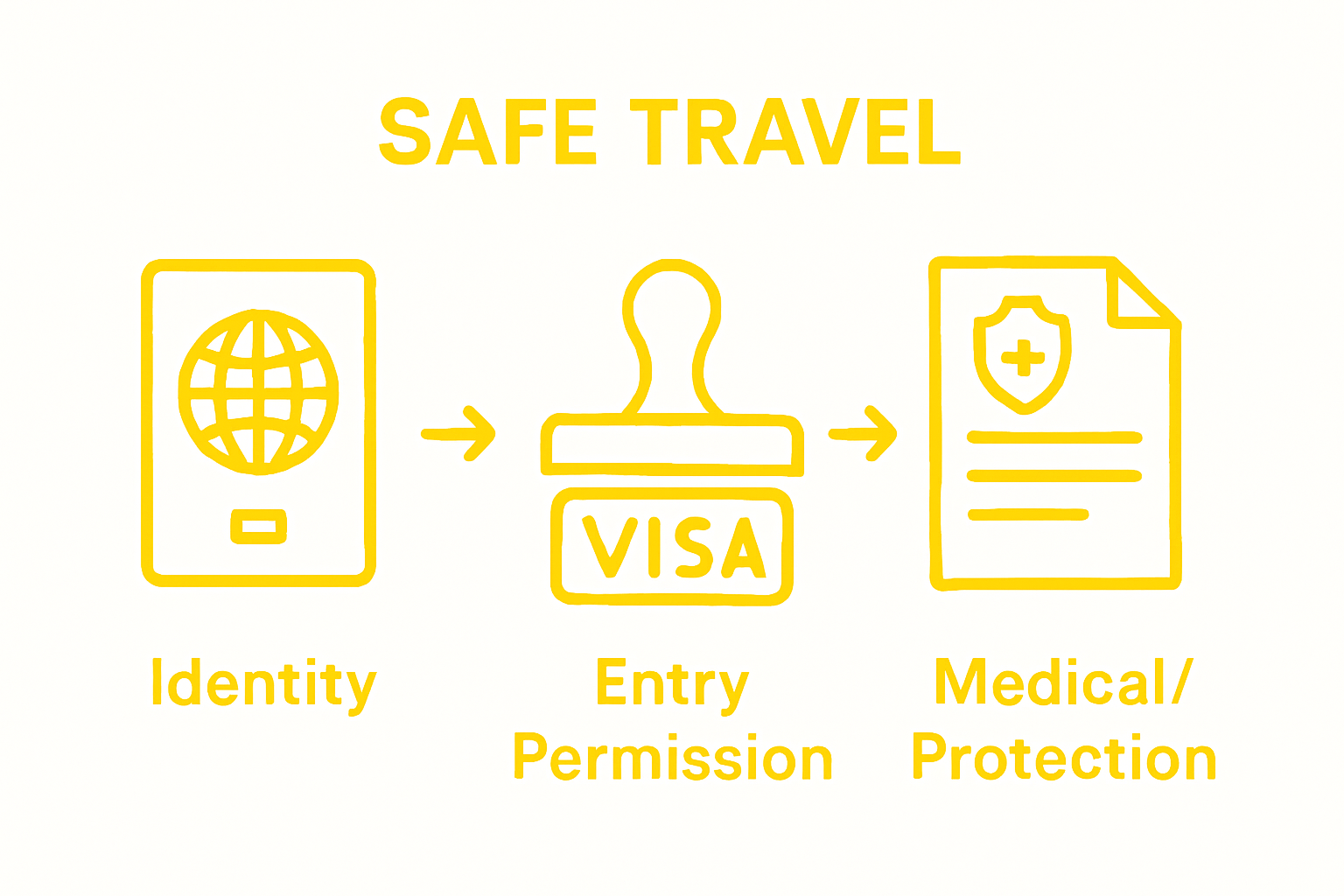
- Passport: The primary international identification document confirming citizenship and personal identity
- Visa: Official authorisation granting entry permission for specific purposes like tourism, work, or study
- Travel Insurance Documents: Proof of medical coverage and financial protection during international travel
According to the UK Government Travel Advice Portal, these documents not only establish personal identity but also demonstrate compliance with international travel regulations. Each document plays a crucial role in ensuring smooth border crossings and preventing potential legal complications.
Purpose and Significance
Travel documentation serves multiple critical functions beyond mere identification. These documents protect national security, manage international migration, and provide travellers with legal recognition across different jurisdictions. Proper documentation enables governments to track international movements, manage immigration processes, and ensure the safety of both travellers and host countries.
For global professionals, expatriates, and international travellers, understanding and maintaining accurate travel documentation is not just a bureaucratic requirement but a fundamental aspect of responsible international mobility. Incomplete or incorrect documentation can result in denied entry, potential legal issues, and significant disruptions to travel plans.
Why Travel Documentation Matters for Safe Travel
Travel documentation represents more than a bureaucratic requirement. It serves as a fundamental mechanism for ensuring personal safety, legal protection, and seamless international mobility. Travellers who understand the critical importance of comprehensive documentation can significantly mitigate risks associated with international journeys.
Legal Protection and Border Security
Travel documents act as official safeguards that protect both travellers and host countries. Proper documentation provides legal recognition, verifies personal identity, and demonstrates compliance with international immigration regulations. Without appropriate papers, individuals risk:
- Immediate deportation
- Legal prosecution
- Potential travel bans
- Financial penalties
- Compromised personal security
According to the UK Foreign, Commonwealth & Development Office, carrying valid documentation is crucial for accessing consular support and ensuring legal protection during international travel.
Medical and Emergency Preparedness
Beyond legal considerations, travel documentation plays a pivotal role in medical emergencies and unexpected situations. Comprehensive travel documents enable rapid identification, facilitate medical interventions, and provide critical information during crisis scenarios. Medical insurance documents, vaccination certificates, and emergency contact information become lifelines when travellers encounter health challenges in foreign territories.
For global professionals, expatriates, and adventurous travellers, understanding the multifaceted importance of travel documentation transforms these papers from mere administrative requirements into essential tools for personal safety and international mobility. Proactive documentation management represents a strategic approach to minimising travel-related risks and ensuring smooth, secure international experiences.

How Travel Documentation Facilitates International Movement
Travel documentation serves as a sophisticated global infrastructure that enables seamless cross-border movement, transforming complex international travel into a structured, manageable process. These critical documents function as universal communication tools that standardise identity verification and movement protocols across diverse national boundaries.
Identity Verification and Border Control
Travel documents are sophisticated verification systems that authenticate an individual’s legal identity and travel permissions. They provide border control agencies with comprehensive information about travellers, enabling rapid and efficient screening processes. These documents include:
- Biometric passport data
- Visa entry permissions
- Personal identification details
- Citizenship verification records
- Travel history information
According to the OECD Migration Report, these documents play a crucial role in managing international mobility while maintaining national security standards.
Standardising International Travel Protocols
Travel documentation creates a universal language of international movement, establishing standardised protocols that governments worldwide recognise. These documents transform complex bureaucratic processes into streamlined, predictable systems that enable millions of people to traverse international borders safely and legally.
For global professionals, digital nomads, and international travellers, understanding the intricate mechanisms of travel documentation is essential. These papers are not mere administrative formalities but sophisticated tools that bridge cultural, legal, and geographical boundaries, enabling unprecedented levels of global mobility and interconnectedness.
Key Types of Travel Documentation and Their Purposes
Travel documentation encompasses a diverse range of official papers designed to facilitate international movement, verify personal identity, and ensure legal compliance across global jurisdictions. Each document type serves a unique purpose, addressing specific travel requirements and providing essential information for government authorities.
Primary Personal Identification Documents
Passports represent the most fundamental and universally recognised travel documentation, serving as primary proof of citizenship and personal identity. These critical documents come in various categories, each tailored to specific traveller profiles:
- Ordinary Passports: Standard travel documents for general citizens
- Diplomatic Passports: Issued to government officials and diplomats
- Emergency Travel Documents: Temporary replacements for lost or stolen passports
- Refugee Travel Documents: Enabling international movement for displaced individuals
According to the International Organization for Migration, these passport categories provide nuanced solutions for different traveller needs and legal requirements.
Supplementary Travel Authorisation Documents
Visas and travel permits complement passports by providing specific permissions for entry, stay, and activities in foreign countries. These documents outline precise conditions of travel, including duration, purpose, and permitted activities. They function as critical gatekeeping mechanisms that countries use to regulate international movement and protect national interests.
For global professionals, expatriates, and international travellers, understanding the intricate landscape of travel documentation is not just a bureaucratic necessity but a strategic skill. Comprehensive knowledge of these documents enables smoother international experiences, reduces potential legal complications, and facilitates more confident global mobility.
The following table summarises the key types of travel documentation discussed in the guide, highlighting their purpose and typical users to provide quick reference for readers.
| Document Type | Main Purpose | Typical User |
| Ordinary Passport | Proof of citizenship and personal identity | General citizens |
| Diplomatic Passport | Official government travel and diplomatic recognition | Diplomats, government officials |
| Emergency Travel Document | Temporary replacement for lost or stolen passports | Citizens requiring urgent travel |
| Refugee Travel Document | Authorise international movement for displaced persons | Refugees and asylum seekers |
| Visa | Official permission for entry, stay, or specific purpose | Tourists, students, workers, business travellers |
| Travel Insurance Document | Proof of medical cover and financial protection abroad | Travellers seeking safety, expatriates, global professionals |
| Vaccination Certificate | Proof of immunisation required for international entry | Travellers entering countries with specific health requirements |
Real-World Examples of Travel Documentation Impacts
Travel documentation transcends theoretical concepts, directly influencing individual experiences, international relations, and global mobility. Real-world scenarios demonstrate the profound consequences of proper or improper documentation, revealing how these papers can dramatically alter personal and professional trajectories.
Personal Travel Disruption Scenarios
Inadequate travel documentation can transform planned journeys into complex, emotionally and financially draining experiences. Travellers frequently encounter significant challenges when documentation is incomplete or incorrect, leading to:
- Denied entry at international borders
- Unexpected deportation
- Financial losses from cancelled travel plans
- Psychological stress and anxiety
- Potential legal complications
According to research published in the National Library of Medicine, travel restrictions and documentation challenges can significantly impact mental health, creating substantial psychological and economic pressures for affected individuals.
Global Mobility and Professional Implications
Travel documentation serves as a critical gateway for international professional opportunities, determining an individual’s ability to work, study, and engage in cross-border collaborations. Professionals in fields such as engineering, healthcare, academia, and digital technology rely on precise documentation to navigate complex international employment landscapes.
For global citizens, understanding the nuanced impacts of travel documentation is not merely an administrative task but a strategic skill. These documents represent more than paper credentials they are powerful instruments that can unlock or restrict international opportunities, shape personal narratives, and define global mobility experiences.
This table compares the potential impacts of inadequate versus adequate travel documentation, helping readers understand the real-world consequences described in the article.
| Documentation Status | Likely Impact on Traveller | Examples from Article |
| Incomplete/Incorrect | Denied entry, deportation, financial loss, stress | Unexpected deportation, cancelled plans, legal trouble |
| Complete and Accurate | Smooth border crossing, legal protection, peace of mind | Seamless travel, access to consular and medical support |
| Missing Insurance | Lack of medical/emergency support, financial risk | Jeopardised safety, difficult crisis response |
Secure Your International Journey with Expert Travel Documentation Support
Worried about the risks highlighted in understanding the importance of travel documentation? Incomplete paperwork and missing insurance documents can quickly turn your travel plans into stressful ordeals. The article makes it clear that missing proof of medical insurance, incorrect visas, or lost passports do more than disrupt your journey. They create legal issues, financial problems and jeopardise your personal safety abroad. Staying informed is important but professional preparation can make all the difference between confident adventure and potential crisis.
Take action and protect yourself by partnering with specialists who understand global travel inside out. At Unparalleled Global Benefits, we help global professionals, expatriates and frequent travellers secure the right Expat Medical and Travel Insurance plans for their unique needs. Do not wait until a missing document causes serious trouble. Visit our website now and discover personalised solutions that ensure you travel with peace of mind every time you cross a border.
Frequently Asked Questions
What is the primary purpose of travel documentation?
Travel documentation serves to validate a traveller’s identity, citizenship, and legal permission to enter, transit through, or reside in another country, ensuring compliance with international travel regulations.
What are the essential types of travel documents?
The essential types of travel documents include passports, visas, and travel insurance documents, each playing a crucial role in international travel.
Why is accurate travel documentation important for international travel?
Accurate travel documentation is vital as it protects against legal issues, ensures border security, and provides access to consular support and medical services during emergencies.
How does travel documentation facilitate border control and identity verification?
Travel documentation allows border control agencies to authenticate an individual’s legal identity and travel permissions, enabling efficient and safe processing of travellers at international borders.