

Vaccines play a central role in keeping travellers safe while exploring unfamiliar corners of the globe. Many popular destinations still have outbreaks of preventable diseases, and the World Health Organization reports that over 1 billion people cross international borders each year, putting millions at risk of infection. Most travellers expect airport queues or lost luggage to be their biggest hassle, but overlooked immunisations can derail a holiday long before any suitcase goes missing.
Table of Contents
- What Are Vaccines And Why Are They Crucial For Travel?
- The Role Of Vaccines In Disease Prevention During Travel
- Types Of Vaccines Recommended For International Travel
- How Vaccine Requirements Vary By Destination And Context
- Understanding Vaccine Certificates And Travel Compliance
Quick Summary
| Takeaway | Explanation |
| Vaccines are vital for travel health. | They protect against infectious diseases not found in your home country, essential for safe international journeys. |
| Consult healthcare professionals pre-travel. | Speak with experts about necessary vaccinations tailored to your destination and health profile well in advance of your trip. |
| Maintain an updated vaccination record. | Keep a comprehensive log of your vaccinations to meet destination requirements and facilitate travel compliance. |
| Plan vaccinations ahead of time. | Ensure you obtain vaccines 4-6 weeks before departure to allow adequate time for immune response development. |
| Understand local vaccine requirements. | Be aware that regulations vary by country, necessitating tailored vaccination strategies based on specific health risks. |
What are Vaccines and Why are They Crucial for Travel?
Vaccines represent a fundamental medical intervention designed to protect individuals from potentially serious and life-threatening infectious diseases. When preparing for international travel, understanding these biological shields becomes paramount for personal health and global safety.
The Scientific Foundation of Vaccines
At their core, vaccines are biological preparations containing weakened, killed, or modified components of specific pathogens that stimulate the human immune system. By introducing these safe, controlled versions of disease-causing microorganisms, vaccines prompt the body to develop targeted antibodies and immune memory. This means when a traveller encounters the actual infectious agent, their immune system can rapidly recognise and neutralise the threat.
According to the Centers for Disease Control and Prevention, vaccines are crucial for international travel because they protect against region-specific diseases not commonly found in one’s home country. Different geographical locations present unique health risks that local immune systems might not naturally defend against.
Essential Considerations for Travellers
Travelling across international borders introduces exposure to diverse microbial environments, making vaccination an essential preventive strategy. Key considerations for international travellers include:
- Understanding destination-specific health risks
- Consulting healthcare professionals about recommended immunisations
- Maintaining an up-to-date vaccination record
- Allowing sufficient time before travel for vaccine administration and immune response development
Moreover, vaccines serve a broader public health purpose beyond individual protection. By reducing transmission risks, travellers contribute to global disease prevention and community immunity. When you learn more about comprehensive travel protection, you will understand how medical preparedness is a critical component of responsible international travel.
Ultimately, vaccines represent a scientifically proven method of safeguarding personal health while respecting global health ecosystems. They transform potential vulnerability into resilience, enabling travellers to explore the world with confidence and minimal health risks.
The Role of Vaccines in Disease Prevention During Travel
Vaccines play a critical role in protecting travellers from potentially dangerous infectious diseases encountered during international journeys. By creating targeted immunological defences, vaccines enable individuals to explore diverse global destinations while minimising health risks.
Understanding Disease Transmission Risks
International travel exposes individuals to unique microbial landscapes vastly different from their home environments. Pathogens prevalent in specific regions can pose significant health challenges for travellers without appropriate immunological protection. Preventing tropical diseases requires a strategic approach to vaccination that considers destination-specific health risks.
According to the Centers for Disease Control and Prevention, different geographical regions present distinct disease transmission patterns. Vaccines act as biological shields, preparing the immune system to recognise and neutralise potential infectious agents before they can cause serious illness.
Strategic Vaccination for Global Travellers
Effective disease prevention during travel involves comprehensive vaccination strategies targeting multiple potential health threats. Key vaccination considerations include:
- Evaluating destination-specific health risks
- Consulting travel health specialists for personalised recommendations
- Obtaining vaccines well in advance of travel dates
- Maintaining comprehensive medical documentation
Vaccines not only protect individual travellers but also contribute to broader global health security. By reducing the potential for disease transmission across international borders, vaccinated individuals play a crucial role in preventing potential epidemic spread.
The complexity of global disease transmission necessitates a proactive and informed approach to travel health. Comprehensive vaccination represents a scientifically validated method of transforming potential health vulnerabilities into robust immunological resilience, enabling travellers to explore the world with confidence and minimal medical risk.
Types of Vaccines Recommended for International Travel
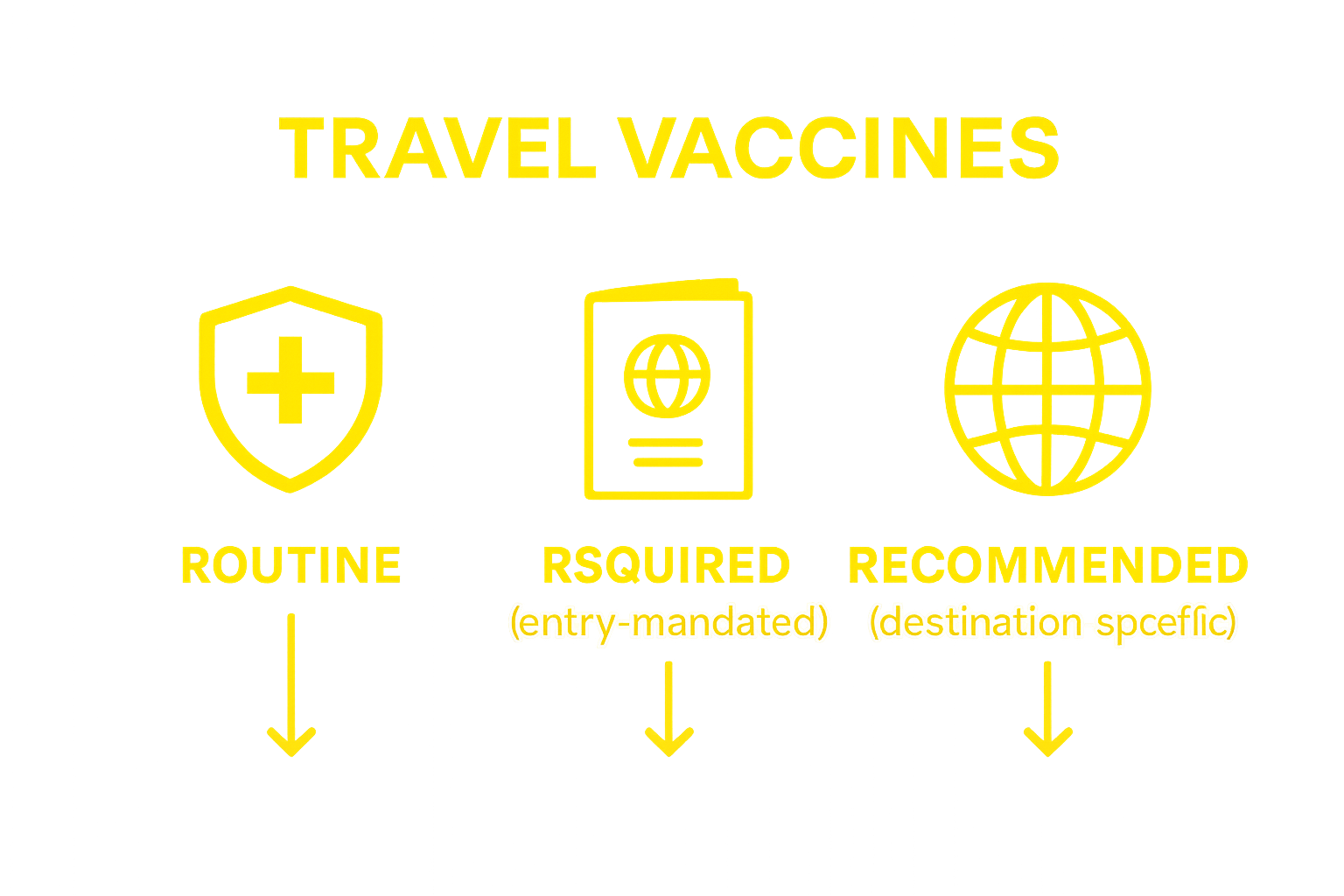
International travel necessitates a comprehensive approach to vaccination, with recommended immunisations varying significantly based on destination, individual health status, and potential exposure risks. Understanding these vaccine categories helps travellers make informed health decisions before embarking on global journeys.
Routine Vaccination Requirements
Before international travel, healthcare professionals emphasise maintaining up-to-date routine vaccinations that provide fundamental protection against common infectious diseases. These core immunisations form the baseline of travel health preparedness and include:
- Measles, Mumps, and Rubella (MMR)
- Diphtheria, Tetanus, and Pertussis (DTaP)
- Influenza
- Polio
- Hepatitis B
According to the World Health Organization, verifying and updating these routine vaccines is critical before any international travel, as they provide essential protection against diseases that may have different prevalence rates in various global regions.
Destination-Specific Vaccine Recommendations
Certain travel destinations require additional vaccines tailored to region-specific health risks. Understanding travel insurance coverage can help travellers appreciate the importance of these targeted immunisations. Key destination-specific vaccines include:
- Yellow Fever (required for travel to parts of Africa and South America)
- Japanese Encephalitis (prevalent in Asian regions)
- Typhoid
- Hepatitis A
- Meningococcal disease
- Rabies
Travellers must consult healthcare professionals at least 4-6 weeks before departure to ensure adequate time for vaccine administration and development of immune response. Each vaccine requires careful consideration of individual health history, potential side effects, and specific travel itinerary.
The complexity of international travel health underscores the importance of a personalised, proactive approach to vaccination. By understanding and implementing comprehensive immunisation strategies, travellers can significantly reduce their risk of contracting infectious diseases and enjoy safer, healthier global experiences.
To help travellers prepare effectively, the table below summarises the main categories of vaccines recommended for international travel and their typical examples.
| Category | Description | Example Vaccines |
| Routine Vaccinations | Core immunisations recommended for all, regardless of travel plans | MMR (Measles, Mumps, Rubella), DTaP, Polio |
| Destination-Specific Vaccinations | Additional vaccines advised or required based on travel destination | Yellow Fever, Japanese Encephalitis, Typhoid |
| Seasonal Vaccinations | Vaccines recommended during certain times of year or outbreaks | Influenza |
| Special Risk Group Vaccinations | Specific to personal risk factors or activities (e.g. healthcare work) | Rabies, Hepatitis A, Meningococcal |
How Vaccine Requirements Vary by Destination and Context
Vaccine requirements for international travel represent a complex, dynamic landscape where health regulations intersect with geographical, epidemiological, and individual health considerations. Understanding these nuanced variations is crucial for travellers seeking comprehensive health protection across different global destinations.
Geographical and Epidemiological Determinants
Vaccine requirements are not uniform but intricately tied to specific regional health risks and disease prevalence. Countries develop vaccination mandates based on their unique epidemiological profiles, which can change rapidly with emerging infectious disease patterns. Exploring comprehensive travel health strategies becomes essential in navigating these intricate health requirements.
According to the Centers for Disease Control and Prevention, vaccine requirements are shaped by multiple critical factors:
- Local disease transmission rates
- Seasonal infectious disease patterns
- Population vaccination coverage
- Historical outbreak data
- Potential for disease importation
Individual Context and Personalised Vaccination Strategies
Beyond geographical considerations, vaccine requirements are significantly influenced by individual traveller characteristics. Personal health factors that impact vaccination recommendations include:
- Age and existing health conditions
- Pregnancy status
- Planned travel duration
- Specific travel activities and environments
- Immunisation history
Some destinations mandate specific vaccines as entry requirements. For instance, yellow fever vaccination is compulsory for travellers entering certain African and South American countries, while meningococcal vaccination is required for Hajj pilgrims visiting Saudi Arabia.
The dynamic nature of global health landscapes means vaccine requirements can change rapidly. Travellers must remain proactive, consulting healthcare professionals and official health organisations well in advance of their journeys to ensure they meet the most current vaccination guidelines for their specific destination and personal health context.
The following table outlines key factors that influence which vaccines may be required or recommended for different travellers. This helps clarify why personalised medical advice is crucial when planning an international trip.
| Factor | Influence on Vaccination Requirement |
| Destination Region | Determines which diseases are prevalent and which vaccines are necessary |
| Duration of Stay | Longer stays may expose travellers to greater health risks |
| Travel Activities | Specific activities (e.g. rural visits, animal contact) may increase risk |
| Personal Health Status | Age, chronic illness, or pregnancy can modify vaccine recommendations |
| National/Local Regulations | Some countries require proof of specific vaccinations for entry |
Understanding Vaccine Certificates and Travel Compliance
Vaccine certificates represent a critical documentation mechanism ensuring travellers meet international health regulations and protect both individual and public health during global mobility. These official documents serve as verifiable proof of immunisation status, bridging the gap between personal health records and governmental health requirements.
Legal and Administrative Framework
International travel necessitates compliance with complex health documentation standards that vary across different jurisdictions. Exploring comprehensive travel protection strategies becomes essential in navigating these intricate regulatory landscapes.
According to the Centers for Disease Control and Prevention, vaccine certificates typically encompass several critical components:
- Official vaccination record details
- Healthcare provider identification
- Specific vaccine type and administration dates
- Patient identification information
- Vaccine batch or lot number
- Authorising medical professional’s signature
International Standardisation and Recognition
The International Certificate of Vaccination or Prophylaxis (ICVP), commonly known as the “yellow card”, represents a globally recognised standard for documenting vaccination history. This internationally standardised document provides crucial information for border control and public health authorities.
Key considerations for travellers regarding vaccine certificates include:
- Verifying document authenticity
- Ensuring certificates are current and valid
- Understanding specific destination country requirements
- Maintaining comprehensive vaccination records
- Carrying multiple copies of documentation
Travellers must recognise that vaccine certificate requirements are dynamic and can change rapidly based on global health conditions. Maintaining updated, comprehensive documentation is not merely a bureaucratic requirement but a critical component of responsible international travel, protecting both individual and collective health ecosystems.

Protect Your Health and Travel Plans with Confidence
You have just learned how crucial vaccines are for safe international travel and how quickly requirements can change. The risk of unexpected illness or entry denial abroad can be stressful. As you plan your journey, ensuring you have the right immunisation is only one aspect. Protecting your health and financial security should also be a priority.

Stay prepared for anything your adventures bring. With expert global medical and travel insurance, you are supported well beyond vaccinations. Our specialist solutions offer cover whether a vaccine reaction keeps you from travelling or you face an unexpected medical crisis overseas. Learn how you can combine peace of mind with proactive health planning through comprehensive travel protection. Visit our website now to get a quote before your next trip and travel with true confidence.
Frequently Asked Questions
What are vaccines and how do they work?
Vaccines are biological preparations containing weakened, killed, or modified components of specific pathogens that stimulate the immune system to develop targeted antibodies and immune memory, providing protection against serious infectious diseases.
Why are vaccines important for international travel?
Vaccines are crucial for international travel because they protect against region-specific diseases that may not be prevalent in one’s home country, helping to prevent illness and contributing to global health security.
How far in advance should I get vaccinated before travelling internationally?
It’s recommended to consult healthcare professionals at least 4-6 weeks before departure to allow sufficient time for vaccine administration and the development of an immune response, particularly for destination-specific vaccines.
What are some common vaccines recommended for international travel?
Common vaccines include routine immunisations like MMR (Measles, Mumps, and Rubella), DTaP (Diphtheria, Tetanus, and Pertussis), as well as destination-specific vaccines like Yellow Fever, Typhoid, and Hepatitis A, depending on travel plans.
Recommended
- Why Travel Insurance Is Important for Every Traveller – Unparalleled Global Benefits
- Types of Travel Insurance: Essential Cover in 2025 – Unparalleled Global Benefits
- Understanding the Difference Between Travel and Health Insurance 2025 – Unparalleled Global Benefits
- Prevención de enfermedades tropicales: guía clave para viajeros y expatriados – Unparalleled Global Benefits