

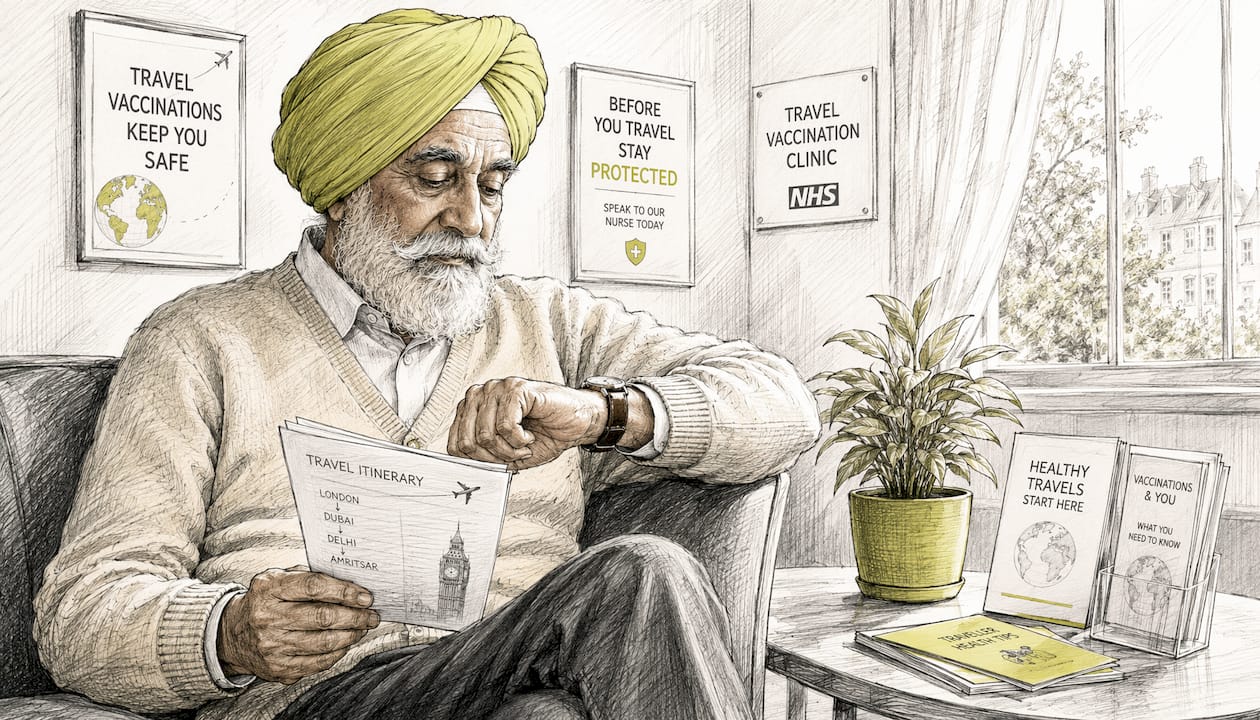
Finding international travel vaccinations near you is straightforward across the UK. Boots and Superdrug pharmacies offer travel vaccination clinics at hundreds of high-street locations, with online booking available for most appointments. NHS GP surgeries provide some vaccinations free of charge, while specialist private travel health centres handle more complex requirements. For Yellow Fever specifically, you must attend a designated Yellow Fever Vaccination Centre to receive a valid International Certificate of Vaccination or Prophylaxis (ICVP). Vaccinations are available for adults and children over 2 years old at most clinics.
Where to access travel vaccinations locally:
- Boots Travel Clinic at pharmacies nationwide, bookable online or by phone
- Superdrug Health Clinic at selected stores, with walk-in and appointment options
- NHS GP surgery for routine boosters and some destination-specific vaccines
- Private specialist travel health centres for complex itineraries or multiple vaccines
- Hospital travel clinics such as the Hospital for Tropical Diseases at UCLH in London
Pro Tip: Book your appointment well in advance before departure. Some vaccine courses require multiple doses spaced weeks apart, and leaving it too late means incomplete protection.
Which travel vaccinations might you need for international trips?
The vaccines you need depend entirely on where you are going, what you will be doing, and your existing immunity. That said, certain vaccines come up repeatedly for travellers heading to Africa, Asia, South America, and parts of Eastern Europe.
Common travel vaccines and their purposes:
- Yellow Fever — required for entry to many countries in sub-Saharan Africa and South America; must be administered at an approved centre
- Hepatitis A — recommended for travel to areas with poor sanitation; one of the most common vaccine-preventable illnesses in travellers
- Hepatitis B — advised for longer stays or destinations with limited medical facilities
- Typhoid — recommended for South Asia, including India, Pakistan, Bangladesh, and Nepal, for travellers aged 2 and over
- Meningitis ACWY — required for Hajj pilgrims and advised for travel to the meningitis belt across sub-Saharan Africa
- Rabies — considered for travel to endemic areas where access to post-exposure treatment is poor, particularly for children
- Cholera — available for travellers to high-risk areas with inadequate water and sanitation
- Tick-borne encephalitis — relevant for forested areas of Central and Eastern Europe and parts of Asia
- Japanese Encephalitis — a private vaccine for rural travel in parts of Asia during transmission season
Beyond destination-specific vaccines, the WHO advises all travellers to review their routine vaccination status before departure. MMR (measles, mumps, and rubella), Polio, and Tetanus boosters are often out of date in adults who received childhood doses years ago. Malaria tablets are not a vaccine but are a critical complementary measure for many destinations; your travel clinic will advise on the appropriate prophylaxis.
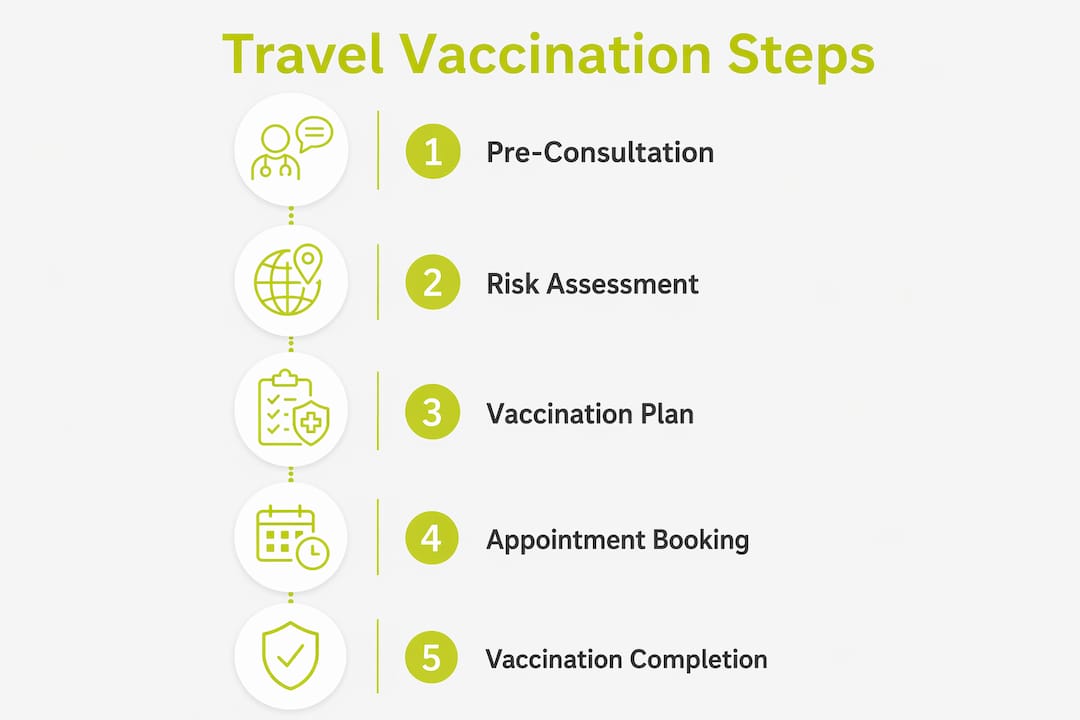
When should you book travel vaccinations and how do you prepare?
Book your pre-travel consultation at least 4–6 weeks before you depart. This timing is not arbitrary. Some vaccines require two or three doses spaced weeks apart to build full immunity, and a rushed schedule can leave gaps in your protection.
Preparation steps before your appointment:
- Gather your existing vaccination records, including your NHS vaccination history if available
- Note your full itinerary, including stopovers, rural versus urban stays, and planned activities
- List any current medications or known allergies for your clinician to review
- Check destination-specific requirements using TravelHealthPro, the UK government’s official travel health resource
- Confirm whether your chosen clinic is a designated Yellow Fever Vaccination Centre if your destination requires it
A pre-travel consultation is more than a vaccination appointment. Clinicians assess your personal risk based on your itinerary, medical history, and planned activities, then tailor recommendations accordingly. That personalised approach often surfaces vaccines or precautions a general internet search would miss.
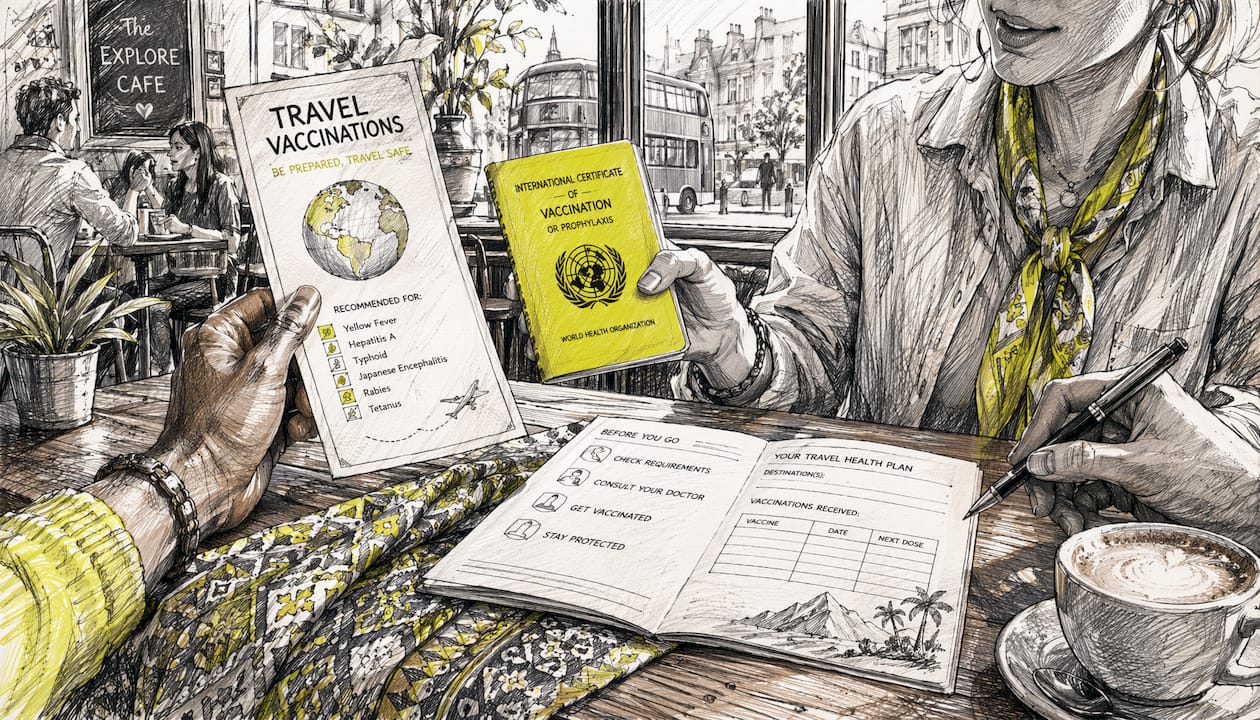
Pro Tip: Carry your physical yellow card (ICVP) even if you also have a digital record. Many countries at border control require the original signed and stamped paper document.
What do travel vaccinations cost in the UK and what does the NHS cover?
Routine vaccinations that form part of the standard UK immunisation schedule are free on the NHS. Travel-specific vaccines are a different matter. The NHS confirms that specialised travel vaccines such as Yellow Fever, Rabies, and Japanese Encephalitis are private services, paid for by the traveller, with prices varying by clinic and destination.
What you can typically expect:
- Free on the NHS: Tetanus, Polio, Diphtheria boosters, Hepatitis A (for some destinations), Typhoid (for some destinations), and Cholera in certain circumstances
- Usually paid privately: Yellow Fever, Rabies, Japanese Encephalitis, Tick-borne encephalitis, Meningitis ACWY (for non-Hajj travellers), and Hepatitis B
- Consultation fees: Private travel clinics charge separately for the consultation itself; always confirm this upfront when booking
Prices vary between providers and regions. Boots, Superdrug, and independent travel clinics each set their own fees. Ringing ahead to confirm both the consultation cost and the per-vaccine price avoids surprises on the day. Transparent pricing at reputable clinics means you should never encounter hidden fees; if a clinic is vague about costs before your appointment, that is worth noting.
Trusted resources for checking international vaccine requirements
Knowing which vaccines you need starts with using the right sources. General internet searches can mislead, particularly for entry requirements that change frequently.
Key official resources:
- TravelHealthPro — the UK’s National Travel Health Network and Centre (NaTHNaC) resource, with destination-specific vaccine recommendations updated regularly
- NHS travel vaccinations page — a clear starting point for UK travellers covering costs, providers, and what to expect
- World Health Organization (WHO) — publishes vaccination requirements and recommendations for international travellers, including the official list of Yellow Fever risk countries
- Your travel clinic or GP — the most reliable source for personalised advice once you have a confirmed itinerary
| Resource | Best used for | Access |
|---|---|---|
| TravelHealthPro | Destination-specific vaccine and health advice | travelhealthpro.org.uk |
| NHS travel vaccinations | UK provider information and cost guidance | nhs.uk |
| WHO travel advice | International entry requirements and Yellow Fever country list | who.int |
| Boots / Superdrug clinic | Booking and in-person consultation | In-store or online |
Yellow Fever certification deserves particular attention. A certificate issued by a clinic that is not an officially designated Yellow Fever Vaccination Centre is invalid at border control, regardless of whether the vaccine itself was administered correctly. Always verify centre status before booking if your destination requires proof of vaccination.
For understanding vaccines for international travel in more depth, including how to read destination health profiles, Unparalleledglobalbenefits has a dedicated guide worth reading alongside official sources.
Protect your trip with international travel insurance too
Vaccinations reduce health risks abroad, but they cannot cover every eventuality. An unexpected illness, a hospital admission, or a medical evacuation can cost far more than any vaccine course.
Unparalleledglobalbenefits specialises in international health cover for expats and travellers, with plans tailored to individual circumstances rather than one-size-fits-all policies. Whether you are travelling solo, relocating abroad, or arranging cover for visiting family, the team can match you to a plan that fits your destination, duration, and health needs. Cover options include trip cancellation, medical expenses, and emergency evacuation, giving you a safety net that works alongside your vaccinations rather than instead of them.
For expert guidance on choosing travel insurance that genuinely fits your trip, it is worth reading through the key considerations before you commit to a policy.
Planning a trip for yourself, a resident, or visiting family? UGB + Ekta can arrange travel insurance for seniors up to 100 years old. Just click here: Ekta Travel Insurance and add the promo code “UGB” to receive an additional 10% discount.
Watch this short video for more guidance on preparing for international travel:
Key takeaways
Getting vaccinated at least 4–6 weeks before departure, using a designated Yellow Fever Vaccination Centre where required, and pairing vaccines with travel insurance gives UK travellers the most complete protection for overseas trips.
| Point | Details |
|---|---|
| Book early | Consult a travel health specialist well in advance of departure to complete multi-dose courses effectively. |
| Yellow Fever certification | Only designated Yellow Fever Vaccination Centres issue valid ICVPs; certificates from other clinics are rejected at border control. |
| NHS vs private costs | Routine boosters are free on the NHS; specialised travel vaccines such as Rabies and Japanese Encephalitis are paid privately. |
| Use official resources | TravelHealthPro and the WHO travel advice pages give destination-specific, up-to-date vaccine requirements. |
| Unparalleledglobalbenefits | Offers tailored international travel and health insurance plans to complement your vaccination preparation for trips abroad. |