

Travel insurance seems straightforward. You book a holiday and want peace of mind if things go wrong. Yet only 38 percent of British travellers actually buy travel insurance before going abroad. Surprising, considering a single medical evacuation can cost more than a new car. Most people think their holiday is safe enough without it but the real risk is not the money lost if your trip is cancelled. The bigger shock comes when even a minor mishap abroad turns into a financial nightmare.
Table of Contents
Quick Summary
| Takeaway | Explanation |
| Travel insurance mitigates financial risks. | It protects travellers from unforeseen expenses due to medical emergencies, cancellations, or lost belongings. |
| Understand coverage components before purchasing. | Key areas include medical emergencies, trip cancellations, and baggage loss. Review your needs against policy details. |
| Choose between comprehensive and specialized policies. | Comprehensive plans bundle various coverages while specialized ones target specific risks. Pick what best fits your travel profile. |
| Claim processes require detailed documentation. | To receive compensation, travellers must provide evidence like medical reports and receipts, ensuring claims are legitimate. |
| Invest in peace of mind. | Travel insurance transforms uncertain journeys into manageable experiences by offering a safety net against unexpected events. |
Defining Travel Insurance: What It Covers
Travel insurance represents a critical financial safeguard for individuals embarking on journeys near or far. At its core, this specialised insurance product protects travellers against potential financial losses that might occur before or during their trip. Understanding what travel insurance covers helps travellers make informed decisions about their protection strategy.
Understanding the Basic Coverage
Travel insurance typically encompasses several key protection areas designed to mitigate risks associated with travel. According to the U.S. Department of State, travel insurance coverage can include multiple components that address different potential scenarios:
-
Medical Emergencies: Covers unexpected healthcare expenses while travelling
-
Trip Cancellation: Reimburses non-refundable travel expenses if trips are cancelled for covered reasons
-
Emergency Medical Evacuation: Provides transportation to appropriate medical facilities
-
Baggage Loss or Delay: Offers compensation for lost or delayed luggage
Comprehensive Protection for Travellers
Travel insurance goes beyond simple medical coverage. The Office of the Insurance Commissioner highlights that comprehensive policies can protect against a wide range of potential disruptions. These might include unexpected travel delays, rental car damages, accidental death, and interruptions to pre-planned itineraries.
Key considerations when selecting travel insurance include understanding the specific terms of coverage, assessing the potential risks of your destination, and matching the policy to your individual travel needs. Different policies offer varying levels of protection, so carefully reviewing the details becomes crucial for obtaining appropriate coverage.
While travel insurance cannot prevent unexpected events from occurring, it provides financial security and peace of mind. By transferring potential financial risks to the insurance provider, travellers can focus on enjoying their journey without constant worry about potential mishaps.
The Importance of Travel Insurance: Why You Need It
Travelling without appropriate insurance is akin to navigating uncharted waters without a compass. While adventure beckons, potential risks lurk around every corner, making travel insurance not just a luxury, but a critical financial protection strategy for modern travellers.
Financial Protection Against Unexpected Events
The unpredictability of travel means that even meticulously planned trips can encounter significant disruptions. According to the Centers for Disease Control and Prevention, international travellers face substantial financial risks that can quickly escalate without proper coverage. These risks include:
-
Medical emergencies in foreign healthcare systems
-
Unexpected trip cancellations due to personal or global events
-
Emergency medical evacuations which can cost tens of thousands of pounds
-
Lost or stolen personal belongings
Comprehensive Risk Management
Travel insurance transcends mere financial reimbursement. It provides psychological reassurance and practical support during challenging situations abroad. Whether you encounter a medical emergency, face unexpected travel disruptions, or require urgent assistance in a foreign country, comprehensive travel insurance acts as a critical safety net.
Beyond immediate financial protection, travel insurance offers additional benefits that many travellers overlook. These include legal assistance, emergency contact services, and support networks that can help navigate complex situations in unfamiliar environments. The right policy transforms potential travel nightmares into manageable challenges, allowing you to focus on your journey rather than worrying about potential setbacks.
Ultimately, travel insurance represents an investment in peace of mind. By transferring potential risks to a professional insurance provider, travellers can explore the world with confidence, knowing they have a robust support system protecting their health, finances, and overall travel experience.

How Travel Insurance Works: Key Components Explained
Travel insurance operates as a complex financial protection mechanism designed to safeguard travellers against unforeseen circumstances that could potentially disrupt or derail their journeys. Understanding its intricate workings helps travellers make informed decisions about their coverage needs.
Core Operational Mechanisms
At its fundamental level, travel insurance functions through a predetermined contract between the traveller and the insurance provider. According to research from the National Center for Biotechnology Information, these policies typically encompass several critical protection components:
-
Claim Submission Process: Travellers document and submit evidence of financial losses
-
Risk Assessment: Insurers evaluate potential scenarios and associated coverage limits
-
Premium Calculation: Based on destination, trip duration, traveller’s age, and potential risks
-
Reimbursement Protocols: Specific procedures for compensating verified financial losses
Coverage Activation and Limitations
Travel insurance policies activate under specific predefined conditions. Critically, coverage must be purchased before departure and includes precise definitions of what constitutes a valid claim. Policies typically exclude certain scenarios such as pre-existing medical conditions, high-risk activities, or incidents occurring in regions with active travel warnings.
The claims process involves detailed documentation, verification, and assessment. Travellers must provide comprehensive evidence including medical reports, police statements, receipts, and other relevant documentation to substantiate their claims. This meticulous approach ensures that only legitimate financial losses receive compensation.
To help readers understand the key operational processes involved in making a travel insurance claim, this table outlines the main steps and requirements from policy purchase to reimbursement.
| Step | Description | Required Documentation |
| Policy Purchase | Traveller selects and pays for suitable insurance policy | Personal and trip details, payment info |
| Incident Occurs | Event happens that could be eligible for a claim | Evidence of incident |
| Notification to Insurer | Traveller informs insurer shortly after the event | Policy number, basic incident description |
| Claim Submission | Detailed claim form completed and submitted | Medical reports, police statements, receipts |
| Assessment & Verification | Insurer evaluates the claim and supporting documents | All submitted evidence reviewed |
| Reimbursement Decision | Insurer approves or denies compensation | Final settlement communication |
Understanding the nuanced operational framework of travel insurance empowers travellers to select appropriate coverage. By comprehending how these policies function, individuals can strategically protect themselves against potential financial risks, transforming uncertain journeys into confidently managed experiences.
Types of Travel Insurance: Understanding Your Options
Travel insurance is not a one-size-fits-all solution. Different types of policies cater to specific travel needs, risk profiles, and individual circumstances. Understanding these variations helps travellers select the most appropriate protection for their unique journey.
Primary Insurance Categories
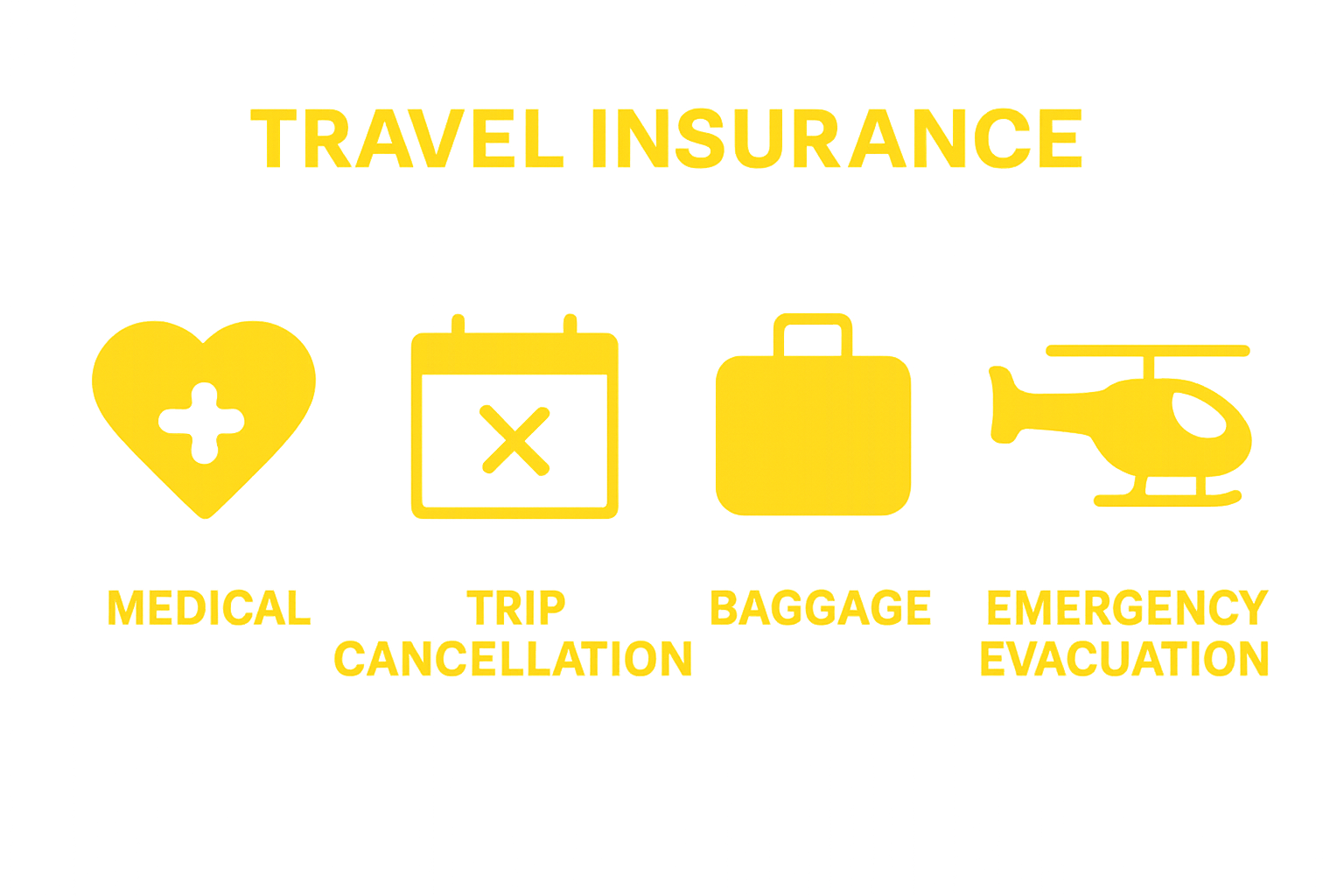
According to the Government of Canada’s travel guidelines, travel insurance encompasses several distinct categories designed to address different potential risks. These primary insurance types provide targeted protection for various travel scenarios:
-
Medical Travel Insurance: Covers healthcare expenses and emergency medical treatments abroad
-
Trip Cancellation Insurance: Reimburses prepaid travel expenses if trips are cancelled for covered reasons
-
Baggage Insurance: Provides compensation for lost, stolen, or damaged personal belongings
-
Emergency Evacuation Insurance: Covers transportation costs during serious medical emergencies
Comprehensive vs Specialized Coverage
Travellers can choose between comprehensive policies that bundle multiple protections and specialized policies targeting specific risks. Comprehensive travel insurance typically combines medical coverage, trip cancellation, baggage protection, and emergency assistance into a single package. Specialized policies, by contrast, allow more granular risk management by focusing on particular aspects of travel protection.
The selection process depends on multiple factors including destination, trip duration, traveller’s age, health condition, and potential risk exposure. Adventure travellers might prioritize emergency medical and evacuation coverage, while business travellers might focus on trip interruption and baggage protection. Understanding these nuanced differences enables travellers to construct a tailored insurance strategy that provides maximum protection with optimal cost-effectiveness.
To clarify the differences between types of travel insurance, the following table compares comprehensive and specialised coverage, outlining their core features and typical use cases.
| Type of Coverage | Core Features | Typical Use Cases |
| Comprehensive Policy | Bundles medical, cancellation, baggage, and emergency assistance coverage in one package | Most holidaymakers; general protection |
| Specialised Policy | Focuses on a specific risk area (e.g., medical, trip cancellation, or baggage protection) | High-risk activities, business, seniors |
| Medical Travel Insurance | Covers healthcare and emergency treatment abroad | Travellers with health concerns |
| Trip Cancellation | Reimburses prepaid expenses for covered cancellations | Last-minute changes, family emergencies |
| Baggage Insurance | Compensation for lost, stolen, or damaged possessions | Expensive items, frequent luggage loss |
| Emergency Evacuation | Covers transport to suitable medical facilities | Remote or high-risk destinations |
Protect Your Journey with Specialist Global Travel Insurance
You have just learned about the unpredictable nature of overseas travel and the many challenges it brings. From medical emergencies and cancelled trips to the loss of personal belongings, the risks are real and the emotional cost of being unprotected while abroad can be overwhelming. If you are seeking peace of mind and true financial security for your next adventure, now is the perfect time to secure professional cover.

Feel confident wherever you go. Explore how our bespoke expat medical and travel insurance policies provide comprehensive protection beyond the basics. As a global specialist in travel insurance, we tailor solutions to your specific needs—no matter your destination or circumstances. Visit Unparalleled Global Benefits now to get started and travel with confidence today.
Frequently Asked Questions
What is travel insurance?
Travel insurance is a specialised insurance product designed to protect travellers from potential financial losses during their trips. It typically covers areas such as medical emergencies, trip cancellations, baggage loss, and emergency evacuations.
What does travel insurance typically cover?
Travel insurance generally covers medical emergencies, trip cancellations, emergency medical evacuations, and baggage loss or delay. Comprehensive policies may also include coverage for additional disruptions like travel delays and legal assistance.
Why is travel insurance important?
Travel insurance is important because it provides financial protection against unexpected events that can disrupt travel plans. It offers peace of mind, ensuring travellers are financially covered for medical emergencies, trip cancellations, and lost belongings.
How does travel insurance work?
Travel insurance works through a contract between the traveller and the insurance provider. It involves submitting claims for financial losses incurred during the trip, with coverage activating under specific conditions outlined in the policy. Documentation is required to support claims for reimbursement.
Recommended
-
Understanding Does Insurance Cover Sports Injuries? – Unparalleled Global Benefits
-
Understanding What is Repatriation Coverage – Unparalleled Global Benefits
-
Entendiendo el seguro de viaje internacional familiar – Unparalleled Global Benefits
-
Travel Safety Essentials: Protect Yourself and Your Belongings – Yopki